
Open Programmable Infrastructure Project: Standardizing APIs for SmartNICs, DPUs and IPUs
Discover how the Open Programmable Infrastructure project standardizes SmartNIC, DPU, and IPU management through unified APIs, enabling easier device implementation and orchestration across different vendors and use cases.
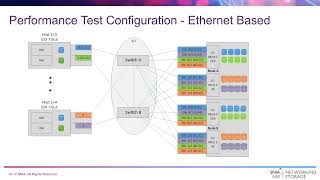
NVMe/TCP - Performance, Deployment and Automation in Enterprise Storage Networks
Explore NVMe/TCP protocol's enterprise features, performance characteristics, deployment strategies, and automation capabilities for modern storage networks and infrastructure management.
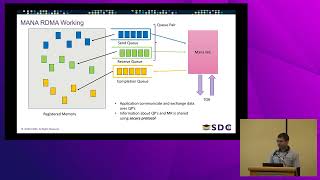
Enhancing Network Performance with RDMA on Microsoft Azure Network Adapter
Discover how to optimize network performance using RDMA technology on Azure Network Adapter, covering deployment strategies, security protocols, and real-world applications for improved throughput and reduced latency.
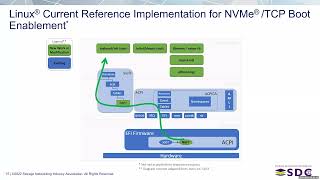
NVMe over Fabrics Boot Standardization and Implementation
Discover how NVMe over Fabrics Boot technology enables network-based OS booting, standardization efforts, and implementation strategies for large-scale deployments.
A Controlled, Secure Vsock Tunnel for High-speed Data Transfer Between Guest and Host
Discover how to implement fast data transfer between guest and host systems using vsock tunnels, with focus on security controls, kernel-level implementations, and performance optimization techniques.
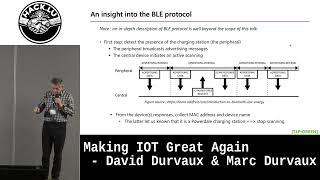
Making IoT Great Again
Explore the future of IoT technology and its potential impact through expert insights on improving connectivity, security, and implementation strategies for modern IoT solutions.
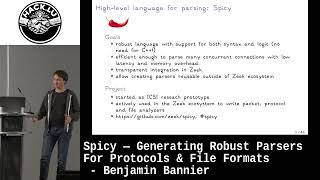
Generating Robust Parsers for Protocols and File Formats
Discover how to generate robust parsers for protocols and file formats using Spicy, a domain-specific language designed for efficient parsing and analysis.
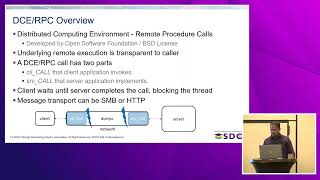
Making DCE/RPC Calls to Active Directory Time Bound Using SMB Redirector
Dive into implementing timeout mechanisms for DCE/RPC calls to Active Directory using SMB redirector, improving system reliability and handling network disruptions effectively.

Building a Global Decentralized Storage Network - Lessons Learned from S3 Alternative Platform
Discover how decentralized storage networks operate through real-world examples, focusing on encryption, erasure coding, and fault tolerance in a global network of 13,500+ independent node operators.

Persistent Write Log Cache with RDMA Replication in Ceph
Dive into implementing Persistent Write Log Cache with replication in Ceph, exploring client-side PMEM storage, RDMA technology, and efficient write-back caching for distributed systems.
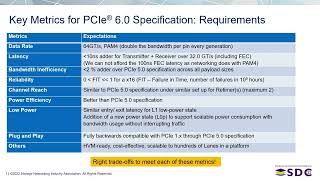
PCIe 6.0 Specification and Beyond - Enabling Storage for Machine Learning Applications
Explore PCIe 6.0's groundbreaking features and their impact on AI/ML applications, including PAM4 signaling, error correction, and flit-based encoding for enhanced data center performance and future developments.
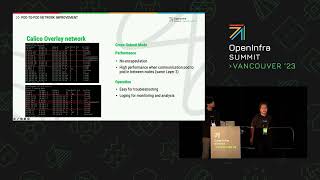
Improving Container Networking Performance with BGP Using Calico in OpenStack Cloud
Discover how to enhance container networking in OpenStack cloud using BGP and Calico, optimizing performance through Jumbo frames MTU while implementing ECMP routing for improved load balancing and redundancy.
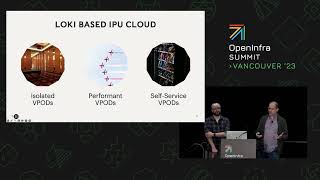
Satisfying AI's Demanding Data Needs Using Infrastructure as Code
Discover how to optimize AI infrastructure deployment using OpenStack, Terraform, and Ansible for efficient IPU-POD management, focusing on maximizing data processing and enabling flexible resource allocation.
Protecting NVMe/TCP PDU Data at 400 Gbps Using Hardware Accelerators
Explore high-performance data protection techniques for NVMe/TCP using SPDK acceleration framework, comparing ISA-L and Intel DSA implementations for efficient data digest computation at 400 Gbps speeds.

Storage Virtualization and Hardware-agnostic Acceleration Using IPDK and xPU
Discover how IPDK enables vendor-agnostic storage virtualization and hardware acceleration, allowing standard drivers to access remote storage at scale while leveraging SmartNIC/DPU/IPU/xPU capabilities.

Disaggregated NVMe/TCP Storage Using an Infrastructure Processing Unit (IPU)
Explore end-to-end Software Defined Storage solutions using Infrastructure Processing Units, focusing on NVMe/TCP integration, Kubernetes CSI plugins, and orchestration frameworks for cloud data centers.

NVMe/FC and NVMe/TCP: An In-depth Packet and Flow Level Comparison
Dive into a comprehensive comparison of NVMe/FC and NVMe/TCP protocols, exploring packet-level details, network configurations, and practical implementation strategies for optimal datacenter fabric design.

Accessing Files Remotely with Linux - Recent Progress with SMB3.1.1 Client and Servers
Explore recent advancements in Linux's SMB3.1.1 protocol implementation, including improved performance, security features, and enhanced remote file access capabilities across various server platforms.
Power Optimization and PPK2 for nRF Connect SDK Applications - Part 5
Master power optimization techniques for Bluetooth LE applications using PPK2 and Online Power Profiler tools, while learning effective strategies to enhance battery life in IoT devices.
Sending and Receiving Data Through Bluetooth LE with nRF Connect SDK - Part 3
Master Bluetooth LE data transmission and reception using nRF Connect SDK, implementing wireless sensor data access and remote control capabilities through mobile applications.
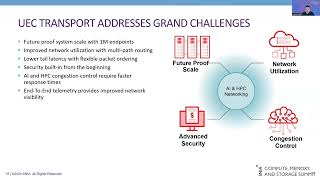
Ethernet Evolution: Powering AI's Future Through Ultra Ethernet Consortium
Discover how the Ultra Ethernet Consortium is revolutionizing network capabilities for AI and HPC, exploring technical innovations, enhanced performance metrics, and advanced RDMA solutions for next-gen computing.