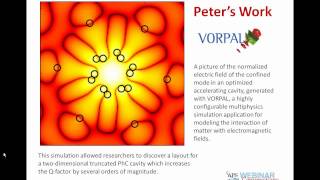
Physics Careers in Small Companies
Explore career opportunities for physicists in small companies, focusing on applied research and software development in computational and experimental physics.
From Physics to Machine Learning and Back
Explore the fascinating intersection of physics and machine learning, uncovering how these fields influence and enhance each other's methodologies and discoveries.
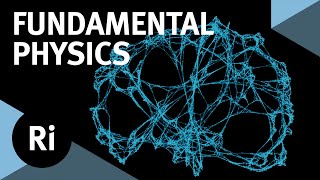
Computation and the Fundamental Theory of Physics
Stephen Wolfram explores using computational systems to develop a new fundamental theory of physics, discussing discoveries and innovations in science, technology, and business over four decades.
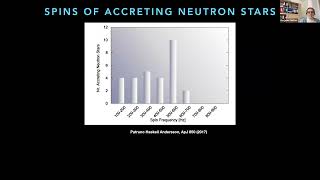
Volunteer Computing to Search the Sky for Continuous Gravitational Wave Emission
Explore the search for continuous gravitational waves using volunteer computing. Learn about detection challenges, signal integration, and the latest results from Einstein@Home all-sky searches in LIGO data.
The Strange Energy Spectrum of Approximate Matrix Product Ground States - Lecture
Explore the unique energy spectrum of approximate matrix product ground states in DMRG, including variance sampling techniques and extrapolation methods for improved accuracy in quantum simulations.
Tailoring Coupled Cluster Theory with Matrix Product States
Explore the fusion of coupled cluster theory and DMRG for tackling strongly correlated systems in computational chemistry, with insights on mathematical and computational advancements.
Wave Function Evolver - Fun Potential Energies - Episode 5
Explore intriguing potential energies in quantum mechanics through interactive coding and visualization using VPython, enhancing understanding of wave function evolution.
Rope Simulator: Adding Surface Interactions - Episode 4
Enhance rope simulation with surface interactions, including dangling and sliding, using lists and conditions in VPython. Learn advanced physics modeling techniques.
Wave Function Evolver - Calculating Expectation Values and the Heisenberg Uncertainty Principle - Episode 4
Explore the Heisenberg Uncertainty Principle through expectation value calculations, gaining insights into fundamental quantum mechanics and chemistry concepts.
Rope Simulator: Implementing Lists for Efficient Element Tracking - Episode 2
Streamline a rope simulator using lists to track elements, velocities, and forces, resulting in a convincing animation that can handle any number of rope segments.
Wave Function Evolver - Implementing the Schrodinger Equation - Episode 1
Explore quantum mechanics through coding the Schrödinger Equation using finite difference methods. Implement and visualize wave function evolution in VPython.
Gravity Simulator - Exploring Motion in Phase Space - Episode 4
Explore phase space plots in gravity simulations, offering deeper insights into system behavior beyond real-space animations. Includes VPython code examples and references to Stephen Hawking.
Jupyter Notebook Assignment - Euler-Cromer Method Development - Part 2
Explore the Euler-Cromer Method for computational physics through a guided Jupyter notebook project. Learn to implement and analyze this numerical integration technique for solving differential equations.
Projectile Motion with Lift Force - Part 13
Explore advanced projectile motion by incorporating lift forces, enhancing 3D simulations with drag, wind, and realistic physics modeling using VPython.
Projectile Motion - Shooting Over Walls and Into Pits
Explore projectile motion simulations involving walls and pits using VPython. Learn to code physics scenarios and visualize trajectories in this hands-on tutorial.
Drude Circuit Simulation - Many Electrons
Explore electron behavior in circuits with a multi-electron simulation, enhancing understanding of electrical conductivity and current flow.
Potential Integrator 5 - Fun with Shapes: Exploring Electric Potential of Various Charged Objects
Explore electric potential of various charged shapes through numerical integration. Hands-on coding with Scilab to visualize and analyze electrostatic phenomena beyond simple rectangles.
Graphing Electric Potential in 3D - Potential Integrator Series Part 4
Explore 3-D visualization of electric potential using numerical integration. Learn to graph potential against x and y coordinates for various charged object shapes.
Potential Integrator - Checking Multipoles Against Electric Potential Code - Part 3
Explore numerical integration for electric potential of charged objects, comparing results with multipole expansion to verify accuracy.
Electric Potential from Point Charges - Computational Electromagnetism
Explore computational techniques for calculating electric potential from point charges, building a foundation for solving complex electrostatics problems using computer simulations.

Beyond Your Wildest Imagination - Van der Pol Oscillator - Lecture 5
Explore the van der Pol oscillator, a complex physics system beyond simple harmonic motion. Learn to apply oscillator tools to study non-linear systems and their fascinating behaviors.