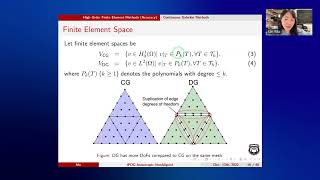
An Efficient and Effective FEM Solver for Diffusion Equation with Strong Anisotropy
Explore an efficient discontinuous Galerkin scheme with auxiliary space preconditioning for solving diffusion equations with strong anisotropy, focusing on magnetic confinement fusion applications.
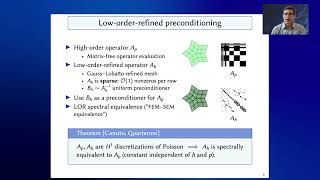
High-Order Solvers and GPU Acceleration for MFEM - Workshop 2022
Explore high-order finite element methods, GPU acceleration, and matrix-free solvers for scientific simulations using MFEM. Learn about low-order-refined preconditioning and adaptive mesh refinement.
SpECTRE: A Relativistic Astrophysics Code
Explore SpECTRE, a cutting-edge relativistic astrophysics code, and its applications in computational relativity and gravitation research.
Statistical Physics and Machine Learning - A 30 Year Perspective
Explore the 30-year evolution of connections between statistical physics and machine learning, offering insights into their intertwined development and future implications.
Integrating Jupyter Notebooks in High School Physics - Creating a JupyterHub
Learn to integrate Jupyter notebooks into high school physics classes, with insights on setting up JupyterHub and leveraging interactive tools for engaging STEM education.
Jupyter Notebook Assignment Development - Introduction and Learning Goals
Explore the process of creating Jupyter Notebook assignments for computational research methods, focusing on setting learning goals and structuring effective content.
Enhancing Scientific Computing Through Physics-Informed Neural Networks
Explore physics-informed neural networks (PINNs) as an alternative to traditional scientific computation, addressing challenges in high-dimensional problems and incorporating noisy data in inverse problems.
Methods for Computational Biology and Drug Discovery
Explore fundamental computational methods in physics and chemistry, presented by their creators, with insights into their development and applications.
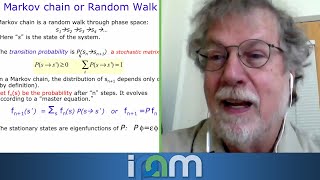
Introduction to Classical and Quantum Monte Carlo Methods for Many-Body Systems
Explore classical and quantum Monte Carlo methods for many-body systems, including Metropolis algorithms, Feynman's path integral formalism, and projector Monte Carlo techniques for fermion systems.
Introduction to Theory and Numerics of Partial Differential Equations - Lecture 5
Explore numerical methods for solving partial differential equations, focusing on techniques essential for gravitational wave astronomy and computational relativity.

Introduction to Theory and Numerics of Partial Differential Equations - Lecture 2
Explore numerical methods for solving partial differential equations, focusing on techniques essential for gravitational wave astronomy and computational relativity.
Introduction to Theory and Numerics of Partial Differential Equations - Lecture 3
Explore numerical methods for solving partial differential equations, focusing on techniques essential for gravitational wave astronomy and computational relativity.
Introduction to Theory and Numerics of Partial Differential Equations - Lecture 1
Explore fundamental concepts and numerical techniques for solving partial differential equations, essential for modeling complex physical phenomena in gravitational-wave astronomy and astrophysics.
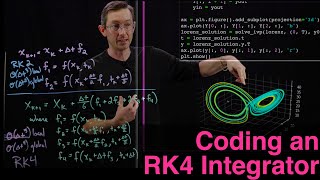
Coding a Fourth-Order Runge-Kutta Integrator in Python and Matlab
Learn to implement a 4th-order Runge-Kutta integrator in Python and Matlab, and apply it to simulate the chaotic Lorenz 1963 system. Gain practical coding skills for numerical integration.
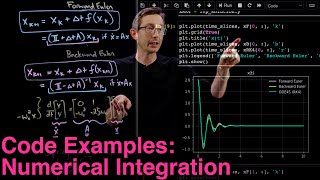
Numerical Integration of ODEs with Forward Euler and Backward Euler in Python and Matlab
Explore Forward and Backward Euler integration methods for ODEs using Python and Matlab. Compare stability, error, and implementation on a spring-mass-damper system with analytic solutions.
Weirdly Concrete Problem 1 - Exploring XKCD's Unsolved Math Problem
Explore XKCD's unsolved math problem through coding and simulation. Dive into a fascinating mathematical puzzle with practical applications and computational approaches.

Finite Differences and Successive Over Relaxation - Jupyter Notebook Assignment Development
Explore finite differences and successive over-relaxation methods in computational physics through a guided Jupyter notebook project, enhancing problem-solving skills in numerical analysis.
Jupyter Notebook Assignment - Runge-Kutta Method Development - Vlog 3
Explore the Runge-Kutta Method in computational physics, comparing it with Euler-Cromer. Develop skills in numerical analysis and scientific computing using Jupyter Notebooks.
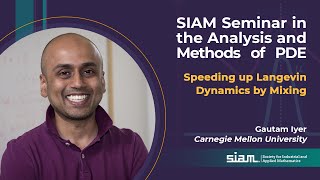
Speeding up Langevin Dynamics by Mixing
Explore a method to accelerate Langevin dynamics using mixing drift, improving convergence to stationary distribution in polynomial time for systems with multiple local minima.
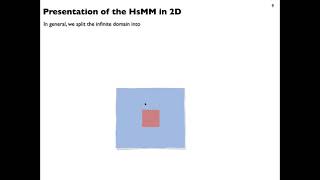
The Half-space Matching Method for Solving Scattering in Complex Media
Explore innovative wave scattering solutions in complex media using the Half-space Matching Method, offering efficient alternatives to traditional computational techniques.
Conservative Adaptive Rank Integrators for Nonlinear Kinetic Models
Explore low-rank time integrators for PDEs, including explicit and implicit schemes, with applications to Vlasov, heat, Fokker-Planck, and advection-diffusion equations.