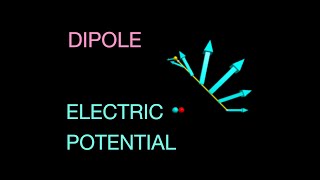
Two Ways to Calculate the Change in Potential Near a Dipole
Explore two methods for calculating potential change near a dipole: using electric field expression and numerical computation with Python.
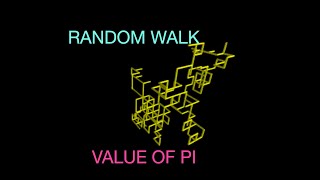
Finding the Value of Pi from a Random Walk Using Python
Explore Python coding to calculate pi using random walks, from 1D to 3D simulations. Enhance mathematical understanding through practical programming.
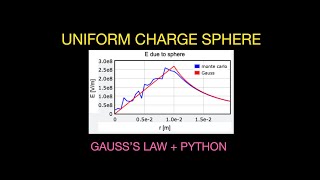
Electric Field due to Uniform Sphere - Gauss's Law and Python Simulation
Explore electric fields of uniformly charged spheres using Gauss's law and Python simulation with 10,000 random points for precise calculations.
Python Physics: Modeling the Motion of a Coffee Filter with Air Drag
Model coffee filter motion with air drag using Python, breaking complex physics into manageable time intervals for accurate simulations.
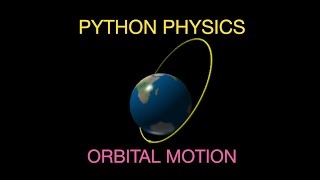
Python Physics: Building a 3D Model for Orbital Motion
Develop a 3D model for orbital motion using Python and Web VPython, breaking down complex calculations into manageable time intervals for accurate simulations.
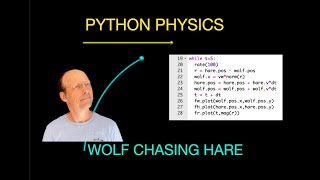
Python Physics: Modeling the Wolf and Hare Problem
Model wolf-hare chase dynamics using Python, exploring predator-prey motion patterns and computational problem-solving in physics simulations.
Physics Informed Neural Networks - BC Incorporation
Explore Physics Informed Neural Networks and learn techniques for incorporating boundary conditions in these advanced machine learning models.
Physics Informed Neural Networks - Introduction
Explore the fundamentals of Physics Informed Neural Networks in this concise introduction.
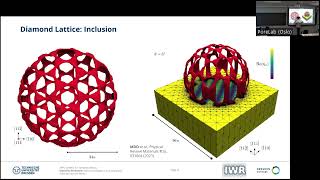
Amplitude Phase-Field Crystal Model for Complex Lattices
Explore complex lattice structures using the amplitude phase-field crystal model, focusing on advanced computational techniques and applications in materials science.
Invasion Percolation - Part II
Explore advanced concepts of invasion percolation, building on fundamental principles to deepen understanding of fluid flow in porous media.

Invasion Percolation - Part I
Explore invasion percolation concepts and applications in porous media flow modeling, focusing on fundamental principles and computational techniques.
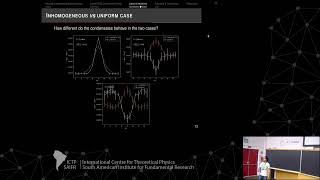
Lattice QCD with an Inhomogeneous Magnetic Background
Explore Lattice QCD simulations with inhomogeneous magnetic fields, uncovering their impact on strongly interacting matter and advancing our understanding of quantum chromodynamics.
Machine Learning for Quantum Applications - Part 2
Explore advanced machine learning techniques for quantum applications, focusing on cutting-edge developments and practical implementations in quantum systems.
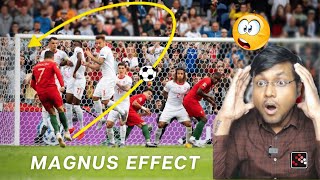
Simulating the Magnus Effect in Football Free Kicks Using SCILAB
Explore the physics behind curved football kicks through SCILAB simulation. Learn about Magnus effect, projectile motion, and programming to visualize unpredictable ball trajectories.
QMCPACK Workshop 2023 Introduction
Explore quantum Monte Carlo simulations with QMCPACK: Learn about recent developments, upcoming features, and workshop agenda for advancing computational materials science.
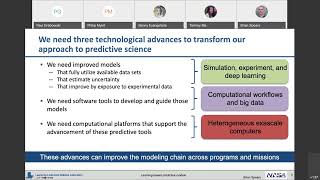
Cognitive Simulation: Combining Simulation and Experiment with Artificial Intelligence
Explore cognitive simulation techniques merging AI with experimental and simulation data for advanced scientific insights and predictive capabilities.
Towards QMCPACK v4
Explore advancements in quantum Monte Carlo simulations with QMCPACK v4, focusing on new features and improvements for computational materials science research.
CPU and GPU Performance of the Batched Code - QMCPACK Workshop 2023
Explore CPU and GPU performance optimization techniques for batched code in quantum Monte Carlo simulations with QMCPACK.
Accurate Electronic and Magnetic Properties of 2D Materials Using Quantum Monte Carlo Methods
Explore quantum Monte Carlo methods for precise electronic and magnetic property calculations in 2D materials with Daniel Wines from NIST.
Spin Orbit Coupling in QMCPACK
Explore spin orbit coupling implementation in QMCPACK with Cody Melton's workshop presentation, covering advanced quantum mechanics concepts and computational techniques.
Surrogate Hessian Method for Geometry Optimization - QMCPACK Workshop 2023
Explore the surrogate Hessian method for efficient geometry optimization in quantum systems, presented by Jaron Krogel at the QMCPACK Workshop 2023.