New Correlation-Consistent Effective Core Potentials
Explore new correlation-consistent effective core potentials for quantum chemistry calculations, enhancing accuracy and efficiency in molecular simulations.
Orbital Optimization - QMCPACK Workshop 2023
Explore advanced techniques in quantum mechanics with a focus on orbital optimization methods and their applications in computational physics.
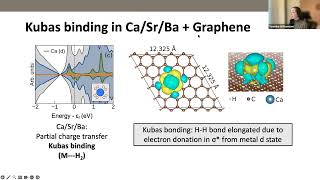
Using QMC to Understand Hydrogen Storage in Metal Decorated Graphene - 14/18
Explore quantum Monte Carlo techniques for analyzing hydrogen storage in metal-decorated graphene, enhancing understanding of advanced energy storage solutions.
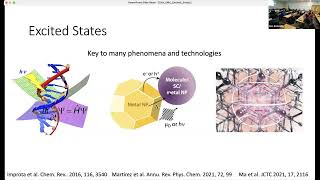
VMC Wave Function Optimization for Excited States in Molecules and Solids - 15/18
Explore VMC wave function optimization techniques for excited states in molecules and solids, enhancing quantum simulations and computational chemistry understanding.
Force-Free Identification of Minimum-Energy Pathways and Transition States Using Quantum Monte Carlo Methods
Explore force-free quantum Monte Carlo methods for identifying minimum-energy pathways and transition states in chemical reactions and material transformations.
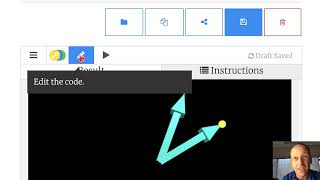
Intro to 3D Modeling the Motion of a Puck with Python
Crea un modelo 3D del movimiento de un disco utilizando Python y GlowScript para visualizar y analizar su trayectoria.
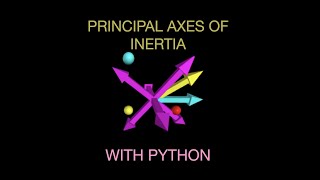
Finding the Principal Axes of Inertia With Python
Learn to calculate principal axes of inertia for mass systems using Python, applying numerical methods to solve complex physics problems efficiently.
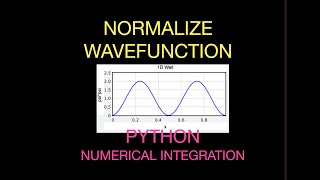
Quantum Python: Numerical Integration to Normalize a Wave Function
Explore numerical integration techniques to normalize wave functions in quantum mechanics using Python, enhancing understanding of computational approaches in physics.
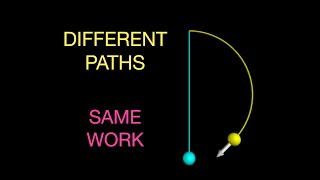
Work Done by Gravity Along Straight and Curved Paths Using Python
Explore gravity's work along straight and curved paths using Python, demonstrating the conservative nature of gravitational force through computational analysis.
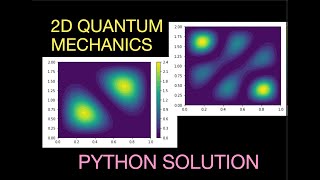
Solving 2D Quantum Mechanics Problems with Python
Explore Python techniques for solving 2D quantum mechanics problems with non-trivial potential, based on numerical methods and analytical solutions.
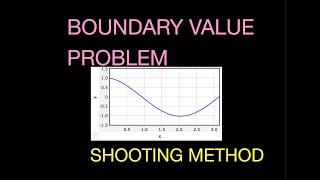
Solving a Boundary Value Problem with the Shooting Method and Python
Learn to solve boundary value problems using the shooting method and Python, with Euler method implementation and animated graph visualization.

Calculate Any Electric Field with Python
Explore Python-based calculations for electric fields from multiple charges. Master a versatile method applicable to various charge configurations.
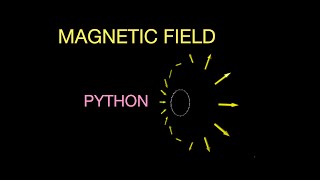
Visualizing the Magnetic Field of a Current Loop with Python
Visualize magnetic fields around current loops using Python. Learn to plot and scale vector fields for enhanced understanding.
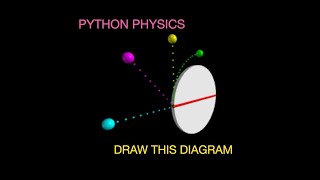
Python Physics: Using Web VPython to Illustrate a Physics Question
Animate a ball falling off a moving circular path using Web VPython to visualize a classic physics problem.
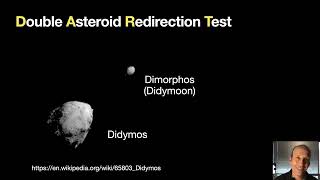
Modeling the DART-Dimorphos Collision in Python
Model the DART-Dimorphos collision using Python, exploring binary orbits, elastic and inelastic collisions, and conservation of momentum. Experiment with different parameters to understand asteroid redirection techniques.
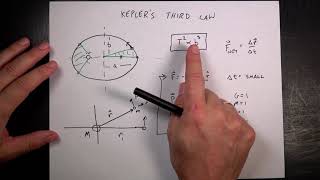
Demonstration of Kepler's Third Law Using Python
Explore Kepler's Third Law through Python modeling, calculating orbital periods and semi-major axes for various orbits to verify the law's validity.
Can ChatGPT Make a VPython Program for Orbital Motion?
Explore ChatGPT's ability to create a VPython program simulating ISS orbital motion, examining code output and discussing limitations.
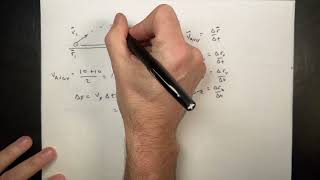
Projectile Motion With Vectors and Python
Explore projectile motion using vectors and Python, solving for flight time, distance, and maximum height of a launched ball.
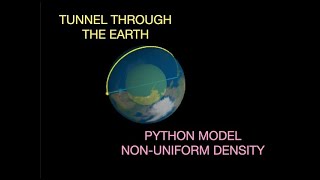
Falling Through the Center of a Non-Uniform Density Earth - Python Simulation
Explore Earth's interior through a 3D Python model, comparing orbital and tunnel travel times with varying density distributions.
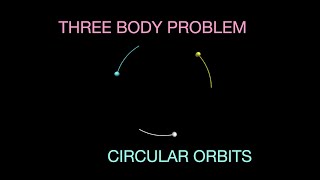
How to Achieve Circular Orbits in the Three-Body Problem
Explore stable circular orbits for three equal-mass planets using Python simulations and gravitational calculations.
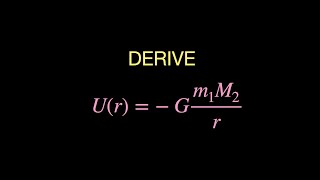
Derivation of the Gravitational Potential Energy - Plus Numerical Integrals with Python
Derive gravitational potential energy through work calculations and explore numerical integration using Python for practical applications.