Subscriber Tribute: Bouncy Balls and Walls - Episode 1
Learn to create a simulation of bouncy balls in a box using VPython, covering physics concepts and coding techniques for realistic ball-wall collisions.
Python Tutorial 4 - Loops for Computational Physics
Learn to implement loops in Python for computational physics, enabling efficient handling of repetitive tasks in scientific calculations.
Python Tutorial 2 - Arrays for Computational Physics Beginners
Learn to use arrays in Python for computational physics, covering essential concepts for undergraduate-level assignments in a beginner-friendly tutorial.
How Simulating Balls and Springs Captures the Power of Quantum Computing
Explore how simulating classical ball-spring systems relates to quantum computing power, offering insights into BQP-complete problems and new quantum algorithm design approaches.
Improved Complexity Estimation for Hamiltonian Simulation with Trotter Formula
Explore improved complexity estimation for Hamiltonian simulation using Trotter formula, focusing on time-dependent effective mass and near adiabatic dynamics scenarios with potential for enhanced efficiency.
Modeling Flow and Transport in Fractured Rock Using Machine Learning
Integrating computational physics, machine learning, and graph theory to model flow and transport in fractured rock systems, offering a paradigm shift from high-fidelity models to efficient coarse-scale graphs.
Machine Learning in Condensed Matter and Materials Physics
Explore how machine learning enhances simulations of matter, from electronic to molecular structures, boosting computational methods and potentially leading to new physical insights and exotic materials.
Aspects of Quantum Simulation of the Fermi-Hubbard Model - IPAM at UCLA
Explore quantum simulation of the Fermi-Hubbard model, focusing on Trotter error bounds and optimization techniques for improved accuracy in quantum circuits and time evolution algorithms.
Deep Learning and Numerical Methods Intersections for Improving Molecular and Fluid Dynamics
Explore intersections of deep learning and numerical methods to enhance molecular and fluid dynamics simulations, improving accuracy and efficiency in scientific computations.
Tensor Network Methods and Large Deviations in Stochastic Dynamics
Explore tensor network methods for studying fluctuations in stochastic systems, covering long-time statistics, rare event sampling, finite-time extensions, and symmetry protected topological phases in dynamical LDs.
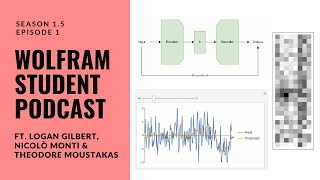
Accelerating Simulations of Particle Systems Using Machine Learning
Explore machine learning techniques for accelerating particle system simulations using transformer-based architectures and Mathematica.

How Do I Compute the Body Electric?
Explore computational physics and supercomputing to revolutionize personalized medicine through advanced simulations of the human body.
Upscaling and Automation - New Opportunities for Multiscale Systems Modeling
Explore automated upscaling techniques for multiscale systems modeling, focusing on Symbolica software for rapid model development in complex energy and geologic systems.
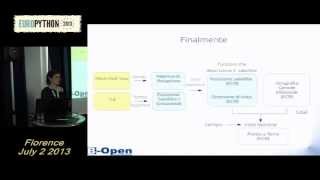
Simulare l'assetto e l'orbita di un satellite con SymPy e PyEphem
Esplora la simulazione di assetto e orbita satellitare utilizzando SymPy e PyEphem, apprendendo tecniche avanzate per modellare il comportamento dei satelliti nello spazio.
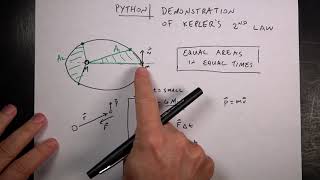
Verifying Kepler's Second Law with Python and Physics
Model planetary orbits and verify Kepler's 2nd Law using Python, demonstrating equal area sectors in equal time periods through orbital motion simulations and sector area calculations.
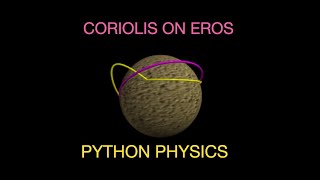
Classical Mechanics: Modeling Coriolis Force for a Kicked Ball on Eros
Explore the fascinating effects of Coriolis force by modeling the trajectory of a kicked ball on asteroid Eros, using Python to visualize non-inertial reference frames.
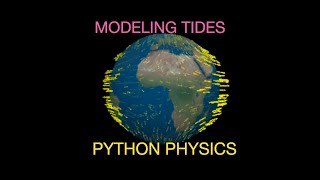
Modeling Earth's Tides with Python - Classical Mechanics
Explore the physics behind Earth's tides through Python modeling, understanding gravitational forces and creating visual simulations of tidal patterns and movements.
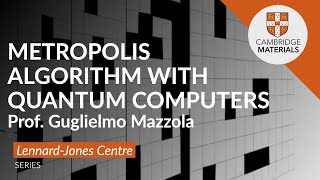
A Quantum Computing Algorithm to Speed Up Metropolis Sampling
Explore a quantum algorithm for accelerating Metropolis sampling in multidimensional systems, leveraging wave function collapses for non-local configuration space moves.
AI for Physical Models with Geometric Tools
Explore geometric tools for integrating AI into physical models, enhancing understanding and application of advanced modeling techniques.
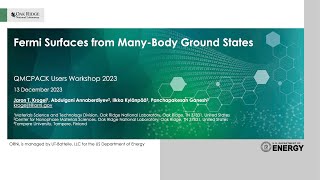
Fermi Surface Calculation with QMCPACK - 13/18
Explore Fermi surface calculations using QMCPACK in this advanced workshop presentation, focusing on cutting-edge techniques and applications in quantum physics.
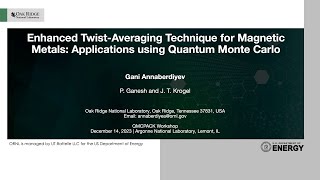
Enhanced Twist-Averaging Technique for Magnetic Metals - Applications Using Quantum Monte Carlo
Explore advanced twist-averaging techniques for magnetic metals using Quantum Monte Carlo, enhancing computational accuracy in materials science simulations.