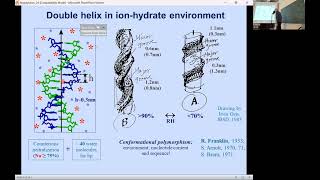
Conformational Mechanics of DNA
Dive into the fundamental principles of DNA conformational mechanics, exploring structural dynamics and molecular interactions through theoretical physics perspectives and computational approaches.
Faces
Explore primate face recognition, from neural substrates to computational principles, examining face cells, processing systems, and recognition architectures in this comprehensive overview.
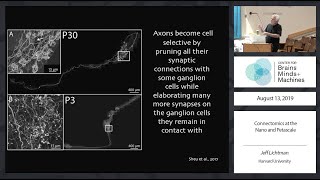
Connectomics at the Nano and Petascale
Explore the intricate world of neural connections from nano to petascale, delving into motor memory, brain structure, and cutting-edge neuroscience research techniques.
The Diversity of Cell Types in the Human Brain
Explore the diverse cell types in the human brain, their classification, and implications for neuroscience and consciousness, with insights from cutting-edge research techniques.
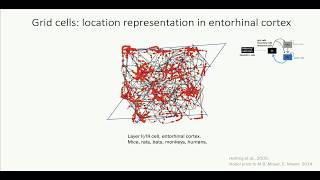
Circuitry and Mathematical Codes for Navigation in the Brain
Explore neural circuits and mathematical codes underlying animal navigation, focusing on computational problems and spatial representations in the brain.
Biophysics of Computation I
Explore the biophysics of neural computation, focusing on dendritic spikes and their role in information processing within the brain's complex structures.
CRISPR 2.0 and the Future of Gene Therapies
Exploring CRISPR 2.0's advancements in gene therapy, challenges in implementation, and future opportunities for startups in the field of genetic engineering and precision medicine.

History of Neuroscience - Sydney Brenner Interview
Explore the life and groundbreaking discoveries of Nobel Laureate Sydney Brenner in neuroscience, genetics, and molecular biology through an in-depth autobiographical interview.

Embracing Complexity: Integrating Data for Predictive Disease Models
Explore how supercomputing and biology integration revolutionizes disease research, breaking linear thinking to uncover complex pathways and innovative treatments.
Microbial Ecology and Evolution by Deepa Agashe
Explore microbial ecology and evolution, focusing on bacterial survival, reproduction, and community formation. Gain insights into quantitative approaches for understanding fundamental principles of cellular life.
Computation in Networks of Neurons in the Brain I
Explore neural network computation in the brain, focusing on advanced concepts and recent research findings in computational neuroscience.
Inference Poses for Reconstruction of 3D Molecular Volumes from Cryo-EM Images
Explore innovative techniques for reconstructing 3D molecular structures from cryo-EM data, focusing on the cryoAI algorithm that combines machine learning and physics-based approaches for efficient processing of large datasets.
Turing's Reaction-Diffusion System and Agent-Based Models in Biology - Lecture 2
Explore Turing's reaction-diffusion system and its applications in biology, from animal patterns to agent-based models. Gain insights into theoretical frameworks for understanding complex biological phenomena.
Understanding Large-Scale Nuclear Architecture by Gautam Menon
Explore nuclear architecture through biophysical modeling, examining chromosome territories, gene density distribution, and active/inactive X chromosome localization. Gain insights into chromatin dynamics and nuclear organization.
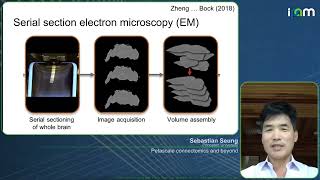
Petascale Connectomics and Beyond - IPAM at UCLA
Explore petascale connectomics, its advancements in brain mapping, and future exascale projects. Learn about automated image analysis techniques and their impact on understanding neural structures and brain function.

Decision Making and Learning in the Life Sciences - Lecture 2
Explore decision-making and learning in life sciences, focusing on advanced concepts and their applications in biological systems and research.
A Mathematical Introduction to the Molecular Biology of the Cell
Explore the intersection of mathematics and molecular biology in this insightful lecture, unveiling how mathematical concepts illuminate cellular processes and mechanisms.

Microbes, Diet, and Immunity - The Interplay of Human Health
Explore the revolutionary impact of microbiome research on medicine, health, and disease. Learn how diet, exercise, and stress affect trillions of microbes in our bodies and their influence on various medical conditions.
Analysis of Cortical Connectomes
Exploring methods for analyzing complex cortical connectomes, including Bayesian circuit modeling and clustering approaches, to understand neuronal circuits in mammalian cerebral cortex.
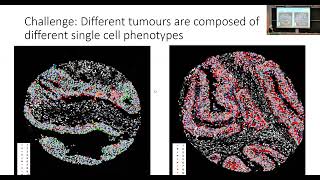
Exploring Cancer Progression: From Static Imaging Data to System Dynamics
Discover innovative approaches to analyze cancer progression using machine learning and dynamical systems, bridging static imaging data with dynamic biological processes.
Chromatin Microenvironments Affect Transcriptional Dynamics - Lecture 3
Explore how chromatin microenvironments influence transcriptional dynamics in cancer progression, offering insights into potential therapeutic approaches and disease understanding.