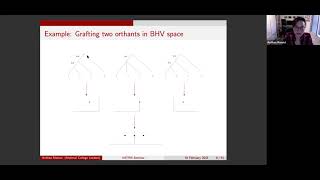
Tropical Geometry of Phylogenetic Tree Spaces
Explore tropical geometry's application to phylogenetic tree spaces, examining BHV space, tropical Grassmannians, and their implications for computational biology and statistics.

Convex Sunflower Theorems and Neural Codes
Explore convex sunflower theorems and neural codes, connecting neuroscience with discrete geometry to understand place cell encoding and cognitive mapping in rat hippocampus.
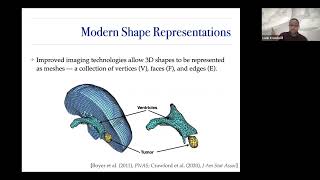
Probabilistic Generative Frameworks for Sampling 3D Complex Shapes and Images
Explore probabilistic frameworks for simulating 2D and 3D shapes, with applications in computational biology. Learn about sub-image selection and shape statistics in cellular imaging and primate mandibular molars.
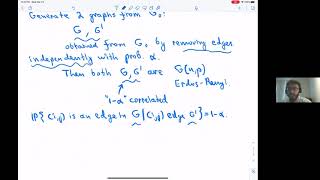
Random Graph Matching with Improved Noise Robustness
Explores a new algorithm for exact matching of correlated Erdos-Renyi graphs, improving noise robustness in graph matching for applications in computer vision and biology.
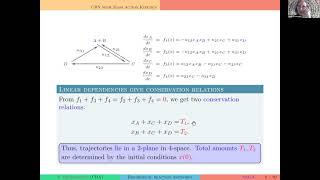
Families of Polynomials in Biochemical Reaction Networks
Exploring polynomial systems in biochemical reaction networks, focusing on computational techniques for analyzing families of polynomials with combinatorial structures derived from reaction digraphs.
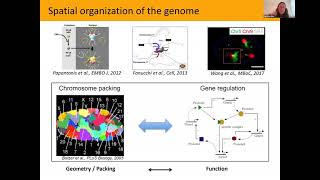
Mathematics of Genome Packing and Regulation
Explore the mathematics of genome organization and its impact on gene expression through geometric packing models and deep learning, with insights on 3D genome reconstruction and autoencoder applications in genomics.

Immunology for Mathematicians
Explore mathematical approaches to immunology, including modeling immune responses and viral dynamics, in this lecture by renowned researcher Alan S. Perelson from Los Alamos National Laboratory.
Structural and Stochastic Modeling to Study the Dynamics of Tumor-Immune Interactions
Explore structural and stochastic modeling techniques to analyze tumor-immune interactions, enhancing understanding of cancer dynamics and potential treatment strategies.
Using Mathematical Approaches to Describe and Understand Cancer
Explore mathematical modeling in cancer research, covering population dynamics, systems biology, and machine learning to enhance understanding and treatment of this complex disease.
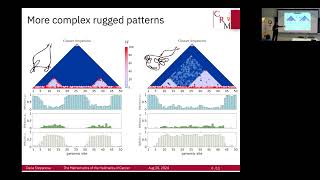
Modelling the Erosion of Epigenetic Landscapes in Cancer and Ageing
Explore mathematical models of epigenetic landscapes in cancer and aging, focusing on erosion processes and their implications for disease progression and cellular behavior.
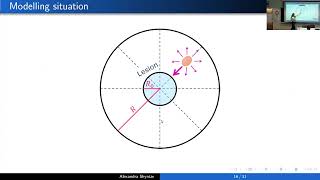
Mathematical Modelling of Microtube-Driven Regrowth of Glioma After Local Resection
Explore mathematical modeling of glioma regrowth post-resection, focusing on microtube-driven mechanisms and their impact on tumor recurrence and treatment strategies.
Data-Driven Modelling of Collective Cell Motility - Kirk Lecture
Explore data-driven modeling techniques for collective cell motility with Prof. Ruth Baker. Gain insights into interdisciplinary approaches in animal ecology and cell biology.
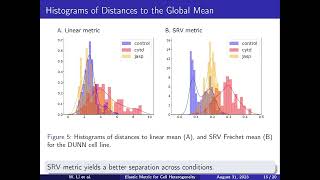
Using a Riemannian Elastic Metric for Statistical Analysis of Tumor Cell Shape Heterogeneity
Analyze tumor cell shape heterogeneity using Riemannian elastic metrics for advanced statistical insights in cancer research.
Weaving Numbers: Killing Mosquitoes with Mathematics
Explore how mathematical modeling aids in combating mosquito-borne diseases and informs effective intervention strategies for global health impact.
Mathematical Modelling of Clonal Dynamics of Acute Myeloid Leukemia: Model-Based Approach to Understand Within-Tumour Heterogeneity
Explore mathematical models of acute myeloid leukemia's clonal dynamics to understand tumor heterogeneity using a model-based approach.
Quantitative Modeling of Metastasis: Cancer at the Organism Scale
Explore mathematical models for metastasis development, including spontaneous spread, tumor interactions, and therapy effects. Gain insights into predictive tools for personalized oncology.
Infer Global, Predict Local - Bias-Variance Theory for Protein Genotype-to-Phenotype Mapping
Explore bias-variance theory in protein genotype-to-phenotype mapping, focusing on global inference and local prediction techniques.
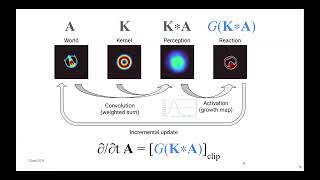
Lenia: A Continuous Model of Virtual Cell Growth Patterns
Explore virtual cell growth patterns through Lenia, a continuous model presented by Dr. Bert Chan in this Mathematical Oncology seminar.
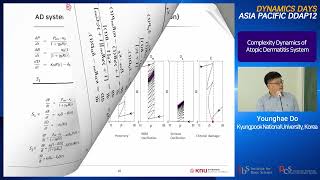
Complexity Dynamics of Atopic Dermatitis System
Explore the complexity of atopic dermatitis through an in silico model, uncovering new oscillating behaviors and multistability patterns to enhance understanding and potential treatment strategies.
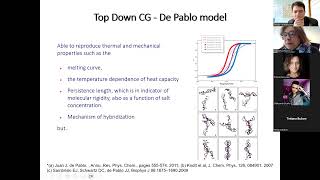
Coarse Graining and Multiscale Modeling of DNA - Part 2
Delve into advanced DNA modeling techniques, exploring coarse graining and multiscale approaches for understanding complex molecular structures and interactions at different computational levels.
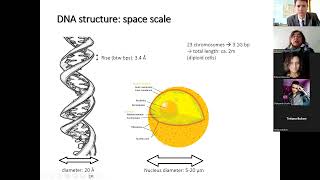
Coarse Graining and Multiscale Modeling of DNA - Part 1
Explore advanced computational techniques for DNA modeling, focusing on coarse-graining methods and multiscale approaches to understand DNA structure and dynamics at different resolutions.