Complex Time - Hallmarks of Biological Failure
Explore biological failure through interdisciplinary perspectives, examining hallmarks, causes, and potential interventions in aging and disease processes across species and systems.
Engineering Crypto-Economies Through the Lens of Complex Systems
Explore cryptoeconomics through complex systems, covering agent-based modeling, game theory, and optimization. Includes live demo of DAO simulation based on Ising model in statistical mechanics.
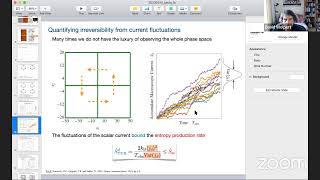
Irreversibility of Biological Active Matter
Explore the fascinating world of biological active matter, focusing on irreversibility in living systems and its implications for understanding complex dynamics and nonreciprocal behaviors.
The Story of Sync - Steven Strogatz Ulam Memorial Lecture
Explore synchronization in nature and technology, from fireflies to bridges, with Steven Strogatz. Discover the evolution of sync theories and exciting new findings in network structures.
C. Brandon Ogbunu on Epistasis and The Primacy of Context in Complex Systems
Exploring context-dependency in complex systems, from protein folding to neighborhood effects, using interdisciplinary approaches. Discusses evolutionary biology, epidemiology, and the intersection of science and culture.

Space Governance: A Complex Adaptive System?
Explore the concept of space governance as a complex adaptive system, examining its challenges, dynamics, and potential future developments in space exploration and management.

Bounded-Confidence Models of Opinion Dynamics on Networks
Explore opinion dynamics on networks using bounded-confidence models, examining how beliefs spread and evolve within interconnected social systems.
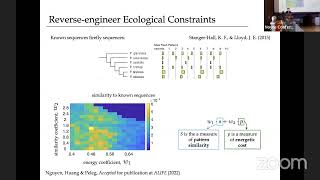
Physical Computation in Insect Swarms
Explore the fascinating world of collective behavior in insect swarms and discover how physical principles govern their complex interactions and decision-making processes.
Hierarchy and Conflict in Human and Other Societies
Explore how social hierarchies reduce conflict through an agent-based model, examining emergent properties and potential applications in various societal contexts.

Modeling the Micro-Macro Dialogue: Cross-Scale Dynamics Far from Steady State
Explore cross-scale dynamics in complex systems, focusing on micro and macro levels. Learn about MaxEnt inference, disturbed ecosystems, and a hybrid theory for reciprocal cross-scale influences.
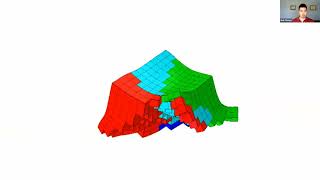
Embodiment Without Situatedness - An Embodied Perspective on Neural Architecture Search
Explore embodied perspectives on neural architecture search with Nick Cheney, examining the intersection of neurorobotics and complex systems in AI development and intelligence research.
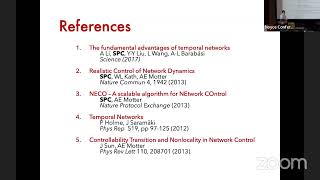
The Power of Temporal Networks
Explore how time-varying networks offer advantages in controllability, cooperation, and synchronization, challenging traditional views on network analysis and dynamics.
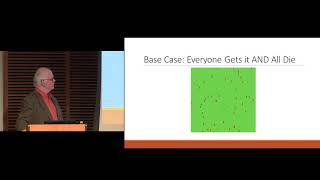
Frontiers of Computational Social Science - Agent-Based Modeling and Artificial Societies
Explore agent-based modeling in computational social science, from playground simulations to global epidemic models, with insights on future developments in neuro-cognitive agents and their applications.
Transforming Healthcare Through Physics - Preventing Medical Errors
Explore how physics and data science can revolutionize healthcare by reducing preventable errors, implementing systemic changes, and improving patient outcomes through innovative approaches.
Energy, Scaling, and The Future of Life on Earth
Explore the roles of energy and information in 21st century biology with Geoffrey West's lecture on scaling laws, energy dynamics, and their implications for life on Earth and our future.
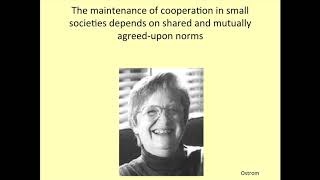
The Ecology of Society - Complex Adaptive Systems in Nature and Human Societies
Explore ecological and economic systems as complex adaptive systems, examining emergent behaviors, critical transitions, and evolutionary forces shaping resource allocation and cooperation.
The Principles of Collective Behavior
Explore the fascinating world of collective animal behavior, from insect swarms to human crowds. Discover how individual actions create complex group dynamics and problem-solving abilities in nature.

Harnessing Chaos and Predicting the Unpredictable with Artificial Intelligence
Explore how Reservoir Computing and AI can predict chaotic systems like weather and brain dynamics, pushing beyond traditional forecasting limits and combining knowledge-free and knowledge-based approaches.
The Post-Darwinian World - Expanding Darwin's Theories in Modern Science
Explore post-Darwinian complexities in biology, economics, and politics, examining ecosystems, food webs, origin of life, HIV/AIDS, and sociobiology to expand on Darwin's evolutionary theories.
Big Data, Global Development, and Complex Systems
Explore how big data from everyday technologies can reveal human behavior patterns and societal trends, with applications in global development, health, and socioeconomic analysis.
The Penguin and The Leviathan - The Science and Practice of Cooperation
Explore how diverse systems leverage human cooperation instead of traditional incentives to achieve goals, challenging long-held beliefs about managing complex systems.