Operator Precedence Parser with Example in Compiler Design
Learn to construct and implement an operator precedence parser, a key technique in compiler design for parsing expressions efficiently.

LR(0) Parser in Compiler Design - Bottom-up Parsing and Types of LR Parsers
Explore LR(0) parsing, bottom-up techniques, and LR parser types in compiler design. Learn key concepts for efficient syntax analysis and code generation.
CLR(1) Parser in Compiler Design - Bottom-up Parsing and Types of LR Parsers
Explore CLR(1) parsing in compiler design, including bottom-up parsing techniques and various LR parser types. Gain insights into efficient syntax analysis for programming languages.
LALR Parser and Bottom-up Parsing in Compiler Design
Comprehensive guide to LALR parsing, covering CLR(1) parser construction, parse tree building, and related compiler design concepts. Includes step-by-step explanations and examples.

AI Math Compiler for Synthetic Dataset Generation - Emitting Reasoning Steps
Explore an innovative AI math compiler that generates synthetic datasets with reasoning steps, enhancing AI model training for mathematical problem-solving.

SPy: Static Python Language - Fast as C, Pythonic as Python
SPy: A statically typed Python variant aiming for C-like performance while preserving Pythonic feel. Leverages modern Python practices and typing for compile-time optimizations without sacrificing dynamic features.
Type Specialization of Java Generics - What If Casts Have Teeth?
Explore Java generics type specialization and its implications for casting, presented by experts at the JVM Language Summit. Gain insights into potential advancements in Java's type system.
Measuring Code Coverage of the Linux Kernel in Accordance with RTCA DO-178C
Explore Boeing's approach to measuring Linux kernel code coverage for safety-critical avionics, focusing on RTCA DO-178C requirements and the enhancement of LLVM coverage tools.
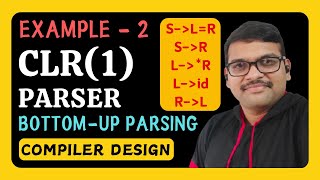
CLR(1) Parser Example - Bottom-up Parsing and Types of LR Parsers - Lecture 2
Comprehensive guide to CLR(1) parsing in compiler design, covering augmented grammar, LR(1) items, parsing table construction, and parse tree generation for bottom-up parsing techniques.
Cooperative C++ Evolution - Toward a TypeScript for C++
Explore C++'s ongoing evolution, cppfront compiler updates, and the importance of compatibility. Gain insights on cooperating with WG 21 for C++'s future development.

Hydroflow: A Compiler Target for Fast, Correct Distributed Programs
Explore Hydroflow, a Rust-based dataflow runtime enabling correct program transformations for distributed systems. Learn about refactoring, replication, and partitioning techniques for optimizing distributed programs.
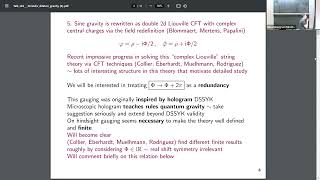
Periodic Dilaton Gravity and q-Deformed JT Gravity
Delve into advanced theoretical physics concepts exploring periodic dilaton gravity, its relationship with SYK models, and implications for quantum gravity through mathematical analysis and holographic principles.
Inside the Scala Capture Checker
Explore Scala's capture checker, its algorithms, architecture, and integration into the compiler for ensuring resource and effect safety in programs.

What Does It Take to Implement the C++ Standard Library? - C++Now Edition
Explore the complexities of implementing the C++ Standard Library, including design opportunities, constraints, and user considerations. Gain insights into the unique challenges faced by library developers.
TinyEngine and Parallel Processing - Lecture 11
Explore TinyEngine and parallel processing techniques for efficient machine learning on resource-constrained devices, enhancing performance and reducing energy consumption.
Declarative Programming via a Relational Algebra - PhD Defense
Explore declarative programming through relational algebra in this PhD defense presentation, delving into advanced concepts and research findings.
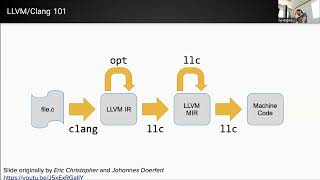
LLVM in HPC - Enabling Performance Portability, Interoperability, and Novel Features - Part 1
Explore LLVM's impact on HPC, covering portable CUDA, debugging at scale, GPU execution of legacy code, and ML in compilers. Learn about efforts to enhance performance, tooling, and development in HPC.
Memory-Safe C++ - Addressing Common Vulnerabilities
Explore memory-safe C++ with a new compiler and runtime that detects vulnerabilities without source code changes. Learn static analysis techniques and runtime checks for enhanced software security.
What if Kubernetes Was a Compiler Target? - From Monolithic Code to Distributed Applications
Explore how multi-tier programming concepts could revolutionize Kubernetes development by transforming monolithic codebases into distributed applications through innovative compiler technology.
Customising Clang-Tidy to Modernize Legacy C++ Code - From Printf to Std::Print
Discover how to automate C++ code modernization using clang-tidy, focusing on upgrading legacy printf-style logging to modern formatting approaches like fmt::print and std::print.
Co-dfns Compiler Roadmap and Updates - Implementation and Integration Features
Discover the latest developments in Co-dfns compiler for APL, exploring GPU integration, scalar optimization, static analysis, and traditional APL support through practical use cases and performance insights.