
JavaScript Masterclass
Discover strategies to transition from intermediate to expert JavaScript developer. Explore cognitive science insights, debunk programming myths, and gain a roadmap for mastering advanced skills.

What if Your Brain Were Literally JavaScript
Exploring parallels between JavaScript and human cognition: event loop vs. attention, object system vs. knowledge representation, and parser vs. language processing.
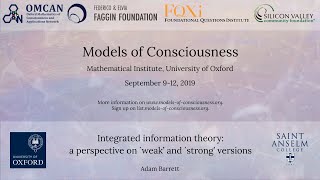
Integrated Information Theory - A Perspective on Weak and Strong Versions
Explores 'weak' and 'strong' versions of Integrated Information Theory, discussing its potential to explain consciousness and highlighting key empirical evidence and theoretical challenges.

Learning to Program or Speak a Foreign Language?
Explore the parallels between learning programming and foreign languages, examining cognitive processes, societal impacts, and personal growth opportunities in both fields.

Your Brain on Video Games
Explore the surprising cognitive benefits of action video games, including improved learning, focus, and multitasking abilities, as revealed by cognitive researcher Daphne Bavelier.

Social Animal
Explore cognitive science insights on human nature, challenging individual-centric views and revealing implications for economics, politics, and self-understanding.
Abductive Inferences and Expectations - Lecture 1.2
Explore abductive inferences and expectations in artificial intelligence, focusing on knowledge representation and reasoning techniques.

The Pattern Behind Self-Deception
Explore the psychological roots of belief in strange phenomena, examining how basic survival instincts can lead to self-deception and irrational thinking.

The Social Animal
David Brooks explores cognitive science insights on human nature, challenging individual-centric views and highlighting the importance of social connections in shaping our behavior and decision-making processes.

What Our Language Habits Reveal
Explore how language expresses our thoughts and reveals hidden aspects of our minds, offering insights into human cognition and communication.

A Neural Portrait of the Human Mind
Explore brain imaging insights with fMRI pioneer Nancy Kanwisher, uncovering specialized components and general-purpose machinery in the human brain, while highlighting the vast potential for future discoveries.

The Pattern Behind Self-Deception
Explore the brain's hard-wired survival skills that lead to belief in strange phenomena. Uncover the psychology behind self-deception and learn how our pattern-recognition abilities can sometimes lead us astray.
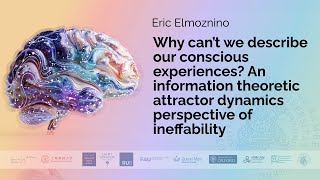
Why Can't We Describe Our Conscious Experiences? An Information Theoretic Attractor Dynamics Perspective of Ineffability
Explore the information theory behind consciousness, examining why rich conscious experiences are difficult to fully describe or recall through the lens of attractor dynamics and working memory.
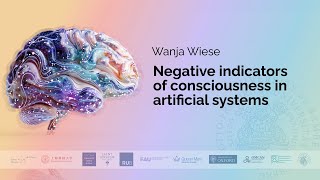
Negative Indicators of Consciousness in Artificial Systems
Explore the concept of negative consciousness indicators in AI systems, examining factors that decrease the likelihood of machine consciousness and their implications for artificial intelligence research.
Consciousness of Large Language Models - Understanding AI Sentience and Communication
Explore the fascinating hypothesis that consciousness emerges through information exchange between entities, examining how LLMs might experience consciousness and feelings comparable to humans.
Buddhist Theory and Practice in Contemporary Models of Consciousness
Explore how Buddhist traditions, particularly Chan/Zen and Abhidharma, can contribute to modern mathematical models of consciousness while examining their limitations and philosophical implications.
Bridging Consciousness and AI: Evaluating the Global Latent Workspace in Embodied Agents
Explore the intersection of consciousness theory and AI through global latent workspace modeling, examining how embodied agents develop spatial awareness and goal-directed behaviors in virtual environments.
Probabilistic Model Based on Hausdorff Measures to Represent Unconscious and Conscious Activity of Human Brain
Explore how Hausdorff measures and probabilistic models explain human consciousness, cognitive biases, and selective attention through mathematical frameworks and real-world examples.
Physical Limits to Cognition - How I Learned to Stop Worrying and Love Black Hole Thermodynamics
Explore the intersection of information theory, cognitive science, and black hole thermodynamics to understand fundamental limits of physically-embodied computational systems and cognitive processes.
Integrated Information in the Active Inference Framework
Explore how active inference agents integrate information and consciousness through unified perception and action selection, with insights into information-theoretic measures and agent-environment interactions.
Building Conscious Artificial Intelligence - Understanding Requirements and Implications
Explore the intersection of AI and consciousness through philosophical and engineering perspectives, examining key concepts like self-modeling, perception, and the functional role of consciousness in cognitive systems.