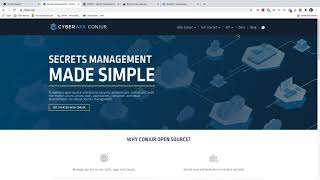
Shifting Security Left - Simplifying Security for Kubernetes and OpenShift Environments
Learn to simplify security in Kubernetes and OpenShift, focusing on authentication, secrets management, and bridging the gap between security and DevOps for more efficient cloud-native environments.
Telepresence Case Studies - From First Experience to Fast Feedback at Scale
Explore how Telepresence improves developer experience, accelerates inner dev loops, and reduces costs in microservice-based applications. Learn implementation through case studies and a demo.
Archetypes for Reliable Systems - Designing and Running Cloud-Based Internet Services
Explore a model for designing cloud-based services with varying reliability levels, featuring Kubernetes-based deployment strategies, multi-tenant architecture, and seamless infrastructure updates.
Application Security for Better Business Value - Expert Insights
Experts discuss how application security practices in cloud-native environments can reduce risks, enhance compliance, and drive innovation, leading to improved business value.
Network Security at Scale: L3 Through L7 at Splunk
Explore Splunk's multi-cloud network security architecture, from VPCs to Istio, addressing scalability, agility, and security challenges across L3 to L7 layers.
Fighting the Next War - Future Threats to OSS and Software Supply Chain Security
Explore future threats to open-source software and supply chain security, discussing emerging attack vectors and strategies for OSS projects to prepare and protect against evolving risks.
Identity Based Segmentation for Zero Trust Architecture
Explore Zero Trust Architecture implementation using identity-based segmentation, focusing on cloud-to-premises communication through DMZs with identity-aware proxies and service mesh.
Demystifying Zero-Trust for Cloud Native Technologies
Explore zero-trust principles for cloud-native environments, covering identity, policy, continuous assessment, and security. Learn implementation guidelines for protecting users, devices, networks, applications, and data.
Security as Code - A DevSecOps Approach
Explore DevSecOps and Security as Code with CodeQL. Learn to implement security checks, detect vulnerabilities, and foster collaboration between development and security teams for a robust security culture.
Software Supply Chain Security with TAG Security
Explore software supply chain security with insights on guidance, resources, and recent developments. Learn about the whitepaper, compromise catalog, and reference architecture for secure supply chains.
From Illuminating to Eliminating Crypto Jacking Techniques in Cloud Native
Explore cryptojacking evolution in cloud environments, from basic attacks to sophisticated techniques targeting containers and Kubernetes. Learn proactive protection strategies using open-source tools for enhanced security.
Untrusted Execution - Attacking the Cloud Native Supply Chain
Explore cloud native supply chain vulnerabilities, threat modeling, and security controls. Learn about trusted execution environments and end-to-end security solutions for protecting complex systems.
Sharing Security Secrets: How to Encourage Security Advocates
Discover strategies for fostering a company-wide security culture, educating non-security teams, and implementing a successful security advocates program to enhance organizational data protection and service availability.
Security Threat Modeling Live from Scratch Session
Hands-on workshop demonstrating lightweight threat modeling for CNCF projects, led by Andrew Martin. Learn practical techniques to identify and mitigate security risks in cloud-native environments.
How to Secure Your Supply Chain at Scale
Learn how Yahoo secures its software supply chain using open-source tools like Grafeas, Sigstore, and Kyverno. Discover strategies for source code scanning, vulnerability management, and protecting Kubernetes deployments at scale.

Cloud Native - Designing and Operating Reliable Cloud Services
Explore strategies for designing and operating reliable cloud services, including failure analysis, design recommendations, and best practices for managing cloud environments.

A Holistic Approach to Managing Cyber Assets and Extending Security Posture
Explore holistic cyber asset management and enhance your security posture in this insightful presentation on modern cybersecurity strategies.

SBOMs, VEX, and Kubernetes - Software Supply Chain Security in Cloud Native Environments
Explore software supply chain security with experts discussing SBOMs, VEX, and their practical applications in Kubernetes environments, from open-source projects to regulated industries.
Growing SPIFFE and SPIRE in 2023 and Beyond - Secure Identity Management Progress
Explore SPIFFE/SPIRE's latest advancements in secure identity management, including Windows support, SIGSTORE integration, and enhanced hardware security, empowering enterprises with robust infrastructure protection.
Fun with Continuous Compliance
Explore continuous compliance strategies, including OSCAL for automated assessments and OSS tools like Falco and Voucher for scalable implementation, to streamline and modernize your DevSecOps compliance approach.
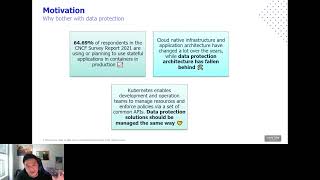
Enhancing Data Protection Workflows with Kanister and Argo Workflows
Explore advanced data protection strategies using Kanister and Argo workflows for enhanced cloud-native security and efficient backup processes.