
EfficientML.AI - Introduction to Efficient Machine Learning
Master efficient machine learning techniques and optimization strategies for deploying ML models in resource-constrained environments, focusing on practical implementation methods and performance enhancement.
Global Tenant Management Using Argo for Multi-Cloud Applications
Discover how to build a global tenant management system using Argo Events, Workflows, and CD, enabling seamless lifecycle management across mixed infrastructure environments.
Observability Migration Worst Case Scenarios - What Not to Do
Learn from real-world mistakes and pitfalls in observability platform migrations, covering evaluation criteria, vendor pricing interpretation, and developer enablement challenges to ensure smoother transitions.
Enhancing Asynchronous Communication Observability with OpenTelemetry
Discover how to implement OpenTelemetry for asynchronous messaging systems, focusing on context propagation, trace correlation, and effective monitoring of message flows across Kafka, RabbitMQ, and other queuing systems.

Distributed Tracing: Challenges and Solutions in Large-Scale Microservices
Discover how eBay implemented distributed tracing across thousands of microservices using OpenTelemetry, exploring challenges, solutions, and strategies for effective instrumentation and context propagation.
Enabling Intelligent Observability Volume Management
Discover how to intelligently manage observability data volume in edge cloud environments using the Observability Volume Manager framework for optimized monitoring and cost control.
Profiling Mastery - Decode Your Data and Elevate Observability
Master profiling fundamentals, flamegraph interpretation, and open-source tools to enhance application performance monitoring and observability in cloud-native environments.
Unlocking Advanced Processing Capabilities with OpenTelemetry
Discover how to optimize OpenTelemetry's processing capabilities for effective data transformation, filtering, sampling, and routing in distributed systems while managing costs and overhead.

Turn the Volume Down on Noisy Neighbors - Intelligent Log Routing in Multi-tenant Kubernetes
Discover how to effectively manage multi-tenant logging in Kubernetes using the Telemetry Controller, enabling intelligent routing and tenant isolation for improved log management and filtering.
Simplifying OpenTelemetry with Configuration
Discover how to effectively configure OpenTelemetry SDKs using file-based configuration, enabling multi-language support and complex instrumentation scenarios for improved observability implementation.
Breaking the 1.5MB Barrier: Running Large Metaflow Flows with Argo for AI/ML Workloads
Discover how to overcome Argo's 1.5MB size limitation for large-scale AI/ML workflows using Aurora Postgres RDS and EKS, enabling efficient management of extensive batch processes and data preparation tasks.
Observability Data Volumes and Strategies for Managing System Growth
Explore strategies for managing growing observability data volumes, from historical growth patterns to current solutions and future possibilities in data processing and storage optimization.
Observing the Future: Embracing OpenTelemetry in WebAssembly
Discover how to implement OpenTelemetry in WebAssembly applications, exploring distributed tracing, metrics, and logging through wasmCloud, with practical demonstrations of cross-language application monitoring.

Troubleshooting the OpenTelemetry Operator in Kubernetes
Gain insights into troubleshooting the OpenTelemetry Operator in Kubernetes, covering installation challenges, auto-instrumentation issues, and collector deployment solutions for effective cluster management.
Multitenancy and Fairness at Scale with Kueue - A Kubernetes Batch System Case Study
Explore how Kueue implements job queueing and resource sharing in Kubernetes, featuring fair sharing mechanisms, quota management, and performance optimizations for large-scale ML platforms.
LLM Powered Agents with Kubernetes - Building Intelligent Systems for Deployment Management
Discover how to build advanced LLM systems that dynamically interact with Kubernetes deployments using agent frameworks, tools, and real-time data integration for enhanced performance and automation.
Building a Cutting-Edge Kubernetes Internal Developer Platform at NVIDIA
Discover how NVIDIA streamlines Kubernetes operations using Python CDK, GitOps, and ArgoCD, while implementing secure secret management and efficient application delivery through Helm Charts.
SkyRay - Extending KubeRay for Multi-Cluster Multi-Cloud Operations
Discover how SkyRay extends KubeRay's capabilities for multi-cluster cloud operations, enabling seamless Ray cluster management across different cloud environments with policy-driven scheduling and automated migration.
Dressing Up Your Cluster for AI in Minutes with a Portable Network Custom Resource
Discover how to optimize Kubernetes clusters for AI workloads using portable network custom resources, enabling dynamic multi-network configurations and enhanced bandwidth for distributed computing tasks.
Outsmarting the Genie - Smart Architecture Decisions for Generative AI Applications
Master architectural best practices for building reliable, safe, and performant generative AI applications through real-world use cases and practical implementation strategies.
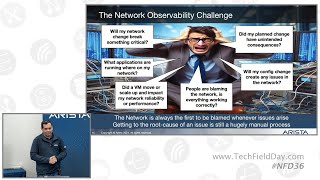
Arista CloudVision 360 - Network Observability and Automation for Enterprise Networks
Discover how CloudVision simplifies network operations through advanced automation, observability, and zero-trust security features across enterprise networking domains - from campus to cloud environments.