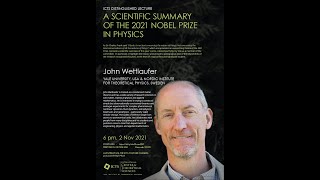
A Scientific Summary of the 2021 Nobel Prize in Physics
Explore complex systems, climate modeling, and statistical mechanics with insights from a Nobel Prize committee member. Gain a graduate-level understanding of interconnected physical phenomena.
Large-Scale Ocean Circulation and Climate - Interannual Climate Variability by Anand Gnanadesikan
Explore interannual climate variability and its connection to large-scale ocean circulation. Gain insights into the complex interactions between oceans and climate systems, enhancing understanding of global climate patterns.
Assessment of Regional and Global Climate Models in Simulating Wind Speed by Manasa Behera
Evaluation of climate models' accuracy in wind speed simulation, focusing on regional and global scales. Insights into model performance and implications for climate predictions.
Climate Change - Climate System, Energy Balance, Climate Models
Explore climate systems, energy balance, and climate models in this comprehensive lecture on climate change, offering insights into atmospheric and oceanic processes.
The Role of Convection and Turbulence in the Ocean Circulation and Modelling by Bishakhdatta Gayen
Explores convection and turbulence in ocean circulation, focusing on their impact and modeling techniques. Discusses fluid dynamics and its influence on climate processes.
Possible Influences of External Factors on the Indian Summer Monsoon by Suvarna Fadnavis
Explore external factors influencing the Indian Summer Monsoon, including climate dynamics, atmospheric processes, and potential impacts on regional weather patterns and precipitation.
Large-Scale Ocean Circulation and Climate - Deep Convection and Overturning by Anand Gnanadesikan
Explore deep ocean convection and overturning circulation, their impact on large-scale ocean dynamics, and their crucial role in regulating global climate patterns.
Basics of Clouds and Convection by Vishal Dixit
Explore the fundamentals of cloud formation and atmospheric convection processes, gaining insights into their role in weather patterns and climate dynamics.

Global Overturning Circulation - How We Know About the Large-Scale
Explore the global overturning circulation and large-scale ocean dynamics with insights from Anand Gnanadesikan. Gain understanding of climate-scale processes and their impact on ocean and atmospheric systems.
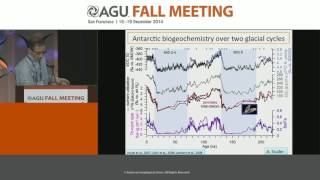
Southern Ocean Biogeochemical Control of Glacial/Interglacial Carbon Dioxide Change
Explore the Southern Ocean's role in glacial/interglacial CO2 changes through biogeochemical processes, Antarctic data, and model results in this comprehensive AGU presentation.
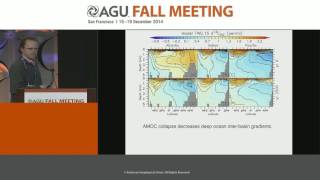
Carbon Isotopes and Atlantic Meridional Overturning Circulation Decline as Triggers for Early Deglacial CO2 Rise
Explore how carbon isotopes support the theory of Atlantic Meridional Overturning Circulation decline triggering early deglacial CO2 rise, challenging existing hypotheses.
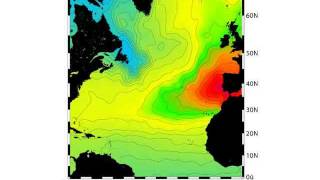
Deep Ocean Pathways and Climate Change in the North Atlantic
Exploring deep ocean pathways and climate signals in the North Atlantic, focusing on water mass distribution, recirculations, and observed warming patterns over the past century.
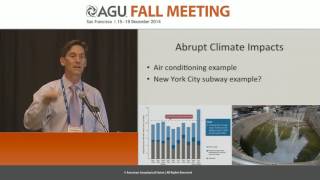
Abrupt Climate Change - Views from Past, Present, and Future
Explore past, present, and future abrupt climate changes through ice core research and environmental systems, examining their economic, physical, and social impacts on human society.
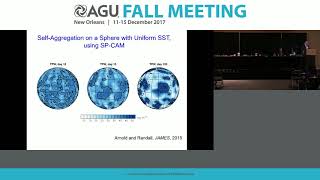
Climate Dynamics: Theory, Modeling, and Breakthroughs - 2017 Fall Meeting
Explore cutting-edge climate dynamics research with leading experts, covering theoretical advancements, modeling techniques, and breakthrough discoveries in atmospheric and oceanic sciences.
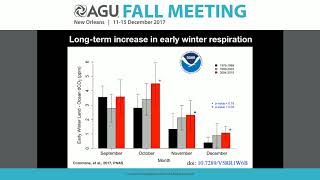
The Resilience and Vulnerability of Arctic and Boreal Ecosystems to Climate Change - 2017 Fall Meeting
Explore the impact of climate change on Arctic and boreal ecosystems through expert presentations on resilience, vulnerability, and environmental dynamics in these sensitive regions.
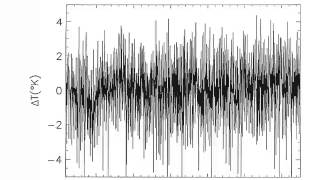
Complexity and Self-Organization in Earth Systems - Lorenz Lecture 2002
Explore self-organized complexity, predictability, and universal statistical distributions in natural systems through Donald L. Turcotte's insightful Lorenz Lecture at the 2002 AGU Fall Meeting.
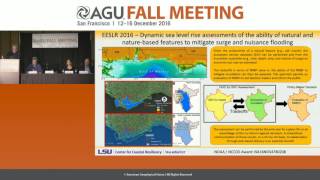
Water World: Historic Floods, Sea Level Rise, Storm Surge and Climate Change
Climate change impacts on coastal communities: Experts discuss sea level rise, flooding, and storm surge, presenting new assessments for the northern Gulf of Mexico and global coastal regions based on climate projections for 2100.
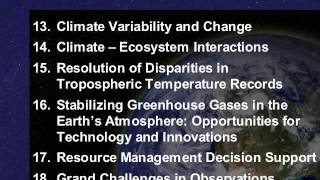
Climate Science Program and Strategic Planning - Agency Lecture
Explore US Climate Science Program's strategic plan, research priorities, and assessment processes with insights on satellite observations and climate modeling.
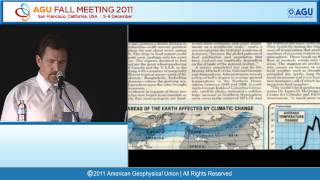
History of Global Warming - Stephen Schneider Global Environmental Change Lecture
Comprehensive exploration of global warming's historical development, examining key scientific discoveries, policy milestones, and societal impacts shaping our understanding of climate change.
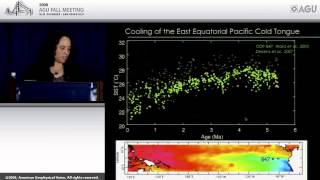
Lessons from the Pliocene Warm Period and the Onset of Northern Hemisphere Glaciation
Explore the Pliocene Warm Period and Northern Hemisphere glaciation onset with insights from Ana Christina Ravelo's lecture, covering global ice volume, tropical Pacific changes, and climate modeling.
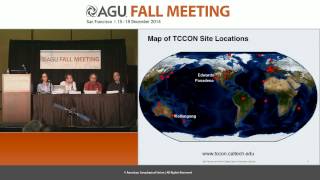
NASA's Orbiting Carbon Observatory Results - Fall Meeting 2014
Discover groundbreaking findings from NASA's Orbiting Carbon Observatory, revealing new insights into global carbon dioxide patterns and their impact on Earth's climate system.