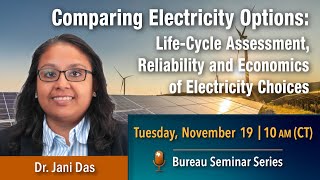
Comparing Electricity Options - Life-Cycle, Reliability, and Economics of Electricity Choices
Explore comprehensive analysis of electricity generation options, examining environmental impacts, grid reliability, and true costs across various technologies through life-cycle assessment and economic modeling.
Climate Change in the Clinic - What Can I Do About It?
Discover how healthcare professionals can address climate change impacts in clinical settings, focusing on practical strategies and interventions for medical practice.

End-to-End System Design for DNA Data Storage
Explore the groundbreaking potential of DNA data storage systems, from core components to real-world implementation challenges, focusing on scalability, automation, and environmental impact.
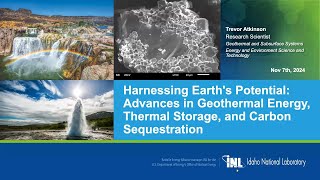
Harnessing Earth's Potential - Geothermal Energy and Carbon Sequestration Solutions
Explore cutting-edge geothermal energy research, thermal storage solutions, and carbon sequestration methods for sustainable power generation and environmental preservation.

Why Can’t We Better Prepare for Extreme Weather? | Catherine Nakalembe | TED
Catherine Nakalembe, director of NASA Harvest Africa, discusses how advanced technology can predict droughts and crop failures months in advance, yet millions still face hunger. She exposes blind spots preventing climate intelligence from reaching vulnerable communities and shares solutions to turn early warnings into early action.

How the Fridge Changed Food | Nicola Twilley | TED
Food storyteller Nicola Twilley explores how our global refrigeration system (the "artificial Arctic") is reshaping the world and melting the real Arctic. She discusses the critical need to rethink our cold chain and examines emerging technologies that could keep food fresh without harming the planet.

How to See (and Stop) Deforestation from Space | Tasso Azevedo | TED
Tasso Azevedo and MapBiomas use satellite imagery to create real-time maps that monitor deforestation in the Amazon, making illegal clear-cutting visible and holding actors accountable. This transparency-driven approach has helped significantly reduce deforestation rates.

How to Measure the Planet’s Heartbeat | Yadvinder Malhi | TED
Ecosystem scientist Yadvinder Malhi explores how energy flows through Earth's ecosystems, from forests to tropical islands, revealing how his team measures ecosystem vitality worldwide. He explains this complex energy web is not just nature's masterpiece but a lifeline for all life on our planet.

How We’re Turning Pollution into Toys, Toothpaste and More | Xu Hao | TED
Xu Hao explores why climate solutions remain stuck in labs despite breakthrough science that can convert CO2 into everyday products like toothpaste and smartphone components. He argues we can't wait centuries for implementation like with alcohol's industrial revolution, and explains what's needed to accelerate clean technology adoption.
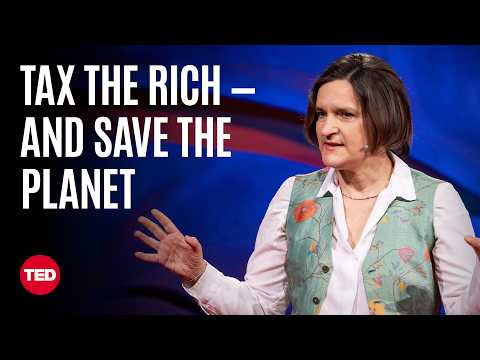
Tax the Rich — and Save the Planet | Esther Duflo | TED
Nobel Prize-winning economist Esther Duflo presents data-driven analysis of the climate crisis, showing how rising temperatures will kill millions in poor countries by century's end. She calculates the staggering cost of greenhouse gas emissions by wealthy nations and argues that taxing billionaires is the most effective way to cover climate damages.

How We Took On an Oil Giant — and Won | Melinda Janki | TED
Climate justice litigator Melinda Janki shares how she successfully challenged ExxonMobil in Guyana, demonstrating that existing laws can be powerful tools for climate action and proving oil companies are more vulnerable than they appear.

Will Climate Change Make Your Home Uninsurable? | Amy Barnes | TED
Climate risk advisor Amy Barnes explains how climate change is making home insurance unaffordable, revealing that soaring premiums signal systemic risks to the global financial system and why investing in resilience could change everything.

Floating Farms, Sponge Cities and the Climate Solutions Already Working | Harjeet Singh | TED
Harjeet Singh explains how climate adaptation solutions like floating farms and sponge cities are smart economic investments that save money long-term. He discusses why wealthy nations should fund adaptation in developing countries and how everyone can build climate resilience.

How to Be an “Apocalyptic Optimist” | Dana R. Fisher | TED
Sociologist Dana R. Fisher discusses how increasing climate disasters will drive people to demand action through social movements. She explains how to build resilience to catastrophe in yourself and your community, and how to rally for change despite seemingly intractable problems.

From Prison to Purpose Through Wildland Firefighting | Royal Ramey | TED
Royal Ramey shares his experience as an incarcerated firefighter in California and how it inspired him to co-found the Forestry and Fire Recruitment Program, a nonprofit that helps formerly incarcerated people become wildland firefighters and find purpose through public service.

Nuclear Energy - Past, Present and Future | Joshua Cowdell-Smith | TEDxWolsztyn High School Youth
Most people perceive the word nuclear as being inherently dangerous, but are these fears truly founded? Or perhaps, is nuclear energy the very thing that can save our planet and civilisation from climate change? Hi, my name is Josh, and I am elated to have been chosen as a speaker for this TEDx. I w
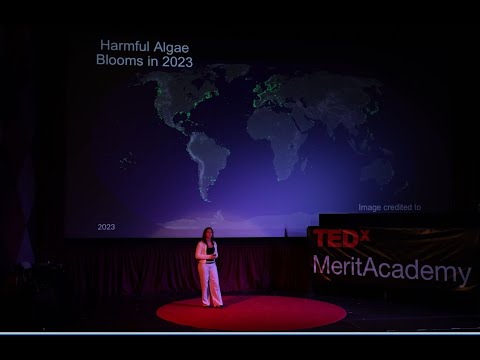
Developing Novel Algae & Compost Biofertilizer to Feed the World | Lilly Froeming | TEDxMeritAcademy
Harmful algae blooms are a growing global threat, fueled by pollution and climate change. They damage ecosystems, contaminate water, and endanger human and animal health, but what if the problem could become part of the solution? Lilly explores ideas of using algae collected from local waterways to

Humain, coupable ou solution ? | Mélissa Bounouar | TEDxSaintEtienne
Les activités humaines exercent aujourd’hui une telle pression sur l’environnement que la Terre menace de franchir un point de non-retour. Ces activités existent en partie pour répondre à nos besoins, mais faut-il forcément détruire la planète pour y parvenir ? Et si nous pouvions satisfaire nos bes

Le numérique a soif ! | Nicolas Bard | TEDxSaintEtienne
Derrière chaque photo, chaque clic, chaque vidéo… se cache un verre d’eau. Le numérique n’est pas virtuel : il mobilise des ressources bien réelles — énergie, métaux, eau. Dans cette conférence, Nicolas Bard explore le cycle invisible de nos usages et propose une autre façon d’utiliser la technologi
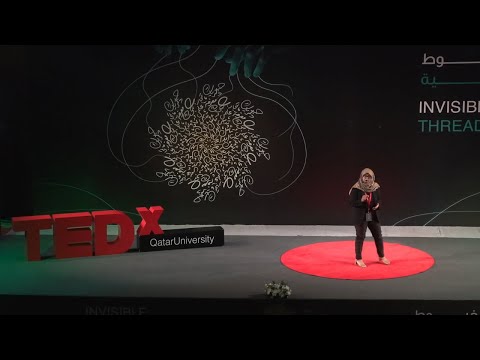
Lessons from Earth’s past for our climate future | Wahyuningrum Lestari | TEDxQatarUniversity
Geoscientist The Invisible Threads of Deep Time reveal how Earth’s hidden records, preserved in rocks, carbon isotopes, and ancient sediments, tell stories of past climate catastrophes and mass extinctions. This talk connects those invisible threads from the deep past to the challenges we face today

A travessia na preservação da Mata Atlântica | Carlos Nobre | TEDxIlhabela
A presença de Carlos Nobre compartilhando sua trajetória e sua relação com a Mata Atlântica representa cultivar a visão de uma das principais vozes do clima no planeta. A partir de décadas dedicadas à ciência, ele destaca o papel estratégico desse bioma na restauração e na conservação da Terra, cone