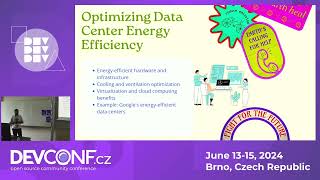
Sustainable Coding: Green Practices for Future-Friendly Software Development
Explore eco-friendly coding practices to reduce software's environmental impact. Learn optimization techniques for energy-efficient applications and data centers, contributing to a greener digital future.
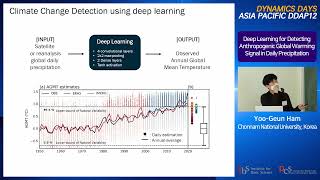
Deep Learning for Detecting Anthropogenic Global Warming Signal in Daily Precipitation
Explore deep learning's detection of climate change signals in daily precipitation, revealing human impact on global hydrological patterns through advanced neural network analysis.
Rust and Climate Change in Tunisia
Explore Rust's role in addressing climate change through innovative projects in Tunisia, showcasing the language's potential for environmental solutions.

How Will Quantum Computing Affect Our Everyday Lives in the Future?
Explore the potential impact of quantum computing on daily life with Xanadu's CEO and an Economist editor at Collision 2023.

Using Intuition and AI to Save Coral Reefs
Discover how AI and physical intuition can identify resilient coral reefs in the Coral Triangle, aiding conservation efforts through connectivity analysis and novel sound monitoring techniques.

How to Empower Farmers and Nourish the Planet
Agricultural scientist Agnes Kalibata discusses strategies to empower Africa's smallholder farmers, focusing on improving tools, climate resilience, and market access to enhance food security and environmental sustainability.

The Intersection of War and Climate Change
Youth advocate Victor Ochen explores the interconnection between conflict and climate change, emphasizing the need to address root causes and empower African youth for sustainable solutions.
A Controversial Play and the Psychology of Climate Change
Playwright shares insights on climate crisis psychology gained from controversial play, revealing diverse perspectives and approaches to addressing global warming.
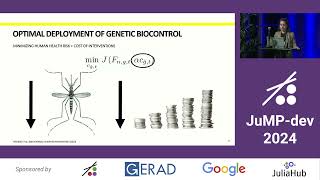
Optimal Deployment of Genetic Biocontrol Under Environmental Uncertainty
Stochastic programming approach for optimal biocontrol strategies against mosquito-borne diseases, considering uncertain weather conditions and using JuMP and Julia for efficient intervention planning.
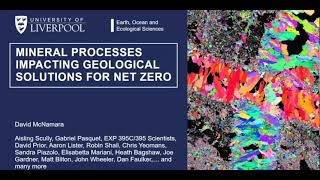
Mineral Processes Impacting Geological Solutions for Net Zero
Explore mineral processes affecting Net Zero geological solutions, from geothermal power to CO2 capture and energy-critical materials, with insights on fluid flow in Earth's crust.
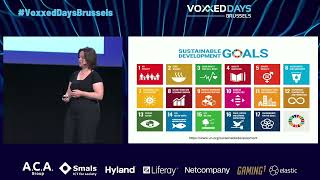
You Aren't Gonna Need It - 7 Sustainability Tips for Developers
Discover 7 key sustainability practices for developers to reduce environmental impact. Learn practical tips for eco-friendly coding, hardware longevity, cloud optimization, and responsible AI implementation.

CO2 Geological Storage Modeling with Machine Learning
Explore machine learning-based CO2 geological storage modeling, offering real-time insights and significant speedups compared to traditional simulations for efficient decarbonization strategies.

Tackling Climate Change with Autonomous Seaweed Farms Hitchhiking on Ocean Currents
Explore innovative carbon removal using autonomous seaweed farms that leverage ocean currents. Learn about control and learning methods for efficient, eco-friendly navigation in complex marine environments.
Rapid Flash Flood Inundation Mapping for Planning and Emergencies
ML-based Flood Predictor provides real-time insight into flash flood dangers, enabling better emergency planning and potentially saving lives. Uses U-net model trained on FEMA data paired with terrain information to generate water depth maps.

Climate Litigation 101 - The Courts as a Climate Solution
Explore the role of courts in addressing climate change, examining legal strategies and landmark cases shaping environmental policy and corporate accountability.

Create an Eco-Friendly World with Green Software Engineering
Discover green software engineering principles to reduce CO2 emissions in your projects. Learn eco-friendly practices for Java, frameworks, JVMs, and hardware to make a positive impact on climate change.
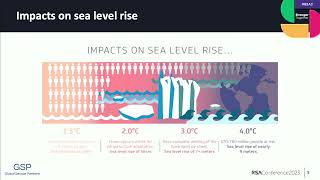
The Elephant in the Security Room - Climate Change
Explore the overlooked impact of climate change on cybersecurity, its contribution to global issues, and strategies for building resilient security teams and companies in the face of environmental challenges.
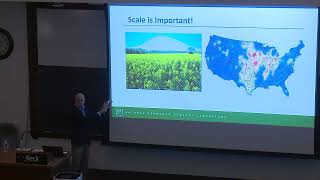
Measurement and Modeling of Soil Carbon and Soil Greenhouse Gases
Explore measurement and modeling techniques for soil carbon and greenhouse gases, enhancing understanding of climate mitigation through soil management.
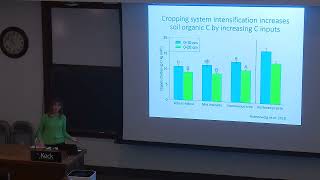
Dynamics of Soil Organic Carbon and Soil Greenhouse Gas Emission in Agriculture - Environmental and Management Drivers
Explore soil organic carbon dynamics and greenhouse gas emissions in agriculture, focusing on environmental and management factors influencing these processes.
Climate, GHG Mitigation and CO2 Removal - A Role for Soils?
Explore climate change mitigation strategies, focusing on soil management's potential for greenhouse gas reduction and carbon dioxide removal.

Pushback - The Perils and Power of Corporate Commitments
Exploring the challenges and opportunities for businesses in addressing ESG issues amid political tensions, focusing on executive decision-making and stakeholder expectations.