
Supporting Trusted Virtual Machines with Hardware-based Secure Remote Memory
Explore hardware-assisted secure memory disaggregation, combining trusted VMs with a dedicated engine for efficient isolation and protection of remote memory pages, ensuring confidentiality and integrity.
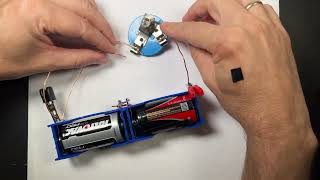
College Physics: Electric Current and Circuits - Chapter 18 Summary
Explore electric current, circuits, resistance, and power concepts. Master loop and junction rules, resistor configurations, and capacitor applications in electrical systems.

Fast Adder: Carry Select Adder
Explore the carry select adder, a fast addition technique, and understand its principles and implementation in digital circuit design.
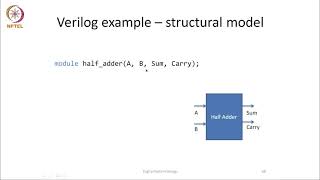
Hardware Description Language: Introduction to Verilog - Structural and Dataflow Modeling
Explore Verilog's fundamentals, including structural and dataflow modeling, for efficient hardware description and design.
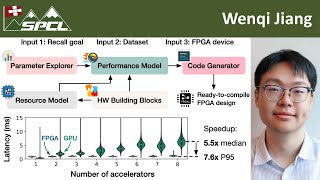
Co-design Hardware and Algorithm for Vector Search
Explore hardware-algorithm co-design for efficient vector search on FPGAs, enhancing performance in large-scale information retrieval and machine learning systems.

Addressing Challenges of Cross-Architecture Dynamic Migration Over Heterogeneous Acceleration Systems
Explore cross-architecture dynamic migration for AI applications on diverse accelerators. Learn unified abstraction, middle-compiler techniques, and runtime support for seamless transitions between hardware.

Addressing Challenges of Cross-Architecture Dynamic Migration Over Heterogeneous Acceleration Systems
解决AI应用在不同加速硬件间平滑迁移的挑战。介绍统一抽象、跨架构编译和动态链接运行时等技术,实现无需改变开发习惯的跨系统应用迁移。

How UXL Foundation Redefines the Landscape of Accelerated Computing
Explore UXL Foundation's initiative for unified software development across diverse accelerator architectures, emphasizing collaboration and open standards in AI/ML computing.

How to Make Your Electrons Do More in Java - Vector API and TornadoVM
Explore Vector API in Java and TornadoVM for GPU/FPGA computing. Enhance processing power and performance through advanced JVM techniques and native-code tooling.

Lessons Learnt from Reusing QDMA NIC to Base Band PMD
Discover key insights and practical lessons from converting AMD Xilinx FPGA NIC PMD to BBDEV PMD, exploring technical challenges and implementation strategies for efficient hardware adaptation.
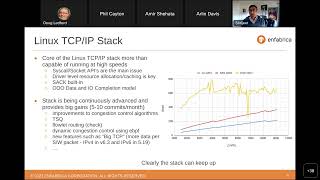
RDMA and Linux TCP - Zero-Copy Kernel Bypass for High-Performance Networking
Dive into high-performance networking with RDMA interfaces and Linux TCP stack optimization, exploring zero-copy techniques and kernel bypass for achieving 800Gbps throughput.
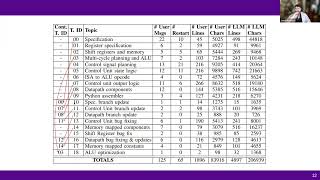
AutoChip - Using Large Language Models to Automate IC Design
Discover how Large Language Models are revolutionizing integrated circuit design automation, enhancing efficiency and innovation in semiconductor development.
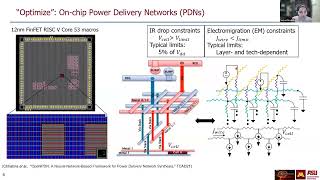
The Role of Machine Learning in Electronic Design Automation
Explore how machine learning revolutionizes electronic design automation, enhancing semiconductor development and improving design efficiency through AI-driven solutions.

Creating Custom Electronic Conference Badges - A Guide to OpenTaxus Design
Learn to design and customize electronic conference badges using OpenTaxus - from hardware modifications in KiCAD to software changes in CircuitPython, plus cost management and production logistics.
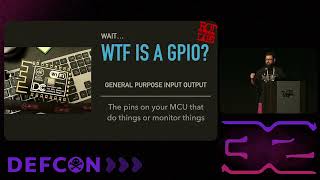
How to Make Electronic Conference Badges - From Ideation to Production
Discover the complete badge-making journey, from creative concept to mass production, including circuit design, firmware development, and practical manufacturing insights.
DNAssim: A Full System Simulator for DNA Data Storage
Explore DNA storage simulation through DNAssim, covering encoding/decoding strategies, error handling, and hardware acceleration for synthetic DNA data storage systems.
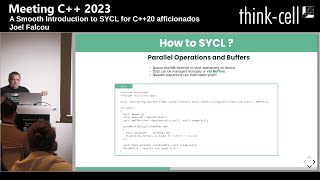
A Smooth Introduction to SYCL for C++20 Aficionados
Explore SYCL for cross-platform accelerator programming in C++20. Learn integration techniques, key features, and real-world applications in high-energy physics.
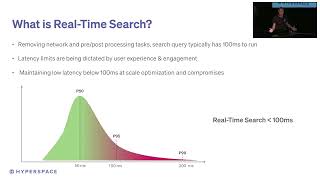
Breaking Search Performance Limits with Domain-Specific Computing
Explore advanced search techniques using domain-specific computing to achieve faster latencies and higher scalability at billion-scale, overcoming limitations of general-purpose CPUs.
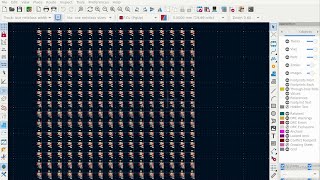
Designing PCBs with Python: Introduction to Faebryk
Explore faebryk, an open-source Python library for electronic design automation. Learn to describe circuits in code, refining designs from abstract to specific while leveraging software development tools.
Programming Novel AI Accelerators for Scientific Computing - Part 2 - Tutorial 5
Explore advanced techniques for programming AI accelerators in scientific computing, focusing on optimization and performance enhancement.
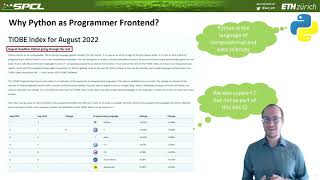
Portable High-Performance Python on CPUs, GPUs, and FPGAs
Optimize Python for high performance on CPUs, GPUs, and FPGAs. Learn HPC-oriented extensions, automatic optimizations, and portable performance techniques across architectures.