Khronos Sycl Language Framework for C++ Accelerators - Take Advantage of All the MIPS
Explore SYCL, a C++ framework for heterogeneous computing, enabling efficient use of various accelerators. Learn its features, applications, and advantages for high-performance computing and AI/ML development.
Printed Circuit Artboards - How Rapid PCB Manufacturing Is a Thing of Beauty
Explore the intersection of art and electronics through custom PCB design. Learn to create visually appealing circuit boards that enhance your projects while leveraging rapid manufacturing techniques.

Kicad for Software Developers
Learn to design circuits and PCBs using Kicad through a guided tutorial. Create a watering system relay controller with wireless communication and solar power, focusing on eeschema and pcbnew tools.
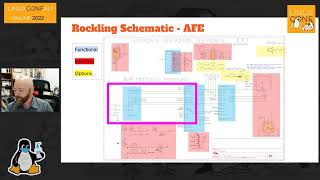
Hardware Design of the OHMC2022 Rockling & Swag Badge and OHMC Close
Explore the hardware design process of OHMC2022 badges, including challenges, design philosophy, and technical details. Gain insights into PCB design, FPGAs, and creative problem-solving in electronics.
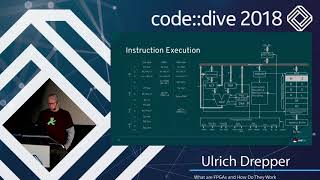
What Are FPGAs and How Do They Work
Comprehensive exploration of FPGA technology, covering architecture, programming, and execution processes. Compares FPGAs to traditional processors and discusses their growing role as accelerators in various computing environments.
Boost.Compute - A Library for GPU - Parallel Computing
Explore Boost.Compute, a high-level API for GPU/parallel computing. Learn to write efficient C++ applications for GPUs, FPGAs, and multi-core CPUs using this portable, STL-like library.

Life at a Networking Vendor - Keeping up with the Joneses
Explore the challenges and rewards of working as a kernel developer for a networking hardware vendor, balancing community expectations with internal and external demands.
Intro - CNCF SIG-Runtime
Explore cloud-native runtime technologies, projects, and specialized architectures with CNCF SIG-Runtime. Learn about orchestration, scheduling, and emerging trends in Edge, IoT, AI/ML, and more.
Introducing Racklet - A Commoditized Educational and Open Source Data Center Scale-Model for Tinkerers
Explore cloud-native server architectures with Racklet, an open-source Raspberry Pi-based scale model of hyperscaler datacenters. Learn through hands-on experience with reproducible hardware and software.
From Circuit Board Design to Finished Product - The Hobbyist’s Guide to Hardware Manufacturing
Explore the complete hardware manufacturing process, from PCB design to assembly, using a programmable gamepad project as an example. Gain insights into component selection, ordering, and interactive demos.

Circuits, Voltage, Resistance, Current - Physics 101 - AP Physics Review with Dianna Cowern
Comprehensive review of electrical concepts: circuits, voltage, resistance, and current. Includes practical exercises and real-world applications for beginners and AP Physics students.
Monitoring 400G Traffic in DPDK Using FPGA-Based SmartNIC with RTE Flow
Discover how to monitor 400G network traffic using FPGA-based SmartNIC and DPDK, featuring hardware acceleration techniques and RTE flow configuration for optimal packet processing performance.

1.2 Tb/s Packet Processing of Radio Telescope Data on GPU
Discover how to process massive radio telescope data streams at 1.2 Tb/s using NVIDIA Grace Hopper GPUs, optimizing packet handling and reducing energy consumption through innovative system architecture.
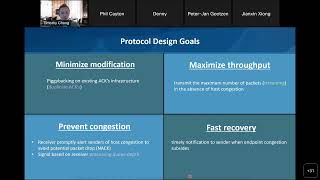
Addressing Endpoint-Induced Congestion in Scale Out Accelerator Domain
Discover innovative RDMA mechanisms for handling endpoint congestion in accelerator domains, focusing on UDP/IP/Ethernet implementation and efficient congestion control for improved network performance.
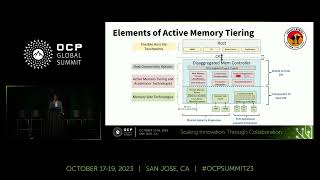
CXL-Enabled Heterogeneous Active Memory Tiering: Architecture and Implementation
Explore CXL Type2-based disaggregated memory architecture and how it extends far memory to remote heterogeneous memory using ethernet, featuring intelligent fabric control and memory tiering.
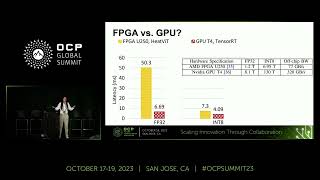
Architectural Challenges and Innovation for Compute Infrastructure Co-Design in Generative AI
Explore architectural solutions for generative AI computing challenges, focusing on heterogeneous computing infrastructure and chiplet-based systems for improved energy efficiency.
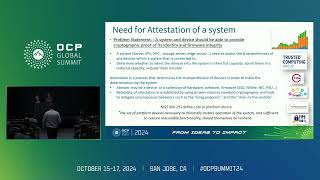
Leveraging FPGA-Based Root of Trust for Efficient, Dynamic, and Remote Platform Attestation
Discover how FPGA-based Root of Trust enables secure platform attestation, providing dynamic cryptographic proof of identity and firmware integrity in modern computing systems.
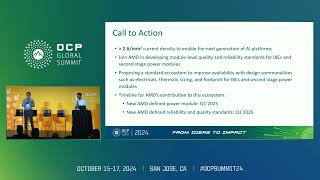
Power Delivery Challenges for AI Accelerators - Advancements and Development of High Density Solutions
Explore power delivery challenges in AI accelerators and innovative solutions for high-density power modules, focusing on AMD Mi300X's vertical stacking and ecosystem standardization.
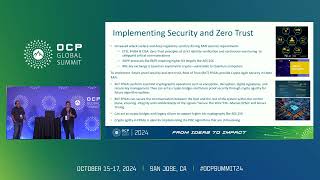
Future-Ready Green O-RAN: Leveraging FPGAs for Enhanced Security, Performance and Low Power
Discover how FPGAs enhance ORAN networks through robust security, precise synchronization, and power-efficient acceleration for optimal network performance and interoperability.
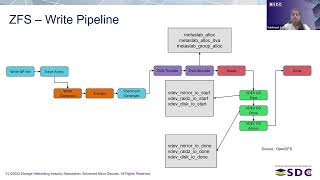
File System Acceleration Using Computational Storage for Efficient Data Storage
Explore file system acceleration techniques using computational storage, focusing on SmartSSD implementation for efficient compression and improved system performance through hardware offloading.
A2C Tangy Pack - Video Adapter for the Apple IIc/IIc+
Explore a refined FPGA video adapter for Apple IIc/IIc+, enabling HDMI and VGA output. Learn about its improved form factor and functionality.