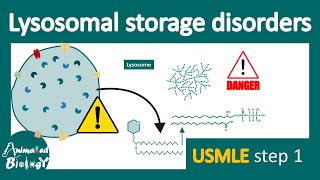
Lysosomal Storage Disorders for USMLE Step 1
Explore lysosomal storage disorders, their mechanisms, and clinical manifestations. Gain essential knowledge for USMLE Step 1 preparation through this concise, animated overview.
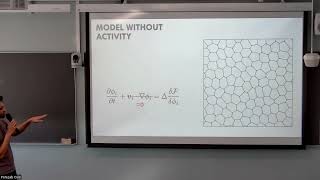
Active Reorganisation in Tissues
Explore collective cell motion in tissues, examining topology-preserving and breaking components, and their implications for wound healing, embryogenesis, and cancer metastasis.
Hack Cellular Metabolism by Targeting Mitochondria
Explore cellular metabolism hacking through mitochondrial targeting, uncovering potential impacts on health, energy, and longevity in this intriguing lightning talk.

Craig Venter Unveils Synthetic Life
Groundbreaking announcement of the first fully functioning cell controlled by synthetic DNA, marking a new era in scientific research and potential applications in biotechnology.

Experiments That Point to a New Understanding of Cancer
Groundbreaking research challenges conventional cancer theories, revealing the crucial role of cellular microenvironment in tumor development through key experiments and innovative perspectives.
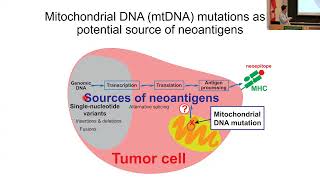
How to Generate New Hypotheses and Research Directions by Single-Cell Data Analysis
Discover advanced techniques for analyzing single-cell data to develop innovative research hypotheses and explore new directions in cancer research and mathematical oncology.

Cytokines: Subclasses and Functions - USMLE Step 1 Review
Explore cytokine subclasses and functions, essential for understanding immune system regulation and preparing for USMLE Step 1 exam.
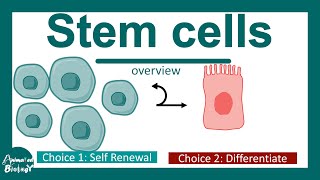
Stem Cell Overview: Types, Properties, and Fate Specification
Explore stem cells: their definition, types, and fate specification processes. Gain insights into the fundamental concepts of cellular differentiation and potential applications.
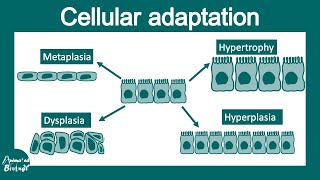
Cellular Adaptations: Hypertrophy, Hyperplasia, Atrophy, and Metaplasia - USMLE Step 1
Explore cellular adaptations: hypertrophy, hyperplasia, atrophy, and metaplasia. Gain fundamental knowledge for USMLE Step 1 preparation through clear explanations and visual aids.
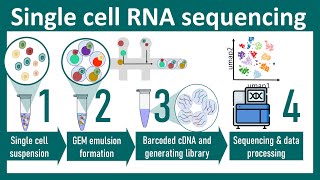
Single Cell RNA Sequencing Overview: ScRNA-seq vs Bulk Seq and Chemistry - Bio Techniques
Explore single-cell RNA sequencing: overview, comparison with bulk sequencing, chemistry, and techniques. Gain insights into this advanced genomic analysis method.
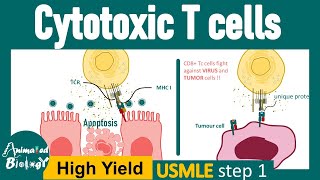
Cytotoxic T Cells and CD8+ T Cells in Viral Immunity - USMLE Guide
Explore CD8+ cytotoxic T cells' role in viral immunity, focusing on their mechanisms and importance in the immune response. Ideal for USMLE preparation.
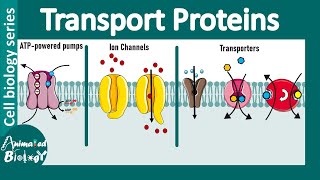
Transport Proteins in the Plasma Membrane - Channels, Carriers, and ATP-Driven Pumps
Explore transport proteins in plasma membranes, including channels, carriers, and ATP-driven pumps. Learn about membrane transport mechanisms for essential cellular functions.
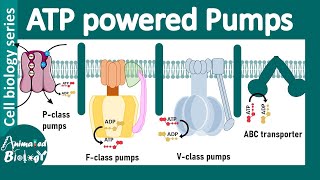
ATP-Powered Pumps: P-Type ATPase, V-Type ATPase, F-Type ATPase, and ABC Transporters
Explore ATP-powered pumps: P-type ATPase, V & F-type ATPase, and ABC transporters. Gain insights into their mechanisms and functions in cellular transport processes.

Vesicular Transport: COPI, COPII, and Clathrin-Coated Vesicles in Cell Biology
Explore vesicular transport mechanisms, including COPI, COPII, and clathrin-coated vesicles, to understand intracellular protein trafficking in cell biology.
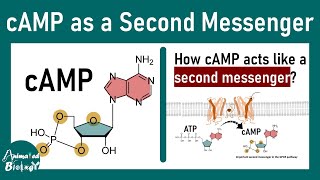
cAMP as Second Messenger - Pathway and Function
Explore the cAMP pathway and its role as a second messenger in cellular signaling, understanding its mechanisms and biological significance.
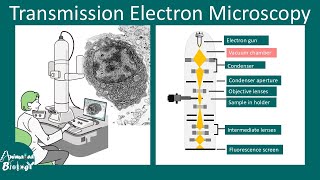
Transmission Electron Microscopy (TEM) - Principles, Applications, and Limitations
Explore transmission electron microscopy principles, applications, and limitations. Gain insights into this powerful imaging technique for studying cellular structures at high resolution.
Microtubules as Maxwell's Demons: Transport-Based Phase-Separation of a Binary System
Explore how microtubules and molecular motors self-organize into polarity-sorted domains, creating ordered structures in living cells through selective transport mechanisms.
Cell Shape Variability and Its Implications in Epithelial Monolayers
Explore cell shape variability in epithelial monolayers, its universal distribution, origins, and implications for tissue dynamics and biological functions.
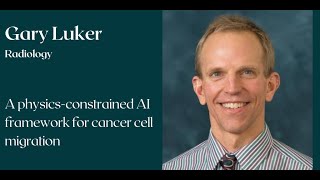
Physics-Constrained AI Framework for Cancer Cell Migration
Explore a physics-constrained AI framework for understanding cancer cell migration, enhancing research in radiology and biomedical engineering.
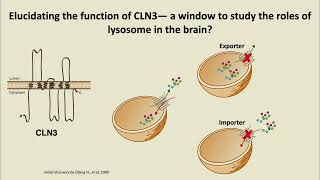
Lysosome Function in Brain Health and Disease - From Tool Development to Novel Biology
Explore lysosome function in brain health, focusing on metabolic processes, choline pathways, and novel discoveries about lysosomal proteins and their role in neurological diseases.
miRNA Export, Transport and Uptake via Extracellular Vesicles in Mammalian Cells
Explore miRNA dynamics in mammalian cells, focusing on export, transport, and uptake through extracellular vesicles. Gain insights from expert Dr. Suvendra Battacharyya.