Eukaryotes - Structures Inside the Plasma Membrane
Comprehensive review of eukaryotic cell structures, including nucleus, cytoplasm, organelles, and their functions. Includes quiz for self-assessment and reinforcement of key concepts in microbiology.
Uncouplers of Oxidative Phosphorylation and Mitochondrial Poisons - Biochemistry
Explore mitochondrial poisons and uncouplers of oxidative phosphorylation. Learn about their mechanisms, effects on cellular energy production, and clinical implications in various medical scenarios.

In Search of Immortality - The New Science of Aging and Quest for Extended Life
Nobel Laureate explores cutting-edge research on aging, questioning mortality's inevitability and discussing potential ethical implications of extended human lifespans.
The Arabidopsis Leaf Quantitative Atlas - Cellular and Subcellular Mapping Through Unified Data Integration
Explore a comprehensive cellular and subcellular mapping of Arabidopsis leaves through integrated data analysis, unveiling new insights into plant biology and leaf structure.
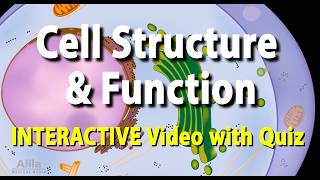
Cell Structure and Functions - Interactive Animation with Quiz
Explore cell biology basics through engaging animations and a quiz, covering plasma membrane, nucleus, cytoplasm, and organelles in this comprehensive overview.
Nuclear Envelope Proteins Regulate Chromosome Territory and Gene Loci Dynamics
Explore nuclear envelope proteins' role in regulating chromosome territories and gene loci dynamics through an in-depth lecture by Kundan Sengupta.
From Active Nematics to Mechanobiology - Class 4
Explore active nematics and mechanobiology with Julia M Yeomans, delving into cutting-edge research on active matter and its applications in biological systems.
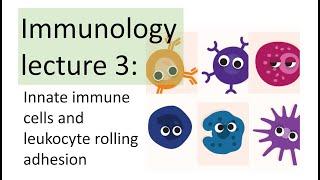
Innate Immune Cells and Leukocyte Rolling Adhesion - Lecture 3
Explore innate immune cells and the process of leukocyte rolling adhesion, including macrophages, neutrophils, basophils, and natural killer cells.
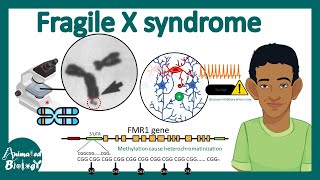
Fragile X Syndrome: Genetics, Cell Biology, and Pathology - USMLE Step 1
Explore the genetics, cell biology, and pathology of Fragile X syndrome, a crucial topic for USMLE Step 1 preparation. Gain comprehensive insights into this genetic disorder's mechanisms and clinical implications.
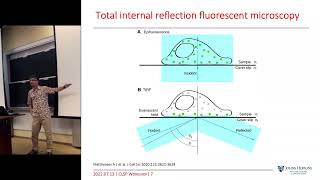
Coupled Excitable Systems: How Cells Migrate
Explore cell migration through excitable systems theory. Discover how spontaneous and directed cell movement can be explained using a comprehensive model based on wave propagation and molecular regulators.
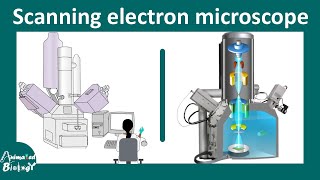
Scanning Electron Microscopy (SEM) - Working Principles and Applications in Biology
Explore the working principles and biological applications of Scanning Electron Microscopy (SEM). Discover how this powerful imaging technique reveals intricate details of microscopic structures.

From Active Nematics to Mechanobiology - Class 1
Explore active nematics and mechanobiology with Julia M Yeomans, delving into cutting-edge research in active matter physics and its biological applications.
Lessons Learned by Studying a Mucin-Dependent MAPK Pathway in a Model Fungal System
Explore signal transduction pathways, focusing on MAPK pathways in fungi. Gain insights into signal specificity, shared components, and implications for disease research.
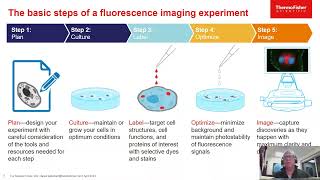
Practical Considerations for Fluorescent Cell Staining and Microscopy in Cancer Cell Biology
Explore fluorescence microscopy techniques for cancer research, covering cell staining, imaging methods, and applications in drug discovery and mechanism studies for 2D and 3D models.
SLC25A46 as a Novel Mitochondrial Regulator and Biomarker in Breast Cancer
Explore SLC25A46's role as a novel mitochondrial regulator and biomarker in breast cancer, focusing on its impact in triple-negative breast cancer and potential for targeted treatments.
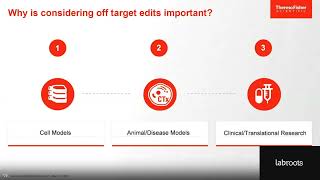
Considerations to Limit Off-Target Edits in Gene Editing Experiments
Explore strategies to minimize off-target edits in gene editing experiments. Learn best practices, considerations for different scenarios, and optimized workflows to enhance precision in genome manipulation.
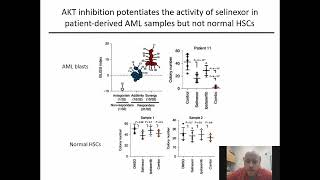
Functional Genomic Interrogation of Tumor Evolution
Explore tumor evolution using genomics and cell signaling. Uncover cancer cell death regulation, survival mechanisms, and drug resistance pathways. Gain insights into potential therapeutic targets.
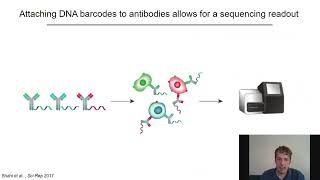
Cell Pathology Revealed by Single-Cell Genotype-Phenotype Mapping
Explore single-cell genotype-phenotype mapping to uncover cancer mutation effects and HIV latency mechanisms. Gain insights into tumor heterogeneity and disease progression using advanced genomic methods.
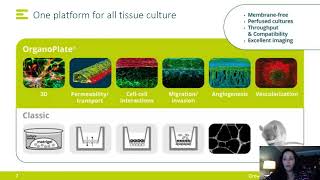
3D Cell Migration Using a Microfluidic Endothelium-on-a-Chip Model
Explore 3D cell migration using microfluidic endothelium-on-a-chip models. Learn about immune cell extravasation, vascular inflammation, and tumor infiltration in advanced in vitro systems.
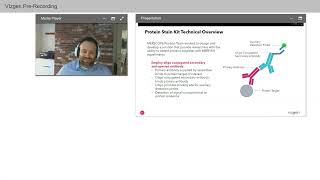
Visualizing In Situ Single-Cell Multi-Omic Gene Expression from FFPE Tissue with MERSCOPE
Explore MERSCOPE's advanced capabilities for visualizing single-cell gene expression in FFPE tissue, including protein co-detection and enhanced sample processing for deeper biological insights.
Quantitative Imaging of Nuclear Organization
Explore quantitative imaging techniques for nuclear organization with Prof. Carolyn Larabell. Discover soft x-ray tomography and cryo fluorescence tomography for near-native cellular imaging.