
Translating Polynumbers and the Derivative - Arithmetic and Geometry Math Foundations
Explore polynomials and derivatives algebraically, introducing Taylor polynomials and sub-derivatives. Challenges traditional calculus views, shifting towards Euler and Lagrange's approach to mathematical foundations.
Change of Basis and Taylor Coefficient Vectors - Wild Linear Algebra A - NJ Wildberger
Explore change of basis, vatrices, and Taylor coefficients in linear algebra. Novel framework connects coordinate vectors to calculus applications, featuring generalized Pascal matrices.
Cubic Splines Using Calculus - Wild Linear Algebra
Explore cubic spline interpolation using Taylor coefficient vectors, a novel approach to creating smooth curves through given points without requiring prior calculus knowledge.

Problems with Limits and Cauchy Sequences - Real Numbers and Limits Math Foundations
Explores challenges in defining real numbers using Cauchy sequences, discussing convergence concepts and visualizing sequences in the plane. Highlights issues in establishing arithmetic for real numbers.
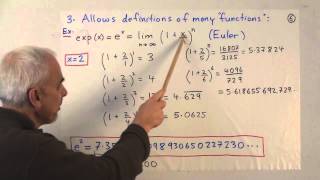
Difficulties With Real Numbers as Infinite Decimals - Real Numbers + Limits Math Foundations
Explores challenges in defining real numbers as infinite decimals from a computational perspective, highlighting technical obstacles in algorithms, arithmetic operations, and number equality recognition.

Differential Geometry - Math History - NJ Wildberger
Explore the foundations of differential geometry, from planar curves to Gaussian curvature, and its impact on modern physics. Learn about key concepts and historical contributions in this mathematical field.
Complex Numbers and Algebra - Math History - NJ Wildberger
Explore complex numbers' history, applications in cubic equations, and geometric representations. Delve into the Fundamental Theorem of Algebra and its proofs by d'Alembert and Gauss.

Calculus - Math History - N J Wildberger
Explore the historical development of calculus, from ancient Greek origins to Newton and Leibniz's revolutionary work, covering key concepts and influential figures in mathematics.
Infinity in Greek Mathematics - Math History - NJ Wildberger
Explore ancient Greek mathematics, focusing on Eudoxus and Archimedes' groundbreaking work in calculus, geometry, and mechanics. Discover their ingenious formulas and principles that laid the foundation for modern mathematics.
Bases of Polynomial Spaces - Wild Linear Algebra - NJ Wildberger
Explore polynomial spaces through linear algebra, focusing on bases, translations, and derivatives. Gain insights into calculus concepts from an algebraic perspective, emphasizing practical applications and theoretical foundations.
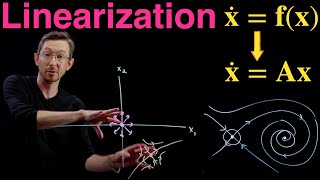
Linearizing Nonlinear Differential Equations Near a Fixed Point
Explore techniques to analyze nonlinear differential equations by linearizing dynamics near fixed points, enabling powerful linear ODE solutions for nonlinear systems.
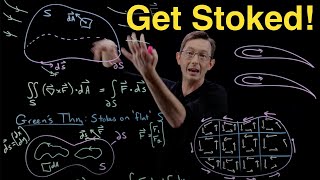
Stokes' Theorem and Green's Theorem
Explore Stokes' and Green's theorems, their geometric interpretations, and practical applications in mathematical physics, including examples and land area calculations.

The Divergence of a Vector Field: Sources and Sinks
Explore the divergence operator in vector calculus, understanding its role in quantifying local expansion or contraction of vector fields, with examples and applications in fluid dynamics.
Approximate Message Passing Algorithms
Explore Approximate Message Passing algorithms, their applications in statistical inference, and theoretical foundations including state evolution, convergence, and joint distribution analysis.
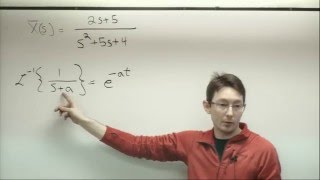
Laplace Transform and ODEs
Explore Laplace transforms and ODEs in engineering mathematics, covering key concepts like characteristic polynomials and inverse transforms with practical examples and applications.

Complex Numbers and Functions
Explore complex numbers, Euler's formula, and functions of Z in engineering mathematics, covering geometric interpretations and convergent Taylor series.
Potential Flow and Laplace's Equation
Explore potential flow and Laplace's equation in engineering mathematics, covering vector fields, heat conduction, and practical applications in fluid dynamics and thermodynamics.
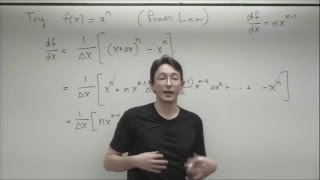
Review of Calculus and First Order Linear ODEs
Comprehensive review of calculus fundamentals and introduction to first-order linear ODEs, with practical examples and applications in engineering mathematics.

A Neat Parameterized Integral Identity
Explore a fascinating parameterized integral identity, uncovering its mathematical intricacies and applications in this engaging tutorial led by Michael Penn.
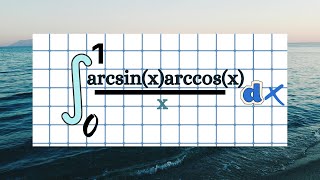
A Gnarly Inverse Trig Integral
Explore a challenging inverse trigonometric integral, delving into advanced calculus techniques for solving complex mathematical problems.
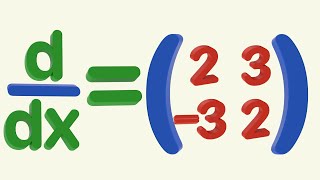
Solving a Calculus Problem Using Linear Algebra
Explore how linear algebra techniques can be applied to solve complex calculus problems, demonstrating the interconnectedness of mathematical disciplines.