Can C++ Data-Oriented Design Be Improved?
Explore innovative techniques to enhance data-oriented design in C++, focusing on optimal transformations and improved code organization for greater flexibility and maintainability.
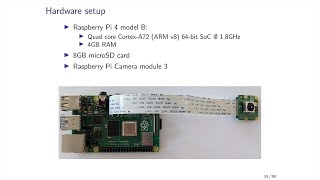
Leveraging the Power of C++ for Efficient Machine Learning on Embedded Devices
Explore practical C++ and TensorFlow Lite integration for efficient machine learning on embedded devices. Includes image classification and hand gesture recognition demonstrations on Raspberry Pi.
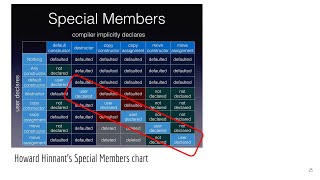
Back to Basics: The Rule of Five in C++ - Lecture
Explore the Rule of Five in C++, its origins, and potential improvements. Learn to design classes for correct copying and moving behavior, guided by Core Guidelines.

Optimizing Away C++ Virtual Functions May Be Pointless
Explore the performance impact of C++ virtual functions, challenging common optimization practices and examining alternatives through modern CPU architecture insights.
C++ in the Developing World: Why it Matters
Explore C++'s significance in developing nations, focusing on efficient coding for older hardware, educational potential, and resource-constrained programming techniques.

Building Consensus on a Set of Rules for Massive C++ Codebases
Explore strategies for building consensus on C++ coding rules across large engineering teams, drawing insights from Bloomberg's experience with naming conventions and infrastructure changes.
C++ Memory Model: From C++11 to C++23
Explore C++ memory model evolution from C++11 to C++23. Learn CPU and compiler optimizations, threading tools, and best practices for robust, thread-safe code development.

Better Code: Exploring Validity in C++ - Lecture
Explore validity in C++, covering object states, invariants, and value concepts. Gain insights into coding practices, move semantics, and exception safety for enhanced program understanding.
Getting Started with C++ - CppCon 2023
Learn essential steps for starting your C++ journey, from setting up tools to finding resources. Gain insights on compiler toolchains, libraries, and best practices for efficient learning and development.
Great C++ is_trivial - Understanding Trivial Type Traits - Lecture 2023
Explore trivial type traits in C++, their impact on efficiency, and benefits for performance optimization. Gain insights into object initialization and move semantics.

Integrating Rust with Other Languages - Get the Best of Both Worlds
Explore integrating Rust with C, C++, and Java to leverage its strengths in existing applications. Learn practical examples and techniques for seamless language interoperability.
Modernizing Falco with Go - A Story of Love and Betrayal
Explore the challenges and solutions of integrating Go with complex C++ codebases, focusing on Falco's adoption of CGO for performance-critical runtime security in cloud-native environments.
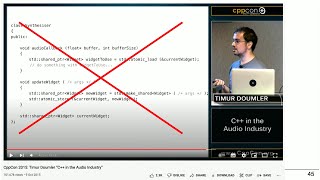
Thread Synchronization in Real-Time Audio Processing with RCU - Lecture
Explore thread synchronization in real-time audio using RCU, addressing data sharing challenges and ensuring wait-free operations on real-time threads.
Eliminating C++ Undefined Behavior, Plug-in Contract Violations, and Intel Assumptions in Legacy Codebase
Eliminate C++ undefined behavior, plug-in contract violations, and Intel assumptions in legacy codebases. Learn strategies for supporting new platforms and improving code quality in audio plugins.
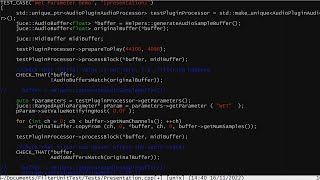
Unit Testing Audio Processors - Lecture
Learn to set up and implement unit testing for JUCE audio plugins, covering practical examples from basic checks to verifying processor output.
How to Allocate on the Audio Thread and Why You Might Want To - Allocations Considered Beneficial
Explore memory allocation on audio threads using C++'s std::pmr namespace. Learn techniques for low-latency audio processing and improve product features through efficient memory management.
CHOC: Why Can't I Stop Writing C++ Libraries or Using Backronyms? - Lecture
Explore CHOC, a free header-only C++ library for audio developers. Learn about its design, functionality, and the thought processes behind creating effective generic code.
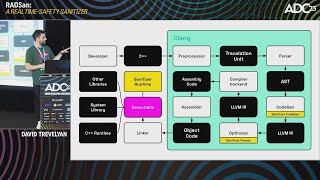
RADSan: A Realtime-Safety Sanitizer - Lecture
Explore RADSan, a realtime-safety sanitizer for LLVM. Learn about sanitizers, realtime-safety testing, RADSan's components, and how to implement it in your projects. Discuss community sharing strategies.

Real-time Confessions in C++ - The Most Common Sins in Real-Time Code
Explore common misconceptions and errors in real-time C++ audio development. Learn to avoid pitfalls and write efficient, reliable code for audio applications.
A More Intuitive Approach to Optimizing Audio DSP Code - Guiding the Compiler
Discover intuitive techniques for optimizing audio DSP code, focusing on compiler-friendly patterns and efficient benchmarking methods to enhance performance without sacrificing readability.
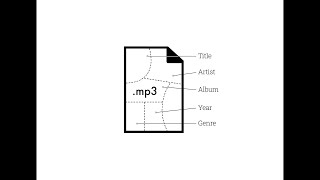
Legacy Code for the Learning Audio Engineer: Examples in C++
Explore legacy code refactoring in C++ audio software. Learn strategies for improving performance, maintainability, and understanding complex codebases through a case study of Ableton Live.