Binary Object Serialization with Data Structure Traversal and Reconstruction in C++ - Lecture
Explore advanced C++ serialization techniques for complex data structures, including binary object serialization, data traversal, and dynamic reconstruction using template argument deduction and reflection-like mechanisms.

Structured Networking in C++ - CppCon 2022
Explore structured concurrency in C++ through a networking application demo. Learn sender/receiver tasks, cancellation integration, implementation aspects, and proposed standard benefits.
A Tour of C++ Recognized User Type Categories
Explore C++ user type categories, their advantages, and pitfalls. Learn about trivial, standard layout, implicit-lifetime, aggregate, and literal types to optimize code and avoid undefined behavior.

Using std::chrono Calendar Dates for Finance in C++ - Lecture
Explore std::chrono calendar date classes for financial software, covering day-count conventions, payment schedules, and fixed income calculations. Master edge cases and efficient C++ implementations.
Aliasing in C++ - Risks, Opportunities and Techniques
Explore aliasing in C++: its risks, opportunities, and techniques. Learn to identify, avoid, and harness aliasing for better code performance and functionality.
New in Visual Studio: CMake Debugger, Better Diagnostics, and Video Game Development - CppCon 2023
Explore Visual Studio's latest features: CMake debugger, improved diagnostics, and game development tools. Enhance productivity with leak sanitizer, Unreal Engine support, and template error analysis.
How Visual Studio Code Helps You Develop More Efficiently in C++
Discover Visual Studio Code's latest C++ features for efficient development, from setup to debugging, covering IntelliSense, call hierarchy, and remote environments.
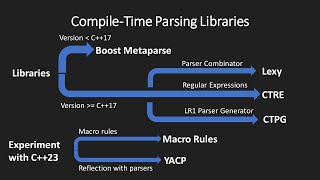
Expressive Compile-time Parsers in C++ - CppCon 2023
Explore compile-time parsers in C++ for expressive APIs and DSLs. Learn techniques, compare libraries, and discover applications in regular expressions, parser generators, and reflection features.
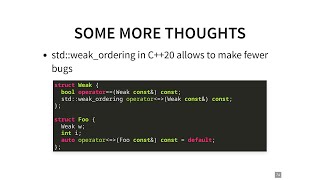
A Long Journey of Changing std::sort Implementation at Scale
Explore Google's journey in replacing std::sort in LLVM libc++, addressing challenges, improving debugging and benchmarking, and lessons learned in optimizing sorting algorithms.
Finding Your Codebase's C++ Roots
Explore C++ codebase history through genealogy techniques. Uncover past decisions, link to C++'s evolution, and improve maintainability for future development.
Thinking Functionally in C++ - Applying Functional Programming Concepts
Explore functional programming techniques in C++, enhancing code performance, reusability, and security. Learn to apply functional thinking to existing codebases using views, lambdas, and ranges.
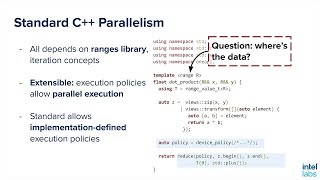
Distributed Ranges: A Model for Building Distributed Data Structures, Algorithms, and Views
Explore distributed ranges for building scalable data structures and algorithms across clusters. Learn to implement generic, interoperable distributed computing solutions using modern C++ features.

A Fast, Compliant JSON Pull Parser for Writing Robust Applications - CppCon 2023
Explore a fast, compliant JSON pull parser for robust C++ applications. Learn API design, semantic constraints, and error handling techniques to enhance JSON parsing efficiency and reliability.
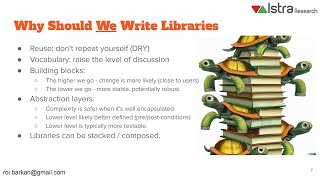
More C++ Ranges Please - Exploring Advanced Algorithms and Applications
Explore advanced C++20/23 range algorithms, including sorted ranges, range-of-ranges operations, and permutations. Gain insights into potential STL additions for enhanced expressiveness and performance.

A Journey Into Non-Virtual Polymorphism in C++ - Lecture
Explore non-virtual polymorphism in C++, covering std::any, std::variant, std::tuple, and CRTP. Discover code examples and modern techniques for handling diverse types without inheritance.
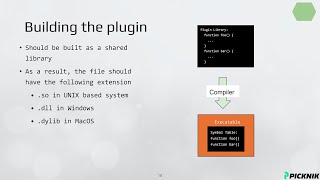
Plug-in Based Software Architecture for Robotics
Explore plug-in architecture in robotics, enhancing system functionality without altering core code. Learn implementation techniques inspired by ROS for flexible, extensible robotic software design.
Is C++23 std::mdspan a Zero-overhead Abstraction? - Lecture
Explore C++23 std::mdspan's efficiency as a zero-overhead abstraction for multi-dimensional arrays through matrix and image operations, comparing assembly output to low-level implementations.
Embracing CTAD - Class Template Argument Deduction in C++17
Explore Class Template Argument Deduction (CTAD) in C++17, its benefits, controversies, and practical applications. Form your own opinion on this divisive language feature.
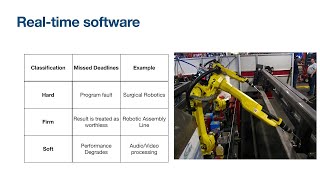
Robotics at Compile Time: Optimizing Robotics Algorithms With C++'s Compile-Time Features - Lecture
Optimize robotics algorithms using C++ compile-time features. Learn to leverage template metaprogramming, constexpr, and concepts for enhanced performance and safety in real-time robotic applications.

Undefined Behavior in C++ - What Every Programmer Should Know and Fear
Explore undefined behavior in C++: its nature, reasons for existence, implications, and practical approaches to detection and performance optimization.
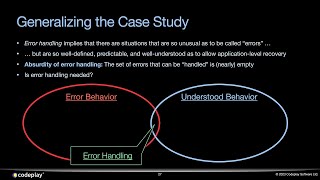
The Absurdity of Error Handling: Finding a Purpose for Errors in Safety-Critical SYCL
Explore error handling challenges in safety-critical SYCL, examining the concept of safety and rethinking error scenarios in C++ software development for critical systems.