IncludeOS - Running C++ Applications Without an Operating System
Explore IncludeOS, a library operating system that enhances performance and security. Learn about its unique features, deployment, and live application updates without downtime.

What I Talk About When I Talk About Cross Platform Development
Explore cross-platform development using the Salami Method, a system architecture that separates platform-specific code from core functionality for improved maintainability and portability.

Binary Reproducible Builds with Docker
Explore techniques for creating binary reproducible C++ applications using Docker, ensuring long-term artifact reproducibility in security-critical environments.
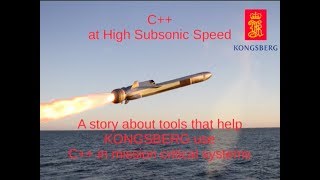
C++ at High Subsonic Speed
Explore high-performance embedded applications for missiles, covering architecture, development tools, coding standards, and optimization techniques for military-grade software.

An Introduction to WebAssembly
Explore WebAssembly as a byte-code alternative to JavaScript for web applications. Learn its workings, integration, and module creation using Rust, C++, and WebAssembly Text Format.

The Curiously Recurring Pattern of Coupled Types
Explore affine spaces in programming, their properties, and applications in C++ for stronger type safety and improved program semantics. Learn to create expressive APIs with affine types.
C++ in Containers
Explore leveraging C++ in containers for performant services, covering code integration, library inclusion, and deployment strategies, with practical demonstrations in editor and shell.

A Short Life Span - For A Regular Mess
Explore std::span through a Regular lens, examining its relation to Regular types and other C++20 concepts. Gain insights into designing and implementing regular types for intuitive usage in everyday programming.

How to Build Python-C++ Libraries
Explore challenges and solutions for building Python libraries with native code, including automation, CI pipelines, Python-CMake integration, and cross-platform compilation techniques.
The Hitchhiker's Guide to Faster Builds
Comprehensive guide to optimizing C++ build times, covering hardware, tooling, code techniques, and upcoming modules. Explores strategies for faster compilation and linking.
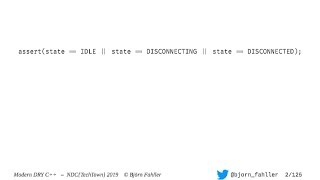
Modern Techniques for Keeping Your Code Dry
Explore modern C++ techniques for creating zero-cost abstractions to eliminate code repetition, improve clarity, and enhance functionality without compromising performance.
C++ Smart Pointers - Usage and Secrets
Explore C++ smart pointers, focusing on shared_ptr and unique_ptr. Learn usage, performance implications, and advanced techniques for effective memory management in modern C++ programming.
Embracing Modern CMake
Explore modern CMake practices for simplified, maintainable build systems. Learn to recognize legacy code, refactor effectively, and leverage new APIs for improved developer experience in C/C++ projects.

Scaling Qt from Desktop to Servers and Micro-controllers
Explore Qt's versatility across platforms, from desktop to servers and micro-controllers. Learn to leverage C++ and Qt skills for web services, embedded UIs, and optimized micro-controller development.

Testing The Tests - Mutation Testing for C++
Explore mutation testing in C++: inserting bugs to evaluate test effectiveness, with insights on implementation, advantages, and new mutation designs for improved code quality.

Interactive Command-Line Tutorials with WebAssembly
Explore WebAssembly's role in bringing command-line tools to the web, focusing on sandbox.bio's development and the technology's benefits and limitations.
Demystifying the C++ Committee
Explore the inner workings of the C++ Committee, its members, decision-making processes, and how you can contribute to shaping the future of C++.

Responsive Parallelism with Synchronization
Explore a novel approach combining static and dynamic techniques to prevent priority inversion in concurrent programs using mutexes and condition variables, enhancing responsiveness and efficiency.
Secure Code, Safe Future: Mastering Security in Critical Software Development
Discover practical secure coding techniques and strategies for developing robust software, including vulnerability management, SBOM implementation, and hands-on security practices for critical infrastructure projects.
Architecting Native Python Extension Modules - Best Practices and Trade-offs
Discover best practices for building high-performance Python extension modules in C, C++, and Rust, focusing on architecture decisions that balance speed, usability, and maintainability.

Bazel's Take on CC Shared Libraries
Dive into the mechanics of Bazel's cc_shared_library rule, understanding its unique approach to shared libraries, dependency management, and implementation using aspects in build systems.