Exception-Safe Coding in C++ - Part II
Explore advanced techniques for exception-safe C++ coding, covering best practices, implementation strategies, and transitioning legacy code to robust exception handling.
Yet Another Paradigm Shift - A Meta4 Model of Concurrency
Explore language evolution, C++ history, and a new paradigm shift in programming, using biological metaphors to propose innovative approaches to concurrency and language design.
C++ Use in High Performance Computing Within DOE - Past and Future
Exploration of C++'s role in high-performance computing at the Department of Energy, examining historical applications and future prospects in scientific and technical computing.
A First Look at Proto-0x
Explore Proto-0x, a C++11 library for building Embedded Domain-Specific Languages. Learn about EDSL design, grammars, semantic actions, and how C++11 features enhance library development.
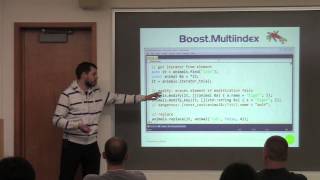
Containers in Boost
Explore advanced container libraries in Boost, including Multiindex, Bimap, CircularBuffer, and more. Learn to leverage these powerful tools to enhance your C++ projects with specialized data structures.
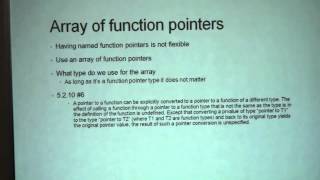
Easy Binary Compatible C++ Interfaces Across Compilers
Explore techniques for creating binary-compatible C++ interfaces across compilers, leveraging C++11 features for easy-to-define, implement, and use interfaces without external tools or extensions.
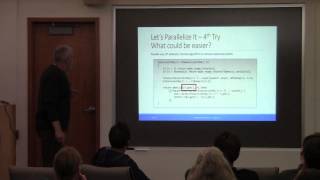
HPX - A C++ Runtime System for Parallel and Distributed Computing
Explore HPX, a C++ runtime system for parallel and distributed computing. Learn about its innovative approach to multi-core processing, asynchronous task execution, and scalable addressing for high-performance applications.
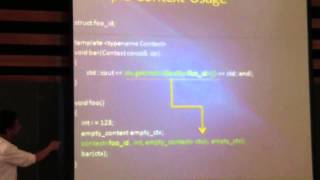
Inside Spirit X3 - Redesigning Boost.Spirit for C++11
Explore the redesign of Boost.Spirit parser framework for C++11, focusing on implementation details, design choices, and leveraging new language features to enhance simplicity and performance.
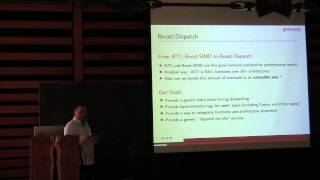
Boost.Dispatch - Generalized Tag Dispatching Infrastructure Library
Explore Boost.Dispatch, a C++ library enhancing tag dispatching for complex function specializations. Learn its protocol, benefits, and applications in high-performance computing and library design.
C++11 Use in Qt5 - Challenges and Solutions
Exploring C++11 integration in Qt5: challenges, solutions, and guidelines for maintaining compatibility with C++98/03 while leveraging new language features.
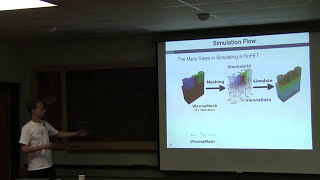
A Discussion of Selected Vienna-Libraries for Computational Science
Explore Vienna-Libraries for computational science: ViennaCL, ViennaGrid, ViennaData, ViennaMath, and ViennaFEM. Learn how C++ can better meet scientific computing needs.
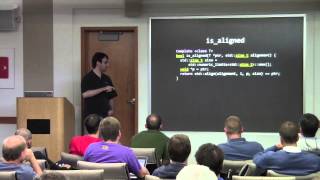
Alignment in C++ - Use, Limitations, and Extension
Explore C++ alignment: C++11 changes, limitations, and proposed solutions. Learn about adding alignment to the type system for improved type safety and performance.
A System for Resource Deadlock Prevention Using Intrusive Dynamic Analysis
Explore a framework for preventing resource deadlocks in multithreaded programs using intrusive dynamic analysis. Learn implementation, integration, and potential future developments.
Building Finite-Element Matrix Expressions with Boost Proto and the Eigen Library
Learn to integrate Eigen with Boost Proto for finite-element matrix expressions, including user-defined functions and external libraries in domain-specific languages.
Dynamic, Recursive, Heterogeneous Types in Statically-Typed Languages
Explore implementing dynamic, recursive, heterogeneous dictionaries in C++ using static typing features, bridging the gap between dynamic and static languages for easier data manipulation.
The Projucer - Live Coding with C++ and the LLVM JIT Engine
Explore real-time C++ execution and refactoring using Clang and LLVM JIT in the Projucer IDE. Learn architecture, implementation details, and future possibilities for live coding.
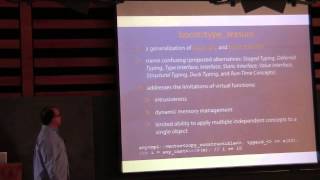
Dynamic C++
Explore C++ type erasure techniques for efficient data conversion between diverse formats. Compare popular solutions, examining design, capabilities, and performance benchmarks.
Look Ma, Update DB to HTML5 Using C++ - No Hands
Explore seamless data transport from SQL databases to HTML5 interfaces using WebSocket and POCO framework, enhancing performance and enabling real-time updates without polling.
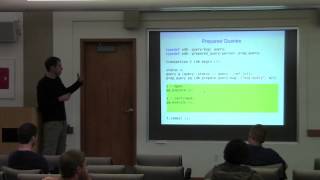
ODB, an ORM for C++
Explore ODB, an open-source ORM system for C++. Learn about C++11 support, database schema evolution, polymorphism, and multi-database capabilities for efficient object persistence in relational databases.
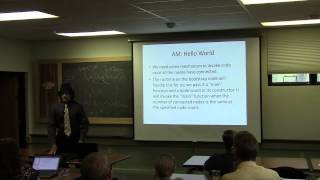
Boost.Asio and Boost.Serialization - Design Patterns for Object Transmission
Explore C++ network programming using Boost.Asio and Boost.Serialization for efficient object transmission, covering complex data structures, serialization techniques, and asynchronous communication patterns.
Boost.Graph for Beginners
Learn to use Boost.Graph library's algorithms for graph operations, with examples of input/output parameters and function calls to simplify implementation in C++ projects.