Bringing Business Logic Back to C++
Exploring techniques to enhance C++ expressiveness for business logic, including polymorphic wrappers, open methods, dynamic mixins, and hotswapping, to improve efficiency and maintainability.
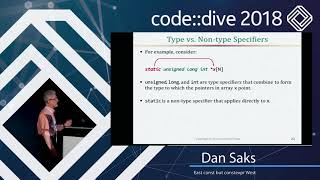
East Const but Constexpr West
Explore C++ declaration syntax, focusing on const and constexpr placement. Learn insights on "East const" and why it differs for constexpr.
Character Encodings Hate Us All
Explore character encoding challenges, common pitfalls, and solutions across programming languages. Learn to handle multilingual text and avoid encoding-related issues in software development.
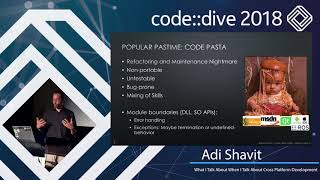
What I Talk About When I Talk About Cross Platform Development
Explore the Salami Method for efficient cross-platform development, focusing on separating platform-specific code from core functionality to create maintainable, testable, and portable systems.
Data-Oriented Design in Practice
Explore data-oriented design as an alternative to OOP in C++, focusing on practical examples from web browsers to demonstrate improved performance, scalability, and maintainability.
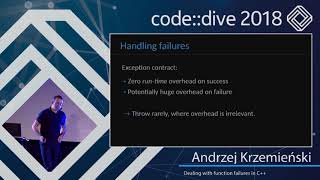
Dealing with Function Failures in C++
Explores C++ function failure reporting methods, comparing exceptions and error codes, and examines how C++17 features and the Outcome library impact failure handling approaches.
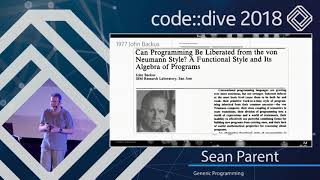
Generic Programming
Explore the origins, concepts, and impact of Generic Programming on software development, featuring insights from industry pioneers and its influence on C++ evolution.
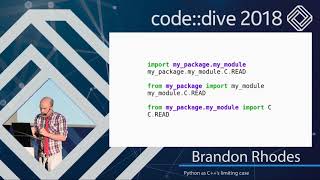
Python as C++’s Limiting Case
Explore Python's memory model as an extension of C++ conventions, examining language design trade-offs, performance considerations, and evolving programming paradigms.

Preconditions, Postconditions, Invariants – How They
Explore Design by Contract principles: preconditions, postconditions, and invariants. Learn their practical applications and benefits for software development and testing.
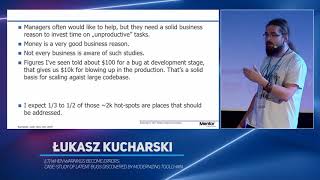
When Warnings Become Errors - A Case-Study of Latent Bugs
Explore real-world examples of latent C++ bugs uncovered during compiler updates and static analysis, highlighting the importance of modern tooling for code quality and maintainability.

Modern Techniques for Keeping Your Code DRY
Explore modern C++ techniques for creating zero-cost abstractions that eliminate code repetition, improve readability, and enhance functionality without sacrificing performance.
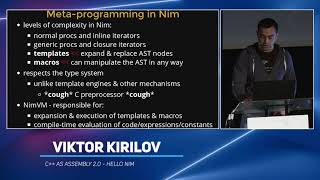
C++ as Assembly 2.0 - Hello Nim
Explore Nim, a powerful systems programming language with metaprogramming capabilities, as an alternative to C++. Learn its features, compilation model, and advantages over traditional languages.
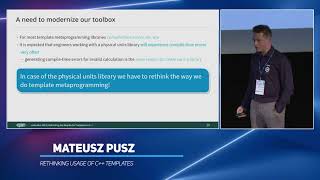
Rethinking Usage of C++ Templates
Explore advanced C++ template metaprogramming techniques, focusing on improving compile-time errors, type names, and compilation speed. Learn from real-world examples and benchmarks to optimize your templated code design.
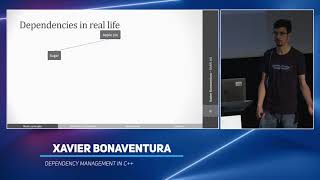
Dependency Management in C++
Explore dependency management in C++, covering types, impacts, and C++20 Modules. Learn to better understand and handle dependencies in software projects.

C++ - λ Demystified
Explore C++ lambdas: implementation, compiler-generated code, and practical applications. Gain insights for efficient coding, especially in embedded systems.
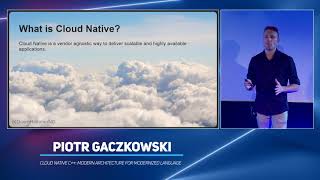
Cloud Native C++ - Modern Architecture for Cloud Applications
Explore how modern C++ can be leveraged for cloud-native applications, offering high performance without sacrificing readability and maintainability. Learn to adapt C++ for cloud deployment without rebuilding in other frameworks.
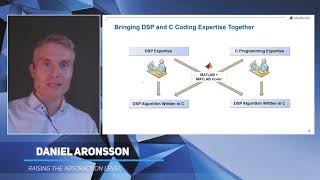
Raising the Abstraction Level
Explore how high-level MATLAB code can be converted to efficient C++ or CUDA, integrating hand-coded sources and using modern tools for bug detection and runtime error prevention.
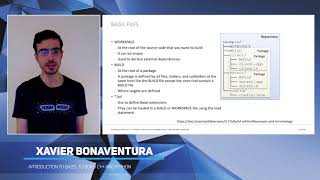
Introduction to Bazel to Build C++ and Python
Discover Bazel: a fast, reliable, multi-platform build tool for C++ and Python. Learn to define libraries, binaries, tests, combine languages, and set up toolchains in this comprehensive introduction.
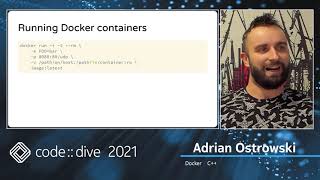
Docker C++
Containerize C++ apps effortlessly with Docker and CMake. Learn to create uniform build environments, simplify cross-platform development, and easily deploy complex applications on developer VMs.

The Markable Library
Explore the Markable library, an alternative to std::optional that saves memory by repurposing an existing value. Learn its usage, benefits, and comparison to std::optional in C++ development.
How It's Done - Sorting Algorithms
Explore various sorting algorithms, their implementations in C and C++, and optimization techniques. Gain insights into the evolution of sorting methods from basic to highly efficient approaches used in modern libraries.