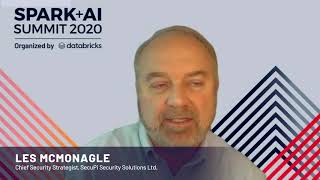
Encryption and Masking for Sensitive Apache Spark Analytics Addressing CCPA and Governance
Practical methods for balancing data encryption and analytics in Apache Spark, addressing CCPA and governance requirements while maintaining analytical value.
Time Series Analysis Visualizations with Matplotlib, Seaborn, and Plotly
Explore time series visualization techniques using Matplotlib, Seaborn, and Plotly. Learn to style charts and analyze trends, seasonality, and moving averages in data science applications.
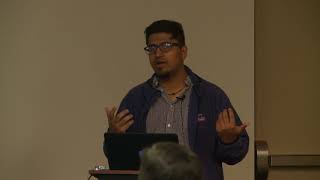
Security Defense through Gamification and CTFs - No One Left Behind
Innovative approach to cybersecurity training using gamification and CTF concepts for all employees. Engages non-technical staff, promotes learning by doing, and fosters friendly competition to enhance security awareness and defense skills.

Three Profiles of OAuth2 for Identity and Access Management - 2016
Explore OAuth2 profiles for identity and access management, covering OpenID Connect, UMA, and Google's approach. Learn strategies for implementing OAuth2 in enterprise security infrastructure.
How to Invest with Data Science - Technical Analysis and Portfolio Optimization
Learn data science techniques for investing, covering stock analysis, portfolio optimization, and advanced indicators to make informed investment decisions.
Testing Stock Trading Strategies with Ichimoku Analysis
Learn to test stock trading strategies using Python, focusing on Ichimoku analysis with real-time data, customizable charts, and performance evaluation techniques.
Finding the Best Investments Using Technical Analysis
Learn technical analysis techniques to identify top-performing securities across sectors, create diversified portfolios, and use the Ichimoku Cloud for momentum trading. Includes hands-on Python coding for data analysis and visualization.
Getting Started with Technical Analysis 2 - Bollinger Bands and Advanced Indicators
Learn advanced technical analysis techniques including Bollinger Bands, moving averages, support/resistance lines, and candlestick patterns using Python and data science libraries for stock market analysis.
Getting Started with Technical Analysis Using Python
Learn Python-based technical analysis for stock market predictions, covering data retrieval, calculations, and visualization using libraries like Pandas and Plotly. Ideal for beginners in financial data science.
Technical Analysis - Ichimoku Indicator Tutorial
Learn to use the Ichimoku indicator for comprehensive technical analysis, covering momentum, support, and resistance through its 5 lines. Gain insights into 11 analysis methods using Python and real-time data visualization.
Technical Analysis: RSI and Bollinger Bands Using Python
Learn to perform technical analysis using Python, focusing on RSI and Bollinger Bands. Create customizable charts with real-time data for stock market predictions using various data science libraries.
Technical Analysis: MACD and Stochastic Oscillator Using Python
Learn to use Python for stock market technical analysis, focusing on MACD and Stochastic Oscillator. Covers data retrieval, chart creation, and multiple technical indicators using various data science libraries.
Technical Analysis with Python for Stock Market Predictions
Learn Python-based technical analysis for stock market predictions, covering data retrieval, chart patterns, moving averages, and advanced visualization techniques using data science libraries.
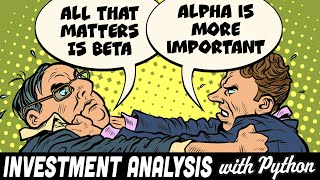
Investment Analysis: Python for Finance - Part 9
Learn investment analysis using Python: calculate Alpha, Beta, CAPM, expected returns, and Sharpe Ratio. Practical coding examples provided for hands-on experience in financial data analysis and portfolio management.
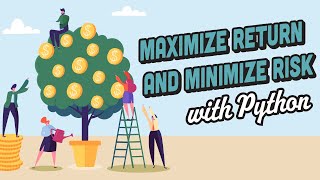
Investment Portfolio Management with Python - Maximizing Return and Minimizing Risk
Learn to maximize returns and minimize risk using Markowitz Portfolio Optimization and Sharpe Ratio. Master efficient frontier, volatility analysis, and advanced data science techniques for investment portfolio management.
Best Stocks to Buy Now - Python for Finance - Part 6
Learn to automate stock market predictions using Python, focusing on regression analysis to identify high-momentum stocks and forecast potential returns across the entire market.
Low Risk Investments - Python for Finance 4
Learn Python techniques for analyzing low-risk investments, including portfolio creation, risk assessment, ROI analysis, and stock sector diversification using data science libraries.
Python for Finance: Downloading and Analyzing Stock Data
Learn to analyze stock market data using Python, covering Numpy, Pandas, data cleaning, and calculating financial metrics for thousands of stocks.
Moving Towards a Journal-centric Publication Model for CHI - Opportunities and Risks
Exploring alternative publication models for CHI, examining journal-centric approaches, and discussing opportunities and risks for the SIGCHI community's scholarly output.

Global Investing in Tech - Pattern Recognition, Founder Traits, and Momentum
Explore global tech investing with insights on emerging markets, successful founder traits, and AI's worldwide impact. Learn about effective strategies, market expansion, and innovative business models in developing economies.

Robin Havea- On the Boundary of the Numerical Range
Explore challenges in constructive mathematics regarding the boundary and border of the numerical range, focusing on convexity analysis and its implications in various settings.