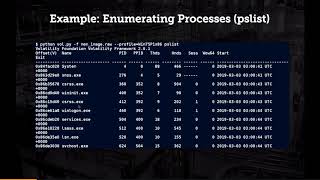
Investigating Malware Using Memory Forensics - A Practical Approach
Practical approach to memory forensics for malware detection and investigation, covering techniques, demonstrations, and analysis of various malware types and rootkits.

Keeping Secrets - Emerging Practice in Database Encryption
Explore emerging database encryption practices for high-sensitivity workloads, covering threat models, production ops, data in-use protection, and blind administrator approaches.
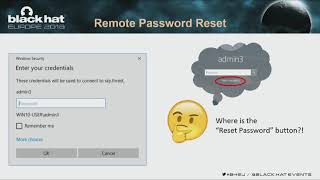
When Everyone's Dog is Named Fluffy - Abusing the Brand New Security Questions in Windows to Gain Domain-Wide Persistence
Explore Windows 10 security questions vulnerability, offering insights on exploiting this feature for persistent access and domain-wide compromise.

IoT Malware - Comprehensive Survey, Analysis Framework and Case Studies
Comprehensive exploration of IoT malware, covering its evolution, analysis frameworks, and real-world case studies. Insights into vulnerabilities, detection methods, and future challenges in securing connected devices.
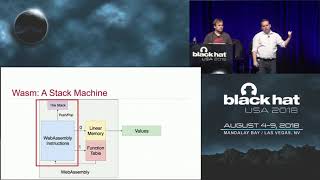
WebAssembly - A New World of Native Exploits on the Browser
Explore WebAssembly's security risks, low-level semantics, and potential vulnerabilities in browser-based applications. Learn about linear memory, function tables, and mitigation strategies.
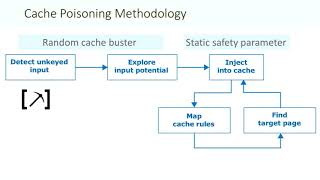
Practical Web Cache Poisoning - Redefining 'Unexploitable'
Explore web cache poisoning techniques to compromise websites by exploiting caches and content delivery networks, turning them into exploit delivery systems targeting unsuspecting visitors.
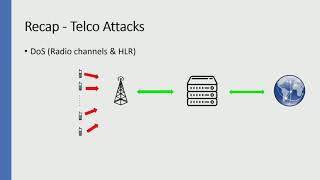
LTE Network Automation Under Threat
Explore vulnerabilities in 4G/LTE network automation, including rogue base stations, SON protocols, and handover hijacking. Learn about potential threats and solutions for mobile network security.
Reconstruct the World from Vanished Shadow - Recovering Deleted VSS Snapshots
Explore techniques for recovering deleted VSS snapshots in Windows, crucial for computer forensics and file restoration. Learn about snapshot management, data structures, and practical demonstrations.
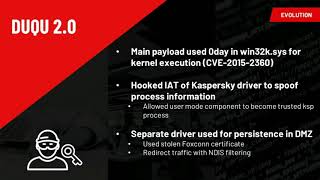
Kernel Mode Threats and Practical Defenses
Explore advanced kernel mode threats, Microsoft's defenses, and practical strategies for detecting and mitigating sophisticated attacks on Windows operating systems.

Breaking the IIoT - Hacking Industrial Control Gateways
Comprehensive exploration of security vulnerabilities in industrial control gateways, from protocol attacks to firmware reverse engineering, with live demonstrations on real devices.

AI & ML in Cyber Security - Why Algorithms Are Dangerous
Explore limitations of machine learning in cybersecurity, dangers of blind algorithm application, and alternative approaches like probabilistic inference for more effective threat detection and analysis.

Identity Theft - Attacks on SSO Systems
Explore vulnerabilities in SAML-based SSO systems, focusing on XML signature attacks. Learn about potential exploits, threat models, and remediation strategies for securing identity management.
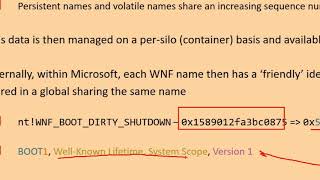
Windows Notification Facility - Peeling the Onion of the Most Undocumented Kernel Attack Surface Yet
Explore the undocumented Windows Notification Facility, its architecture, and potential security implications. Learn about state names, data publishing, and consuming, as well as attack vectors and defensive strategies.
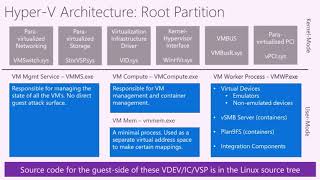
A Dive into Hyper-V Architecture and Vulnerabilities
Explore Hyper-V architecture, vulnerabilities, and security implications in virtualization technology. Gain insights into guest-to-host exploits and platform security challenges.
Running a Security Operations Center - Challenges, Solutions and Key Learnings
Explore challenges and solutions in operationalizing a Security Operations Center, covering threat hunting, behavioral analytics, and rapid product deployment for enhanced cybersecurity.
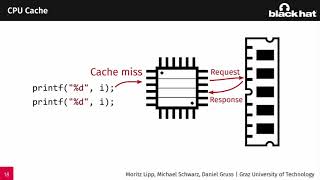
Meltdown - Basics, Details, Consequences
Explore Meltdown, a critical security vulnerability that breaks fundamental isolation between user applications and operating systems, allowing unauthorized access to system memory and sensitive data.
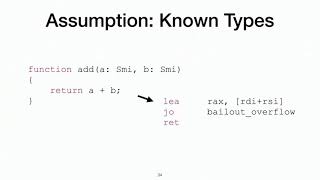
Attacking Client-Side JIT Compilers
Explore JIT compiler security in JavaScript engines, focusing on challenges, solutions, and potential vulnerabilities. Learn about optimization techniques and their impact on browser exploitation.

Screaming Channels - When Electromagnetic Side Channels Meet Radio Transceivers
Novel side-channel attacks on mixed-design chips exploiting electromagnetic leaks in radio signals, potentially breaking cryptography over large distances. Explores discovery, impact, and countermeasures.
XOM-Switch - Hiding Your Code from Advanced Code Reuse Attacks in One Shot
Discover XOM-switch, a security tool enabling XOM on Linux applications using PKU. Learn about its end-to-end approach for protecting deployed apps without source code or heavy binary rewriting.

A New Era of SSRF - Exploiting URL Parser in Trending Programming Languages
Explore a new SSRF exploit technique targeting URL parsers in popular programming languages. Learn about protocol smuggling, fuzzing tools, and discover vulnerabilities in widely-used libraries.
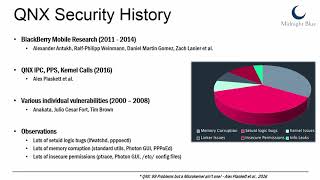
Analyzing & Breaking QNX Exploit Mitigations and PRNGs for Embedded Systems
Dissection of QNX's security features, including exploit mitigations and random number generators, for embedded systems in automotive, industrial, defense, and medical sectors.