Breaking BHAD - Abusing Belkin Home Automation Devices
Exploración de vulnerabilidades en dispositivos de automatización del hogar Belkin WeMo, revelando fallas de seguridad y demostrando ataques potenciales en la infraestructura IoT.

Witchcraft Compiler Collection - Towards Self Aware Computer Programs
Explore innovative reverse engineering techniques to create self-aware binary code through relinking, binary reflection, and automated API prototyping, enhancing code reuse and debugging capabilities.
How Your DRAM Becomes a Security Problem
Explore DRAM security vulnerabilities and side-channel attacks targeting row buffers, with implications for various devices and systems regardless of software or OS.

Exploiting Curiosity and Context - How to Make People Click on a Dangerous Link
Explores how curiosity and context influence clicking on dangerous links, analyzing user behavior and reasoning to improve cybersecurity strategies and protection mechanisms.
Applied Machine Learning for Data Exfil and Other Fun Topics
Explore machine learning applications in cybersecurity, including data exfiltration, network mapping, and botnet detection. Hands-on examples and tool demonstrations provided for practical implementation.
A Journey From JNDI-LDAP Manipulation to Remote Code Execution Dream Land
Explore JNDI/LDAP vulnerabilities and exploitation techniques, from basic concepts to advanced remote code execution methods in Java-based enterprise applications.
Hell on Earth - From Browser to System Compromise
Explore cutting-edge browser exploitation techniques and kernel vulnerabilities from Pwn2Own 2016. Analyze attack vectors, root causes, and remediation strategies for achieving system-level access.

The Linux Kernel Hidden Inside Windows 10
Explore the Linux kernel in Windows 10, its implementation, security implications, and potential vulnerabilities. Learn about system calls, process management, and attack surfaces in this unique OS integration.

HTTP/2 & QUIC - Teaching Good Protocols to Do Bad Things
Explore multiplexing attacks in QUIC and HTTP/2 protocols, their impact on network security, and defense strategies against potential threats in modern web technologies.
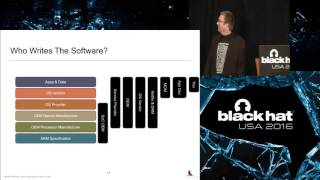
Can You Trust Me Now? An Exploration Into the Mobile Threat Landscape
Comprehensive exploration of mobile security, examining hardware, software, and network components across platforms to uncover vulnerabilities and discuss protective measures for data and devices.
Breaking Payment Points of Interaction
Explore vulnerabilities in payment systems, focusing on bypassing protections in points of interaction devices. Live demonstrations showcase EMV bypassing and PIN protection avoidance.
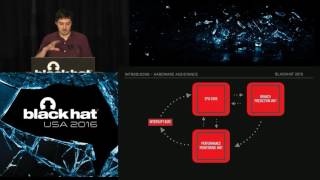
Capturing 0Day Exploits With Perfectly Placed Hardware Traps
Innovative hardware-assisted approach to prevent control-flow hijack attacks, using processor features for real-time detection and prevention of abnormal branches in Windows and Linux systems.
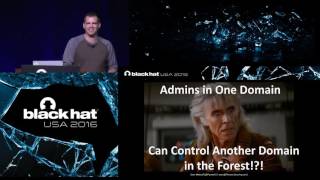
Beyond the MCSE - Active Directory for the Security Professional
Comprehensive exploration of Active Directory's critical components, security features, and vulnerabilities, empowering security professionals to better defend enterprise resources against sophisticated attacks.
Augmenting Static Analysis Using Pintool - Ablation
Extracts runtime information to enhance static analysis, resolving virtual calls in C++ binaries and visually comparing samples for efficient vulnerability research and code auditing.
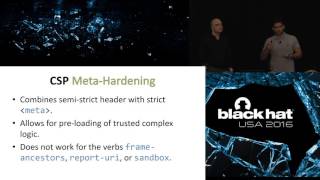
Abusing Bleeding Edge Web Standards for Appsec Glory
Explore risks and mitigation strategies for modern web security standards like SRI, CSP, and HPKP. Learn about implementation challenges, trade-offs, and potential exploits in legacy applications.

A Retrospective on the Use of Export Cryptography
Explores vulnerabilities in TLS due to export-grade cryptography, examining FREAK, Logjam, and Drown attacks, their impact, and lessons for future cryptographic protocol design and implementation.
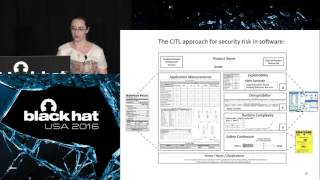
Measuring Adversary Costs to Exploit Commercial Software
Quantitative analysis of software security across platforms, revealing surprising insights for informed decision-making in product selection and vulnerability assessment.
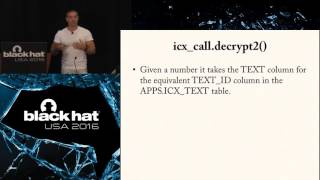
Hackproofing Oracle EBusiness Suite
Explore vulnerabilities in Oracle eBusiness Suite and learn effective strategies to secure systems against potential attacks, including remote code execution and SQL injection.
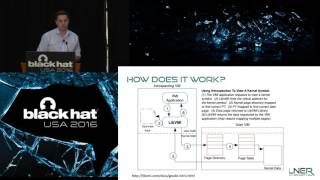
Memory Forensics Using Virtual Machine Introspection for Cloud Computing
Explore memory forensics in cloud environments using virtual machine introspection. Learn techniques for trustworthy data collection without system interference, ideal for digital forensics in virtualized settings.
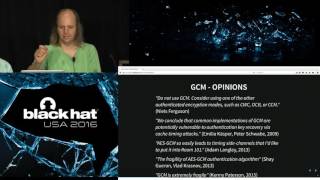
Nonce-Disrespecting Adversaries - Practical Forgery Attacks on GCM in TLS
Explore nonce-reuse vulnerabilities in GCM encryption for TLS, including Internet-wide scans, proof-of-concept attacks, and implications for HTTPS security.
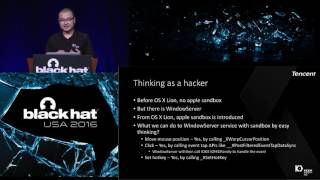
Subverting Apple Graphics - Practical Approaches to Remotely Gaining Root
Explore techniques for subverting Apple graphics to gain root access remotely. Learn about vulnerabilities in userland and kernel components, and practical exploitation methods for both OS X and iOS systems.