
Applied Self-Driving Car Security
Explore self-driving car security with industry experts, covering technology, potential attacks, and defense strategies for this emerging field.

None of My Pixel is Your Business - Active Watermarking Cancellation Against Video Streaming Service
Explore techniques to remove intrusive watermarks from live video streams, addressing user concerns and discussing the implications for streaming services and content protection.
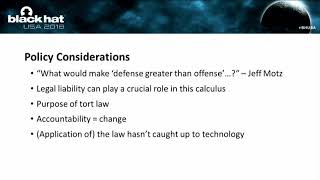
Legal Liability for IOT Cybersecurity Vulnerabilities
Explore the impending surge of litigation surrounding IoT cybersecurity defects and its implications for software liability and industry practices.
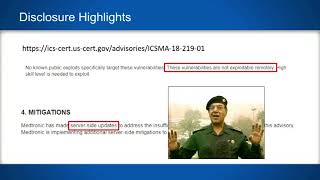
Understanding and Exploiting Implanted Medical Devices
Explore vulnerabilities in implanted medical devices, including pacemakers and neurostimulators. Learn about remote exploitation risks, therapy disruption, and patient safety concerns in this technical presentation.

Protecting the Protector - Hardening Machine Learning Defenses Against Adversarial Attacks
Strategies for enhancing machine learning model resilience against tampering, comparing cloud and client-based models, and exploring defense techniques for endpoint protection systems.
Unpacking the Packed Unpacker - Reverse Engineering an Android Anti-Analysis Native Library
Gain tools and techniques to expose hidden Android malware through reverse engineering of anti-analysis native libraries, enhancing your ability to combat mobile threats.

Automating Exploit Generation for Arbitrary Types of Kernel Vulnerabilities
Explore automated exploit generation techniques for kernel vulnerabilities, reducing development time from thousands of hours to minutes and enhancing cybersecurity practices.
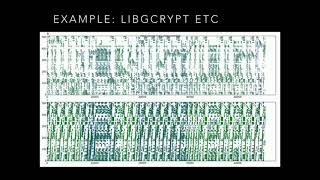
TLBleed - When Protecting Your CPU Caches is Not Enough
Explore TLBleed, a novel side-channel attack leaking information from Translation Lookaside Buffers, demonstrating vulnerabilities beyond CPU caches and challenging current security measures.
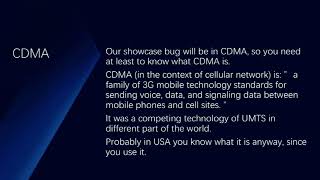
Exploitation of a Modern Smartphone Baseband
Explore smartphone baseband security, learn to find and exploit memory corruption bugs in modern devices. Gain insights into design, countermeasures, and practical hacking techniques.
Drill Apple Core - Up and Down - Fuzz Apple Core Component in Kernel and User Mode for Fun and Profit
Explore kernel sanitizers, XNU syscall API patterns, and code coverage techniques for Apple systems. Live demo of macOS root access using 0-day vulnerabilities discovered through fuzzing.
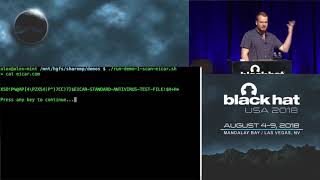
Windows Offender - Reverse Engineering Windows Defender's Antivirus Emulator
Dive into the internals of Windows Defender's antivirus emulator, exploring its binary analysis techniques for potentially malicious PE files. Gain unique insights into reverse engineering antivirus systems.
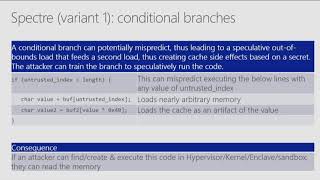
Wrangling with the Ghost - An Inside Story of Mitigating Speculative Execution Side Channel Vulnerabilities
Explore Microsoft's approach to mitigating speculative execution vulnerabilities, including research, collaboration, and industry-wide efforts. Learn about Spectre, Meltdown, and strategies for robust security measures.
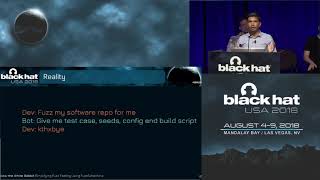
Follow the White Rabbit - Simplifying Fuzz Testing Using FuzzExMachina
Explore FuzzExMachina, a framework for efficient fuzz testing. Learn how it uncovered 11 crashes and 6 exploitable vulnerabilities in Arch Linux packages, simplifying security analysis.
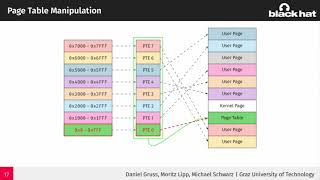
Another Flip in the Row
Explore the Rowhammer bug in DRAM modules, its security implications, exploitation techniques, and potential mitigations in this comprehensive overview of hardware vulnerabilities.
Playback - A TLS 1.3 Story
Explore TLS 1.3's 0-RTT feature, its risks, and real-world replay attacks. Learn about potential solutions and mitigation controls for secure deployment of TLS 1.3-supported software.
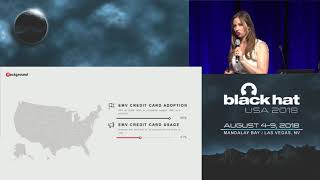
For the Love of Money - Finding and Exploiting Vulnerabilities in Mobile Point of Sales Systems
Explore security vulnerabilities in mobile payment systems, focusing on economic implications, fraud risks, and outdated card standards. Learn about testing methods and potential attack vectors.

It's a PHP Unserialization Vulnerability Jim, but Not as We Know It
Explore PHP unserialization vulnerabilities, including RCE exploits in popular web applications. Learn attack methodologies, file formats, and defense strategies.
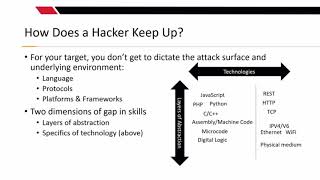
An Attacker Looks at Docker - Approaching Multi-Container Applications
Explore containerization's impact on offensive security operations, focusing on Docker's implications for penetration testing and multi-container application vulnerabilities.
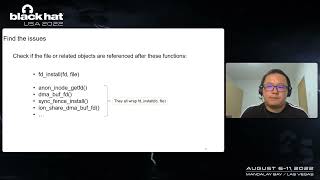
Devils Are in the File Descriptors - It Is Time To Catch Them All
Explore vulnerabilities in Linux kernel file descriptor operations, focusing on high-risk scenarios in exporting and importing, and learn to identify and address these security concerns.
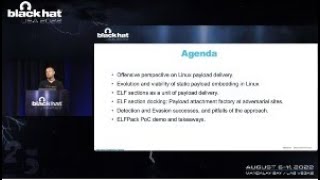
ELF Section Docking - Revisiting Stageless Payload Delivery
Explore advanced techniques for embedding and loading static payloads in Linux malware, focusing on ELF binary construction and section manipulation to enhance payload survival and evasion.
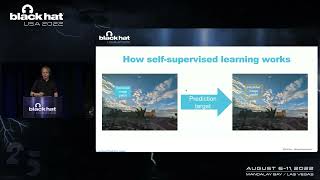
How Supercomputer-Scale Neural Network Models Apply to Defensive Cybersecurity Problems
Explore how large-scale neural networks revolutionize cybersecurity, enabling custom explanations of attacker behavior and improved threat detection with limited data. Learn to leverage public models like GPT-3 for security applications.