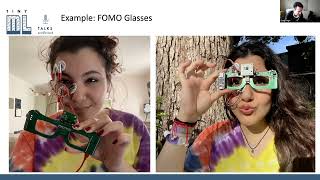
TinyML4STEM - Using TinyML for Neuroscience in K12
Explore how tinyML and neuroscience combine to create engaging STEM education experiences for K-12 students, featuring insights from a successful pilot collaboration with Backyard Brains.
Kubernetes from Scratch for Neuroscientific Research
Explore how the Blue Brain Project implemented Kubernetes for neuroscientific research, detailing their journey, challenges, and solutions in building a tailored cluster setup for scientific organizations.
Alan Turing and the Other Theory of Computing and Can a Machine Be Conscious?
Explore neuroscience advances in understanding consciousness, including the Global Workspace Model and its computational implications, with insights on free will and determinism.
Safety and Open Source Software: Evolution and Future Directions
Explore the evolution and future of safety in open source software, focusing on challenges, best practices, and the ELISA Project for safety-critical systems.
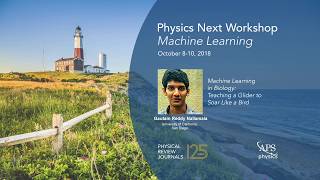
Machine Learning in Biology - Teaching a Glider to Soar Like a Bird
Explore machine learning's role in enhancing autonomous glider performance, inspired by bird soaring techniques and atmospheric dynamics.
Dialogues Between Neuroscience and Society - AI and Machine Learning's Impact on Human Experience
Pioneering AI expert discusses transformative potential of machine learning, emphasizing ethical stewardship to augment human experience and serve diverse global populations.
Reproducible Multi Element System Composition with Linux, Xen and Zephyr
Explore system architectures for safety-critical systems using Linux, Xen, and Zephyr. Learn about reproducible prototyping, documentation, and collaboration in open-source projects for complex systems.
Fast Growth: Disrupting Artificial Intelligence
Explore AI disruption with leaders from Unbabel, HyperScience, Bonsai AI, and ProFinda as they discuss growth, corporate impact, and the future of human-AI interaction.
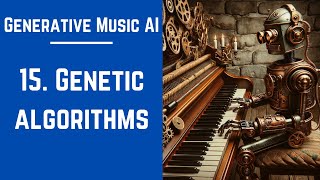
Genetic Algorithms for Generative Music AI - Lecture 15
Explore genetic algorithms for music generation, covering key concepts, applications, and step-by-step processes. Learn about music encoding, fitness functions, and interactive approaches in AI-driven composition.
Shut Your Laptop and Go to Sleep - The Impact of Sleep Deprivation on DevOps Teams
Explore the impact of sleep deprivation on DevOps teams, examining real-world experiences, measurement techniques, and effective solutions for improving productivity and well-being in tech organizations.

Elements Towards Functional Safety Use Cases with Linux in Automotive
Explore Linux's role in automotive functional safety, focusing on warning signs in instrument clusters as a starting point for more complex safety-critical applications.

How ELISA Is Helping Use Linux in Safety-Critical Systems
Explore how the ELISA Project facilitates Linux adoption in safety-critical systems, enhancing reliability and security for critical applications across industries.
Enabling Linux in Safety-Critical Applications - ELISA Project Overview
Explore ELISA project's efforts to enable Linux in safety-critical systems, covering goals, strategies, work groups, and challenges in automotive, medical, and industrial IoT applications.
Computer Vision to Phenotype Human Diseases Across Physical and Molecular Scales
Innovative computer vision algorithms for disease phenotyping across scales, from video-based heart function assessment to spatial transcriptomics and immune cell dynamics, with focus on robust and human-compatible AI.
Machine Learning-based Design of Proteins and Small Molecules
Explore machine learning approaches for protein engineering, focusing on data-driven design to create proteins with desired properties and the challenges of extrapolation in predictive modeling.
Accelerating Scientific Discovery in Biomedicine Using Artificial Intelligence
Exploring AI's potential to accelerate biomedical discoveries, focusing on genomics and personalized medicine. Discusses cost-effective genome sequencing, automated literature curation, and reliable disease risk prediction.
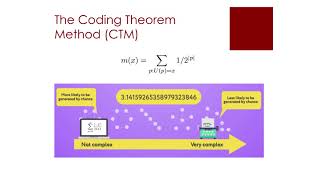
Computing the Uncomputable: The Coding Theorem Method - Unit 6, Module 2
Explore the Coding Theorem Method for computing uncomputable functions, delving into algorithmic information dynamics and its applications in causality and living systems.
Cool Genes - Using Genomics and Big Data for Disease Research with Docker
Explore genomics and big data in medical research using Docker. Learn how TGen leverages containerization for bioinformatics workloads, managing large-scale compute clusters to accelerate disease understanding and treatment discovery.
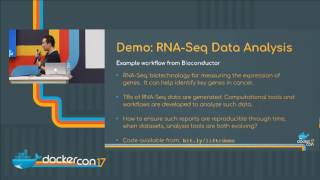
Persistent Reproducible Reporting with Docker
Dockerize R Markdown documents for reproducible research, enabling easy generation and distribution of dynamic reports for large-scale data analysis.
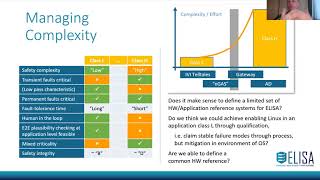
Designing, Configuring and Verifying Linux Systems for High Quality and Fault Mitigation
Explore techniques for creating robust Linux systems with high quality and fault mitigation, focusing on design, configuration, and verification methods used in the LF ELISA project.

Enabling Linux Usage in Space Applications
Explore Linux's potential in space applications, focusing on safety, monitoring, and implementation using COTS hardware. Learn about challenges and future prospects for Linux in orbit.