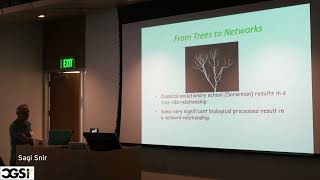
Harnessing Genome Dynamics for Phylogenetic Reconstruction
Explore advanced phylogenetic reconstruction techniques using genome dynamics, including horizontal gene transfer, gene content, and microsynteny-based approaches for prokaryotes and angiosperms.
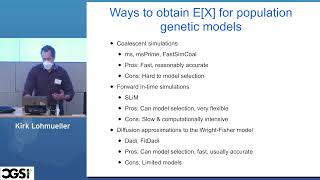
The Poisson Random Field Model in Population Genetics
Explore the Poisson Random Field model's applications in population genetics, gaining insights into its theoretical foundations and practical implications.
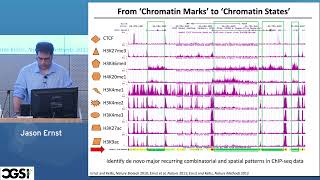
A Tutorial on Computational Methods for Modeling and Analyzing Epigenomic Data
Explore computational methods for modeling and analyzing epigenomic data, covering ChromHMM, multivariate Hidden Markov Models, and integrating multiple chromatin markers across cell types.
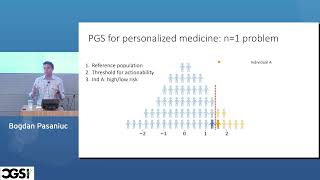
Personalized Genomic Medicine Using Large-Scale Biobanks Linked with Medical Records
Explore personalized genomic medicine using large-scale biobanks and medical records. Learn about leveraging genomic diversity for discovery and promoting precision health research in diverse populations.
Lessons from the Largest Genome-Wide Association Study of Human Height
Explore insights from the largest genome-wide association study on human height, examining genetic variants, heritability, and the impact of rare variations on this complex trait.
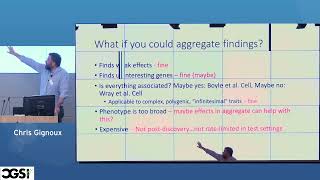
Applying Polygenic Scores at Biobank Scale - CGSI 2022
Explore applying polygenic scores at biobank scale, examining reporting standards, reproducibility, health disparities, and clinical applications in genomic risk prediction.
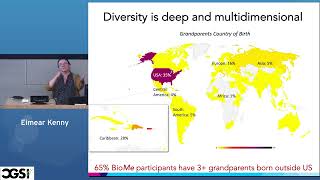
Population Genetics in an Era of Genomic Health
Explore population genetics' role in genomic health, focusing on electronic health records, personalized medicine, and genetic disease identification in specific populations.

Overview of Rare Variant Analysis in Whole Genome Sequencing Association Studies
Explore rare variant analysis techniques for whole genome sequencing studies. Learn statistical methods, study designs, and powerful tools for uncovering genetic associations in large-scale genomic data.
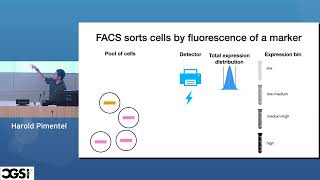
Inference Methods for High-Throughput CRISPR Screens - CGSI 2022
Explore inference methods for high-throughput CRISPR screens, focusing on regulatory gene discovery in human T cells and the architecture of immune networks.

How Genetics Can Help Untangle Institutionalized Health Inequity
Explore how genetic research can address health inequities, focusing on case studies involving racial disparities in medical diagnoses and treatment decisions.
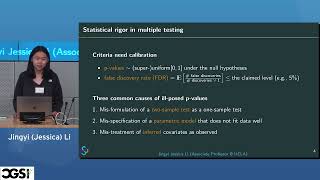
Statistical Rigor in Genomics Data Science
Explore statistical rigor in genomics data science, focusing on differential expression methods, p-value calibration, and high-throughput data analysis techniques for improved accuracy in genomic research.
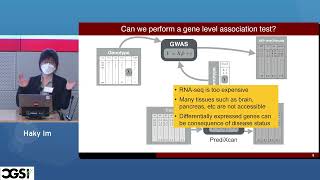
Integrating Multiple Omic Data to Improve Mechanistic Understanding and Prediction
Explore integrating multiple omic data to enhance mechanistic understanding and prediction in genomics. Learn techniques for improving data interpretation and predictive modeling in computational biology.
Designing DNA with Tunable Regulatory Activity Using Discrete Diffusion
Explore DNA Discrete Diffusion (D3) for engineering regulatory DNA sequences with targeted functional activity levels. Learn about its advantages, evaluation metrics, and applications in functional genomics.

gRNAde: Geometric Deep Learning for 3D RNA Inverse Design
Explore gRNAde, a geometric deep learning pipeline for 3D RNA inverse design. Learn about its architecture, use cases, and advantages over traditional methods in RNA sequence design.

The Future of Chemistry - Self-Driving Laboratories and AI-Driven Discovery
Explore self-driving laboratories revolutionizing scientific discovery through AI and automation. Learn about cutting-edge applications, key elements, and opportunities in chemistry, materials science, and biotechnology.

MFBind - A Multi-Fidelity Approach for Evaluating Drugs in Generative Modeling
Explore MFBind, a multi-fidelity approach integrating docking and binding free energy simulations for improved drug discovery generative modeling. Learn its advantages over current methods.
Removing Biases from Molecular Representations via Information Maximization
Explore InfoCORE, an innovative approach to remove batch effects in drug screening data, enhancing molecular representations for improved property prediction and molecule-phenotype retrieval.

Equivariant Scalar Fields for Molecular Docking with Fast Fourier Transforms
Explore machine learning-accelerated molecular docking using equivariant scalar fields and fast Fourier transforms for efficient drug discovery and virtual screening.

Current Trends in Cancer Immunotherapy with a Focus on Cytokine Therapies
Explore cytokine therapies in cancer immunotherapy, including their role in tumor microenvironments, clinical trials, receptor blockade, and future directions. Gain insights into Sino Biological's research support.
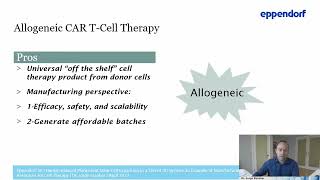
Human-Induced Pluripotent Stem Cell Expansion in a Stirred 3D System - Manufacturing Allogeneic Resources for Cell Therapy
Explore advanced techniques for expanding human-induced pluripotent stem cells in 3D stirred systems, focusing on manufacturing allogeneic resources for cell therapy applications.
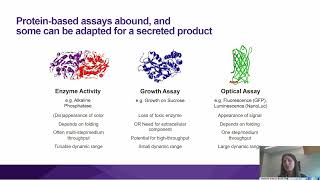
Developing a Suite of High-throughput Screens for Engineering Bacterial Protein Secretion
Explore high-throughput screening techniques for engineering bacterial protein secretion systems, focusing on innovative approaches to enhance protein production efficiency and industrial applications.