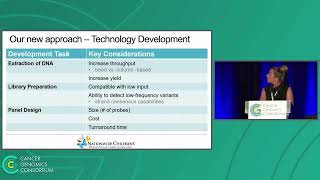
Personalized Sequencing Assays for Cerebrospinal Fluid Liquid Biopsies in Children with Brain Tumors
Explore personalized sequencing techniques for cerebrospinal fluid biopsies in pediatric brain tumor cases, enhancing diagnostic and monitoring capabilities.
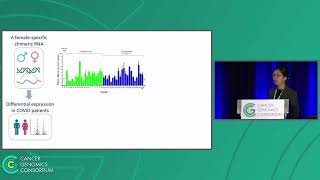
A Female-Specific Chimeric RNA with Differential Expression in COVID Patients
Explore a female-specific chimeric RNA's differential expression in COVID patients, uncovering potential implications for diagnosis and treatment.

Fusion Curation Interface: An Educational Tool to Explore a Unified Framework
Explore a unified framework for representing and curating gene fusions using an educational tool designed for cancer genomics professionals.
Whole Transcriptome Sequencing as a Diagnostic Tool for AML
Explore whole transcriptome sequencing's potential as a diagnostic tool for Acute Myeloid Leukemia (AML), focusing on its applications and benefits in clinical cancer genomics.
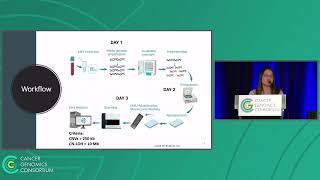
Chromosomal Microarray Analysis for Hypocellular MDS Patients with Inconclusive Cytogenetics
Explore chromosomal microarray analysis for hypocellular MDS patients with inconclusive cytogenetics, enhancing diagnostic accuracy and treatment decisions in cancer genomics.
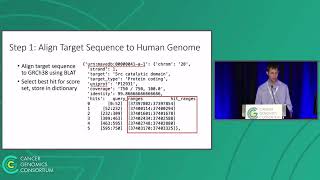
Mapping Variants from Multiplex Assays of Variant Effect to Human Reference Sequences
Learn to map variants from multiplex assays of variant effect (MAVEs) to human reference sequences, enhancing accuracy in clinical cancer genomics and improving patient diagnosis and treatment.
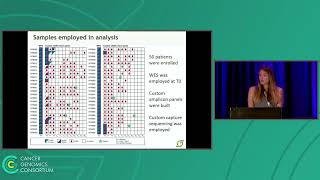
Personalized ctDNA Micro-Panels for Monitoring and Predicting Clinical Outcomes in Triple-Negative Breast Cancer
Explore personalized ctDNA micro-panels for monitoring and predicting clinical outcomes in triple-negative breast cancer patients. Gain insights into advanced genomic testing techniques.
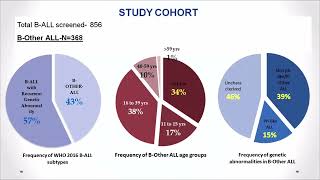
Clinical, Cytogenetic and Genomic Profiling of B-Other Acute Lymphoblastic Leukemia - An Indian Cohort Study
Explore clinical, cytogenetic, and genomic profiling of B-Other Acute Lymphoblastic Leukemia in an Indian cohort study. Gain insights into cancer genomics and its impact on accurate diagnosis and treatment.
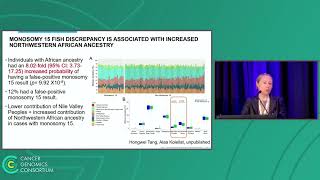
Reduced Performance of Centromere 15 Probe in Association with African Ancestry
Explore the impact of African ancestry on centromere 15 probe performance in cancer genomics, enhancing diagnostic accuracy for diverse patient populations.
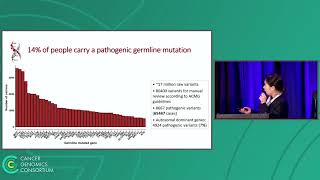
Association Between Clonal Hematopoiesis and Inherited Cancer Susceptibility Genes
Explore the link between clonal hematopoiesis and inherited cancer susceptibility genes in this concise presentation from the 2022 CGC Annual Meeting.
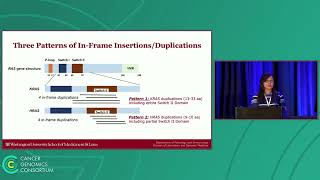
Genetic Spectrum of RAS Alterations - A Highlight of In-Frame Insertion Variants in Association with Vascular Anomalies
Explore genetic spectrum of RAS alterations, focusing on in-frame insertion variants associated with vascular anomalies. Gain insights into clinical cancer genomics and best practices.
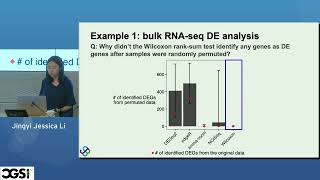
Controlling False Discoveries in Genomics Data Analysis - What is the Null Hypothesis?
Explore advanced techniques for controlling false discoveries in genomics data analysis, focusing on null hypothesis formulation and its impact on statistical inference in high-dimensional biological datasets.
Polygenic Means to Test and Refine Depression Disease Models
Explore polygenic methods for testing and refining depression disease models, focusing on phenotype integration, symptom differences, genetic heterogeneity, and epistasis in complex traits.
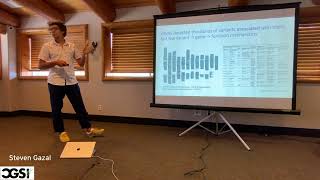
The Functional Architectures of Human Diseases and Complex Traits: From Polygenicity to Variant Function
Explore functional architectures of human diseases and complex traits, focusing on polygenicity and variant function in genomics research.

Genome-wide Prediction of Disease Variants with a Deep Protein Language Model
Explore genome-wide prediction of disease variants using deep protein language models. Learn cutting-edge techniques for identifying potential genetic causes of diseases.

Confounding in Biobanks: Challenges and Implications
Explore confounding factors in biobank research and their impact on genetic studies, focusing on educational attainment and height analyses.
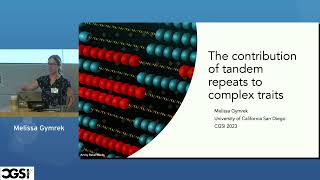
Dissecting the Contribution of the Repeatome to Complex Traits
Explore the impact of repetitive DNA sequences on complex traits through genome-wide association studies, focusing on short tandem repeats and their role in human phenotypes and gene expression.

Predicting the Epigenome from DNA Sequence - Are We There Yet?
Explore predicting epigenomes from DNA sequences using deep learning methods. Discover limitations, data analysis techniques, and latest research in computational genomics.
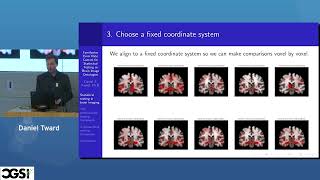
Familywise Error Rate Control for Statistical Testing in Brain Image Ontologies
Explore familywise error rate control in brain image ontologies, covering statistical testing, spatial patterns, and advanced techniques for neuroimaging analysis.
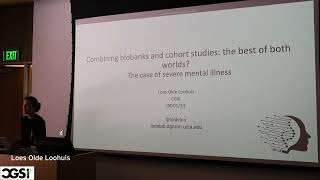
Combining Biobanks and Cohort Studies - The Best of Both Worlds
Explore the integration of biobanks and cohort studies to enhance genetic research and improve understanding of complex diseases.
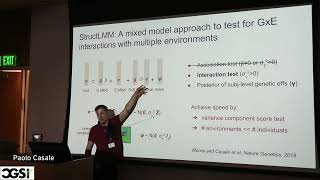
Mixed Models in Genomic Analyses and Imaging Studies
Explore mixed models in genomics and imaging, focusing on efficient set tests, Gaussian process priors, gene-environment interactions, and neural networks for histologic feature quantification.