
Cardiovascular Physiology - Pressure-Volume Loops, Cardiac Cycle, ESV, EDV, SV, CO, Starling Law
Comprehensive exploration of cardiovascular physiology, covering pressure-volume loops, cardiac cycle, and key metrics like ESV, EDV, SV, and CO. Includes Frank-Starling Law and concepts of preload, afterload, and compliance.

Protein Isolation and Protein Analysis
Explore protein isolation techniques including electrophoresis, isoelectric focusing, and chromatography. Learn about protein analysis methods for biochemistry research and applications.
Biosignaling - G-Proteins, Ligand-Gated, Voltage-Gated Channels, JAK-STAT - Biochemistry
Explore key biosignaling mechanisms including G-proteins, ligand-gated and voltage-gated channels, and JAK-STAT pathways. Gain essential knowledge for medical exams and biochemistry understanding.
Cellular Proteins Functions - Structural, Motor, Binding, Cell Adhesion Molecules
Explore cellular protein functions: structural support, motor activities, binding mechanisms, and cell adhesion molecules. Gain insights into essential biochemical processes for medical exams.
Small Intestine Motility and Secretions - GI Physiology
Explore small intestine motility and secretions in gastrointestinal physiology, focusing on digestion and absorption processes for a comprehensive understanding of GI function.

Gastric Motility and Receptive Relaxation - GI Physiology
Explore gastric motility, receptive relaxation, and the nervous system's role in stomach function. Learn about gastric emptying and hunger contractions in this comprehensive physiology lecture.
Competitive Inhibition and Enzyme Kinetics - Biochemistry
Explore competitive inhibition in enzyme kinetics, focusing on Michaelis-Menten and Lineweaver-Burk graphs. Gain insights into biochemical processes and their applications in medicine.

Lineweaver-Burk Plot - Vmax, Km & [S] - Biochemistry
Explore Lineweaver-Burk plots in enzyme kinetics, analyzing Vmax, Km, and substrate concentration to deepen understanding of biochemical reactions and enzyme behavior.

Michaelis-Menten Equation and Enzyme Kinetics - Biochemistry Series
Explore enzyme kinetics and the Michaelis-Menten equation, covering substrate concentration, reaction velocity, Vmax, and Km. Ideal for MCAT, DAT, and NEET exam preparation.

Gastrointestinal Motility - Propulsive Movements vs Mixing Movements
Explore gastrointestinal motility, including propulsive and mixing movements, the enteric nervous system, and related clinical conditions like Hirschsprung disease.

Anthrax and Its Subtypes - A Disease Caused by Bacillus Anthracis - Microbiology
Explore Bacillus anthracis, its subtypes, and clinical manifestations. Learn to differentiate cutaneous, pulmonary, and gastrointestinal anthrax, as well as distinguish anthrax from anthracosis.
GI Innervation - Nerve Supply of the Gastrointestinal System - Enteric Nervous System
Explore the intricate nerve supply of the gastrointestinal system, including the enteric nervous system, sympathetic and parasympathetic innervation, and their roles in gut function.
Slow Wave Potential, Basic Electrical Rhythm -BER- and Spike -Action- Potentials of Gut - Physiology
Explore gastrointestinal electrical activity: slow wave potentials, basic electrical rhythm, and spike potentials. Understand gut motility mechanisms and their physiological significance.

Gastrointestinal -GI- Physiology - The Basics - Introduction- - Physiology Series
Comprehensive introduction to gastrointestinal physiology, covering key concepts and functions of the digestive system for medical students and healthcare professionals.
Acid Fast Bacilli Smear for Tuberculosis - Labs
Comprehensive guide to Acid Fast Bacilli Smear for tuberculosis diagnosis, covering lab techniques, interpretation, and clinical significance for medical professionals and students.
Gram-Positive Cocci - Quick Review - Microbiology and Infectious Diseases
Comprehensive review of gram-positive cocci bacteria, covering key aspects for medical exams. Focuses on bacteriology, infectious diseases, and clinical relevance for healthcare professionals.

The Ultimate Biology Review - Last Night Review
Comprehensive biology review covering key concepts for medical exams. Ideal for last-minute preparation, offering concise explanations of essential topics for MCAT, NCLEX, USMLE, and other healthcare-related tests.
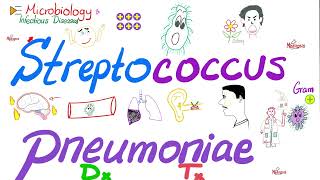
Streptococcus Pneumoniae Diagnosis and Treatment - Microbiology and Infectious Diseases
Comprehensive overview of pneumococcal infection diagnosis and management, covering clinical presentation, laboratory tests, and treatment strategies for various manifestations.
Streptococcus Pneumoniae - Microbiology and Infectious Diseases
Comprehensive overview of Streptococcus pneumoniae, covering microbiology, clinical features, diagnosis, and treatment. Ideal for medical students preparing for USMLE, NCLEX, and other exams.
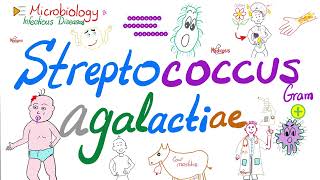
Streptococcus Agalactiae - Neonatal Meningitis, Sepsis, Pneumonia
Comprehensive overview of Streptococcus agalactiae, focusing on its role in neonatal infections like meningitis, sepsis, and pneumonia. Explores pathogenesis, diagnosis, and treatment strategies.
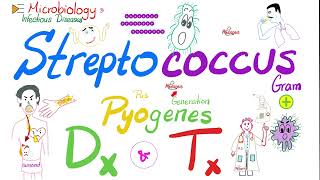
Streptococcus Pyogenes Diagnosis and Treatment - Microbiology and Infectious Diseases
Comprehensive overview of Streptococcus pyogenes, covering diagnosis methods and treatment options for this beta-hemolytic bacterium. Ideal for medical students and healthcare professionals.