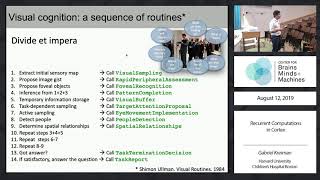
Recurrent Computations in Cortex
Explore recurrent computations in the brain's cortex, focusing on visual processing, neural networks, and cognitive models to understand human perception and cognition.
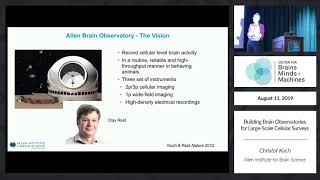
Building Brain Observatories for Large-Scale Cellular Surveys
Explore large-scale cellular surveys in brain research, focusing on innovative techniques, reproducibility, and the creation of comprehensive brain observatories for advanced neuroscience studies.
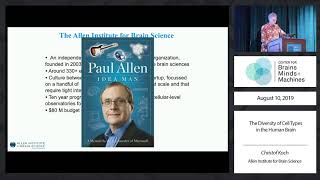
The Diversity of Cell Types in the Human Brain
Explore the diverse cell types in the human brain, their classification, and implications for neuroscience and consciousness, with insights from cutting-edge research techniques.
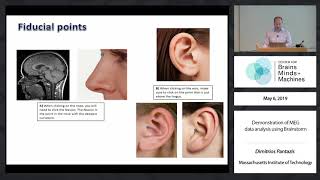
Demonstration of MEG Data Analysis Using Brainstorm
Learn to analyze MEG data with Brainstorm software, covering import, preprocessing, visualization, and advanced analysis techniques like dynamic statistical parametric mapping and source localization.
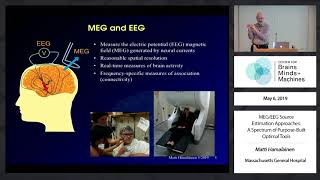
MEG-EEG Source Estimation Approaches: A Spectrum of Purpose-Built Optimal Tools
Explore MEG/EEG source estimation techniques, from dipole models to cortically-constrained approaches. Learn about neural source localization, forward modeling, and applications in neuroscience research.
Cortical Travelling Waves- Mechanisms and Computational Principles
Explore mechanisms and computational principles of cortical travelling waves, covering visual cortex, hippocampus, sleep spindles, and memory consolidation in neuroscience research.
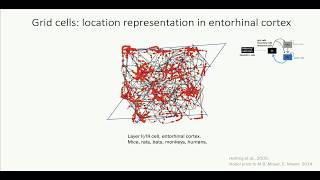
Circuitry and Mathematical Codes for Navigation in the Brain
Explore neural circuits and mathematical codes underlying animal navigation, focusing on computational problems and spatial representations in the brain.
How Fast Is a Neural "Winner-Take-All" When Deciding Between Many Noisy Options?
Explore neural decision-making mechanisms, focusing on the speed and efficiency of "winner-take-all" processes in noisy environments. Gain insights into parallel strategies and canonical circuits.
A View of Cortex from the Thalamus
Explore the thalamus's role in cortical function, focusing on visual relays, pulvinar, and neural circuits. Gain insights into alternative views of brain organization and evolution.
Pattern Separation and Completion in Subregions of the Hippocampus
Explore cognitive map theory, pattern separation, and memory processes in the hippocampus with insights from neuroscientific research and computational models.
The Brain and Body Compute Together - Neuromechanics and Sensorimotor Control
Explore neuromechanics and sensorimotor control, examining how the brain and body work together in movement and perception. Gain insights into motor neurons and cutting-edge research in this field.
Thalamocortical System II
Explore thalamocortical system's cell types, synapses, and processing mechanisms. Gain insights into retinal and cortical structures, neurotransmitters, and sensory integration in the brain.
Thalamocortical System I
Explore the thalamocortical system's structure, circuitry, and organization. Gain insights into neural pathways, cell types, and cortical specializations in this comprehensive neuroscience lecture.
Biophysics of Computation I
Explore the biophysics of neural computation, focusing on dendritic spikes and their role in information processing within the brain's complex structures.
Allen Institute Large-Scale Datasets and Modeling Tools
Explore large-scale datasets and modeling tools for brain research, covering transcriptomics, connectome mapping, visual coding, and human neuron studies to advance our understanding of brain function.
High Throughput Connectomics
Explore cutting-edge techniques in connectomics, from crowdsourcing to machine learning, for mapping neural connections and understanding brain function at scale.
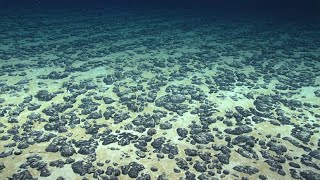
Oceanography - Marine Sediments
Explore marine sediment types, their formation, distribution, and significance in oceanography. Learn about lithogenous, biogenous, hydrogenous, and cosmogenous sediments and their impact on ocean ecosystems.
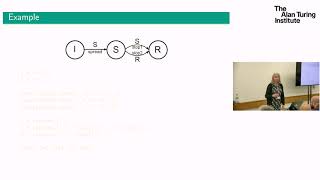
Integrating Inference with Stochastic Process Algebra Models - Jane Hillston, Edinburgh
Explore probabilistic programming for continuous-time systems using ProPPA, an extension of Bio-PEPA. Learn parameter inference methods and applications in biology, ecology, and urban transport.
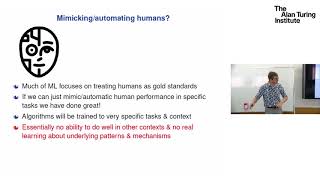
Beyond Tech - Machine Learning in Science & Policy - Professor David Dunson, Duke
Exploring machine learning applications beyond tech, highlighting challenges in science and policy. Discusses fair algorithms, interpretable models, and the need for targeted methods in complex domains.
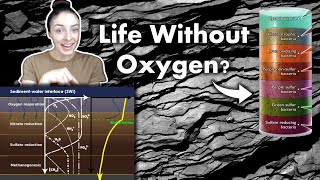
Life in Oxic, Suboxic, and Anoxic Sediments - Yes, Some Life Doesn't Require Oxygen!
Explore microbial life in sediment layers, from oxygen-rich to oxygen-free zones. Learn about diverse metabolic processes and their impact on organic matter decomposition in marine and freshwater environments.
Organic Carbon Burial and Diagenesis - How Much Organic Carbon Is Actually Preserved?
Explore organic carbon burial and diagenesis in marine sediments, from production to preservation. Learn about microbial degradation, sediment reactions, and the surprisingly small fraction of carbon ultimately preserved.