
Historical Perspective: Science in Ancient India - Lecture 18
Explore empiricism, natural theology, and evolutionary concepts in ancient Indian scientific thought, gaining insights into historical perspectives on science.
Mathematical Modelling of Clonal Dynamics of Acute Myeloid Leukemia: Model-Based Approach to Understand Within-Tumour Heterogeneity
Explore mathematical models of acute myeloid leukemia's clonal dynamics to understand tumor heterogeneity using a model-based approach.
Mathematical Models and Tools for Personalized Medicine
Explore mathematical models for personalized medicine, focusing on glioblastoma and immunotherapy. Learn how these tools aid in optimizing individual cancer treatments and predicting tumor evolution.
Quantitative Modeling of Metastasis: Cancer at the Organism Scale
Explore mathematical models for metastasis development, including spontaneous spread, tumor interactions, and therapy effects. Gain insights into predictive tools for personalized oncology.
A Fluid-Based Model for Single-Cell Migration
Explore a deterministic model of single-cell migration using fluid dynamics and molecular interactions. Analyze static and motile behaviors through mathematical and numerical approaches.
Microtubules as a Key Target in Oncology: Mathematical Modeling of Anti-MT Agents on Cell Migration
Explore mathematical modeling of microtubule-targeted agents in cancer cell migration. Gain insights into anti-migratory effects and potential therapeutic applications through fluid-based simulations.
Time-Reversal of the Spine of Branching Processes Near Stationarity
Explore homogenization in time-reversed spine processes for branching processes approximating PDEs at stationarity, with focus on biological applications.
Front Initiation in Continuous Neural Fields
Explore front initiation mechanisms in continuous neural fields, examining mathematical models and their applications in neuroscience and cognitive science.
Graph Rules and Topological Insights for Inhibitory Network Dynamics
Explore graph rules and topological insights for inhibitory network dynamics, uncovering mathematical principles behind neural networks.
Marked Point Process Modeling and Estimation Problems in Neural Data Analysis
Explore marked point process modeling and estimation techniques for analyzing neural data, focusing on advanced statistical approaches in neuroscience research.
Mathematical Models of Electroporation Validated on Medical Data
Explore mathematical models of electroporation, focusing on medical data validation. Learn to evaluate treatments using numerical simulations and data assimilation strategies.
A PDE Model Describing Immune Cells-Tumor Growth Interactions
Explore a mathematical model of immune cell-tumor interactions using PDEs, examining growth control, equilibrium states, and potential applications in immunotherapy design.
Reduction of the Filament Based Lamellipodium Model (FBLM) to an Active Curve
Explore the reduction of a 2D continuum model for cell motility to an active curve dynamics, focusing on lamellipodium mechanics and actin network behavior.
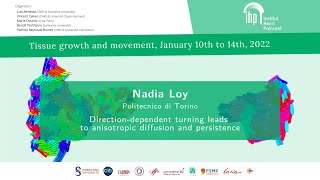
Direction-Dependent Turning Leads to Anisotropic Diffusion and Persistence
Explore how varying turning rates in kinetic transport equations model cell movement in heterogeneous environments, leading to persistent migration and enhanced diffusion.
Firefly Flashing Behavior as a Paradigmatic Example of Synchronization in Complex Networks
Explore firefly synchronization as a model for complex network dynamics, from simple systems to mobile oscillators in this insightful presentation.
Deterministic Mathematical Modeling in Quantitative Ecology - Class 19
Explore deterministic mathematical modeling in quantitative ecology with Roberto Kraenkel. Gain insights into advanced ecological concepts and analytical techniques.
Deterministic Mathematical Modeling in Quantitative Ecology - Class 18
Explore deterministic mathematical modeling in ecology with Roberto Kraenkel. Learn advanced techniques for quantitative analysis of ecological systems.
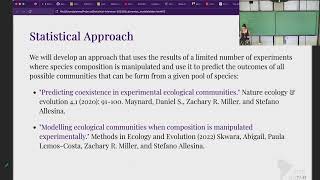
Statistical Models: Linking Data to Theory - Class 12
Explore statistical models for linking ecological data to theory in this advanced quantitative ecology lecture by Paula Lemos Costa from the University of Chicago.

Deterministic Mathematical Modeling - Class 17
Explore deterministic mathematical modeling in quantitative ecology with Roberto Kraenkel. Learn advanced techniques for analyzing ecological systems and predicting outcomes.
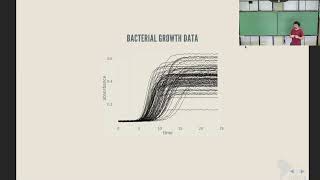
Statistical Models: Linking Data to Theory - Class 11
Explore statistical models linking data to theory, focusing on geometric models, differential equations, and Gaussian processes. Learn to integrate theory with real-world ecological data.
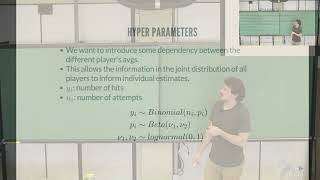
Statistical Models: Linking Data to Theory - Class 10
Explore statistical models linking data to theory in quantitative ecology. Learn from expert Diogo Melo about advanced techniques for analyzing ecological data and developing robust theoretical frameworks.