Energetics of Biological Systems
Explore the energetic constraints and limits of cellular processes, focusing on how cells harness and partition energy for various biological functions and their impact on cellular operations.
Phase Separation in Active Brownian Particles
Explore models of active matter systems, focusing on motility-induced phase separation in self-propelled particles and the resulting macroscopic PDEs.
Application of Coordination Compounds in Chemistry
Explore diverse applications of coordination compounds in analysis, water treatment, metal extraction, biological systems, catalysis, and more. Gain insights into their practical uses across industries.
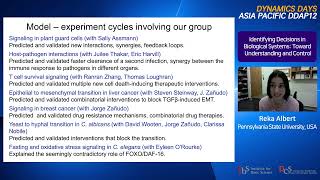
Identifying Decisions in Biological Systems: Toward Understanding and Control
Explore network science and dynamic modeling to understand biological systems' emergent properties. Learn about stable motifs and their role in decision-making and attractor control for potential therapeutic strategies.
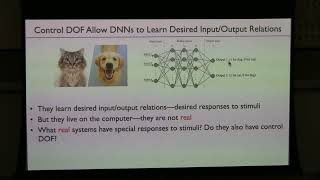
Physical Systems That Can Learn by Themselves
Explore innovative approaches to scalable learning in physical systems, inspired by brain function but utilizing simpler physics-based methods for energy-efficient, autonomous machine learning tasks.
Molecular Modeling of Complex Biological Systems
Explore molecular modeling techniques for complex biological systems, focusing on chromatin dynamics, DNA methylation effects, and histone tail modeling. Learn to predict system responses to modifications and mutations.
Coarse Grained Biological Systems - Day 2
Explore coarse-grained biological systems in drug discovery with Jacopo Venturin, delving into advanced machine learning applications for pharmaceutical research.
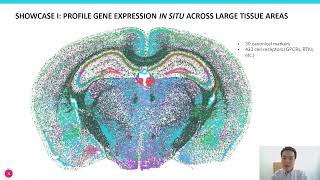
Illuminating Biology with Spatially Resolved, Single-cell Transcriptomics
Explore spatially resolved, single-cell transcriptomics to understand tissue organization and cellular heterogeneity in biological systems, presented by Vizgen co-founder Jiang He.
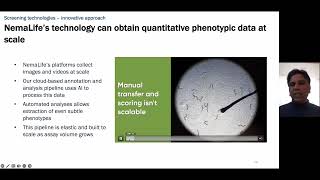
Microfluidics Platforms for High Throughput In Vivo Screening
Explore microfluidic approaches for high-throughput phenotypic screening in C. elegans, offering human-relevant biology and addressing limitations of in vitro models in modern drug discovery.
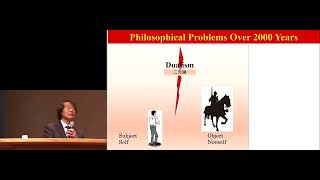
生命現象の統一理論 - 対立と進化の視点から
Explore the unified theory of life phenomena through evolutionary perspectives and NECTE principles, examining complementary oppositions and self-nonself circulation theory in biological systems.
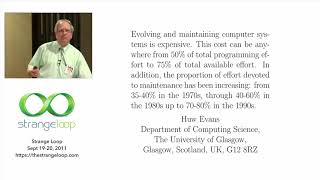
We Really Don't Know How to Compute!
Exploring computational limitations and future design principles for complex systems, drawing insights from neuroscience and genomics to revolutionize engineering approaches.
Learning from Nature - What Biological Systems Can Teach Software Engineers
Explore how biological systems inspire software engineering, uncovering nature's solutions for complex problems and innovative design approaches.

An Introduction to Quantum Biology
Explore how quantum effects influence biological processes like smell, enzymes, and bird migration. Discover the fascinating intersection of quantum theory and the messy world of biology.
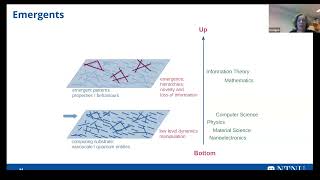
Emergent Computations for Emerging Technologies in Quantum Computing
Explore quantum materials' potential for novel computational approaches inspired by biological systems, addressing challenges in quantum computing through interdisciplinary collaboration.
A Touch of Non-Linearity: Mesoscale Swimmers and Active Matter in Fluids
Explore mesoscale swimmers and active matter in fluids, focusing on the transition from Stokes to intermediate Reynolds numbers and its impact on hydrodynamic interactions and collective behavior.
Foundation Models for Enabling Rational Design of Biological Systems - Lecture 3
Explore foundation models for rational design of biological systems with Arvind Ramanathan, advancing understanding in computational biology and system engineering.
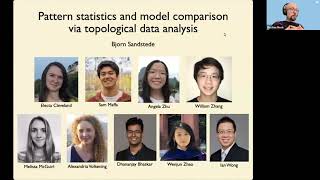
Pattern Statistics and Model Comparison via Topological Data Analysis
Exploring topological data analysis for pattern quantification, model comparison, and feature design in zebrafish skin patterns and other complex systems.
Quantitative Foundations of Ecological and Evolutionary Dynamics - Class 01
Explore quantitative foundations of ecology and evolution with Joshua Weitz, covering key concepts and mathematical approaches for understanding complex biological systems.
Active Matter Models of Mechanobiology - Lecture 1
Explore active matter models in mechanobiology, focusing on their applications and implications for understanding biological systems and processes.
Evading Newton's Third Law to Set Patterns in Motion - Kirk Public Lecture
Explore how active matter systems evade Newton's third law, creating dynamic patterns in biological and synthetic systems. Gain insights into this cutting-edge field of physics.