Introduction to Probability, Statistics, Statistical Testing
Explore fundamental concepts of probability, statistics, and statistical testing, essential for understanding data analysis and machine learning in health and disease research.
Data- Access, Analysis and Distillation by K VijayRaghavan
Explore data access, analysis, and distillation techniques for machine learning in healthcare. Learn to harness computational methods for understanding health-related data across multiple domains.
Heterogeneity of Type-2 Diabetes in India - I by V Mohan
Explore the diverse manifestations of Type-2 Diabetes in India with Dr. V Mohan, gaining insights into its unique characteristics and implications for diagnosis and treatment in the Indian population.
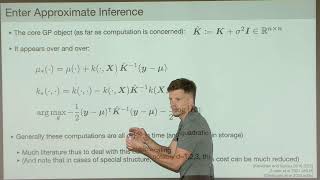
Data is as Data Does - The Influence of Computation on Inference
Exploring the impact of computational approximations on probabilistic models in machine learning, with focus on Gaussian Process approximations and their applications in neurobiology.
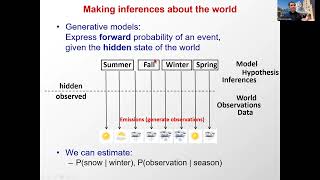
Expression Analysis, Clustering, and Classification in Machine Learning - Lecture 2
Comprehensive exploration of machine learning concepts, from basic principles to advanced techniques, with applications in gene expression analysis and text clustering.
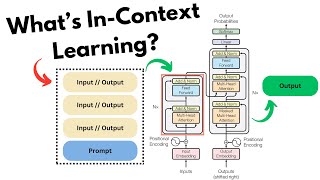
In-Context Learning in Deep Learning - How It Works in Large and Small Language Models
Explore in-context learning in LLMs: definition, significance, Bayesian framework, and implementation. Gain insights into this surprising capability of language models and its implications for AI.
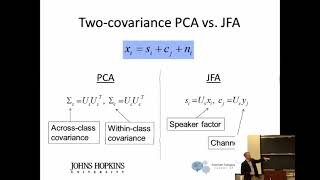
Recent Progress in Acoustic Speaker and Language Recognition - October 2013
Explore recent advancements in speaker and language recognition, focusing on GMM subspace methods, pattern classification, and Bayesian approaches for improved performance and domain adaptation.
Probabilistic Programming in Python - Conf42 Python 2024
Explore Bayesian statistics, probabilistic modeling, and MCMC in Python. Learn key concepts and practical applications through demonstrations and workflow explanations.
Detecting Discriminatory Risk through Data Annotation Based on Bayesian Inferences
Explore Bayesian inference techniques for detecting discriminatory risk in data annotation, enhancing fairness and accountability in machine learning systems.
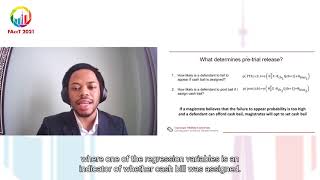
A Bayesian Model of Cash Bail Decisions
Explore a Bayesian approach to modeling cash bail decisions, examining the factors influencing judicial determinations and their implications for fairness in the criminal justice system.
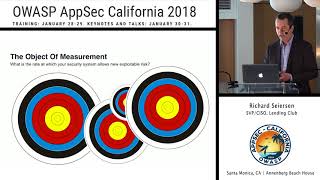
Prove It! - Confronting Security With Data
Explore data-driven methods to measure and improve security capabilities in rapidly scaling businesses, focusing on quantitative strategies and decision analysis techniques.

How to A/B Test with Confidence
Learn to conduct accurate A/B tests, avoid common pitfalls, and make data-driven decisions confidently. Discover practical tips for setup, implementation, and analysis to ensure trustworthy results.
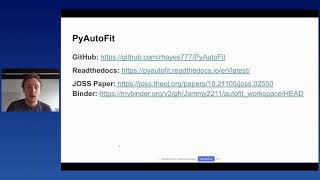
PyAutoFit - A Classy Probabilistic Programming Language For Data Science
Explore Bayesian inference with PyAutoFit, a probabilistic programming language for data science. Learn core features, model composition, and advanced tools for big data analysis and parallel computing.
Free Energy Minimisation for Perception as Inference
Explores predictive processing theory and free energy principle in perception, comparing Helmholtz machine and message passing approaches to neural inference and consciousness.
A Careful Walk Through Probability Distributions, Using Python
Explore probability distributions using Python, demystifying key concepts like sampling, joint, conditional, and marginal distributions for a solid foundation in Bayesian statistics.

Probabilistic Programming in Python
Learn probabilistic programming in Python using PyMC3 for flexible statistical modeling, automated parameter estimation, and uncertainty quantification in data science and scientific research.
Unveiling the Universe with Python
Explore how Python and Monte Carlo simulations unveil the mysteries of the Universe, from analyzing cosmic microwave background data to revealing the surprising dominance of dark matter and energy.

What Do Babies Think?
Explore the sophisticated intelligence of babies and young children through play, revealing their advanced cognitive abilities and decision-making processes.
An Introduction to Forecasting Using Orbit
Explore Orbit, a probabilistic forecasting tool developed by Uber, and learn its application in demand forecasting for technical support teams through a practical case study.
Supply Path Optimization: A Bayesian Approach to Take Rate Estimation
Explore Bayesian approaches to bid shading and supply path optimization in programmatic advertising, enhancing pricing strategies and ROI for more effective real-time bidding campaigns.
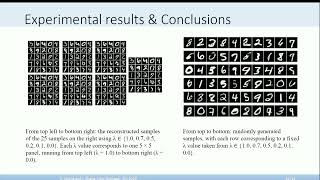
Deformed Evidence Lower Bound (λ-ELBO) Using Rényi and Tsallis Divergence
Explore advanced variational inference techniques using Rényi and Tsallis divergences to optimize the Deformed Evidence Lower Bound (λ-ELBO) for improved probabilistic modeling.