Properties of Chaotic Systems for Audio
Explore chaotic systems for audio generation and transformation. Learn about fixed points, bifurcation, and practical applications with interactive visualizations and code examples.
Building a Music Assessment Engine: Requirements, Challenges, and Solutions
Explore requirements, challenges, and solutions for building a music assessment engine, including technical limitations and performance demonstrations on real-life data.
Practical Digital Signal Processing Workshop
Explore digital audio signal processing, from continuous acoustic to discrete digital signals. Learn sampling theory, filtering, and time-frequency domain transformations through practical methods and hands-on exercises.
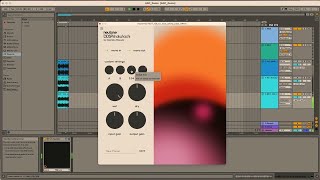
Neutone - Real-time AI Audio Plugin for DAWs
Explore real-time AI audio processing with Neutone plugin. Learn to integrate deep learning models into DAWs, experiment with timbre transfer, and develop innovative audio effects.
Audio In, MIDI Out: Generating MIDI from Audio Analysis
Explore audio-to-MIDI plugin development, transforming audio input into MIDI events for creative music production workflows. Learn techniques for real-time content analysis and feature extraction.

Four Ways to Write a Pitch-Shifter
Explore approaches to pitch-shifting music and time-stretching, from simple overlap-add to FFT-based effects and frequency-domain techniques. Gain insights into designing a polyphonic pitch/time C++ library.
Point to Point Modeling: An Automatic Circuit Solving Library
Explore an automatic circuit solving library for simulating analog audio circuits. Learn to implement and analyze component-level circuits for real-time plugins and mobile apps.
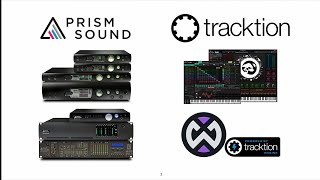
Optimizing a Real-Time Audio Processing Library
Optimize real-time audio processing libraries with practical strategies, measurement techniques, and performance-enhancing tricks. Gain tools for confident code optimization across platforms.
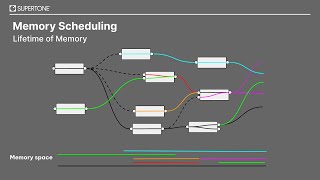
NO MORE CODE: New Graphical Programming Language for Audio Research and Developers
Explore a new graphical programming language bridging AI research and audio software development. Learn about its functional programming concepts, data handling capabilities, and flexible algorithm implementation.
Accelerated Audio Computing: From Problem to Solution
Explore accelerated audio computing advancements: technology progress, use cases, SDK vision, and industry standards. Engage in shaping the future of GPU-powered audio processing.
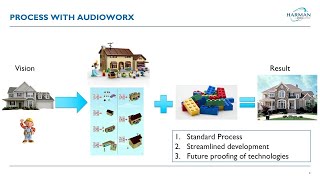
AudioworX: A Framework for Streamlining Development of Audio Post Processing for Car Audio Systems
Streamline car audio post-processing development with AudioworX. Learn about its framework, tuning tools, measurement module, and simulation environment for efficient audio software creation.
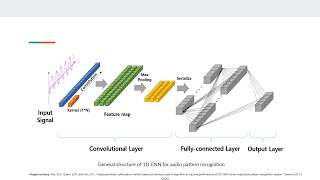
Leveraging Pruning and Quantization for Efficient Real-Time Audio Applications
Explore pruning and quantization techniques to enhance efficiency of complex audio models for real-time processing in resource-constrained environments. Gain insights into model compression for audio applications.
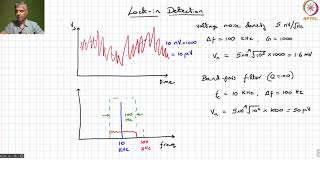
Lock-in Detection
Explore lock-in detection techniques for signal processing and measurement applications. Learn principles, implementation, and practical uses in various scientific fields.
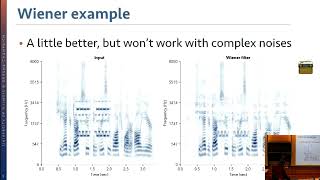
New Twists for New Tricks - Making Audio Deep Learning Practical
Explore innovative approaches to audio deep learning, addressing practical challenges in efficiency, unsupervised learning, and resource-limited scenarios for enhanced audio processing and source separation.
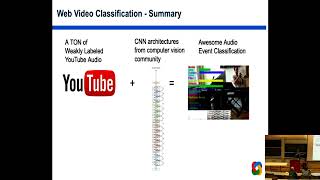
Recognizing Sound Events - 2019
Explore deep neural networks for sound classification, covering speech, music, and environmental sounds. Learn about AudioSet ontology and applications in bioacoustics and cross-modal learning.
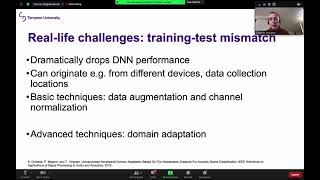
Computational Analysis of Sound Scenes - 2020
Explore computational sound scene analysis, covering tasks from basic classification to advanced localization and captioning, with deep learning techniques and data requirements.
Multiclass Audio Segmentation in Broadcast Environments
Explore multiclass audio segmentation techniques for broadcast environments, focusing on cutting-edge approaches and practical applications.
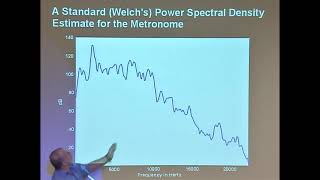
Acoustic Scene Analysis, Complex Modulations, and a New Form of Filtering - 2008
Explore acoustic scene analysis, complex modulations, and innovative filtering techniques for separating overlapping sound sources in noisy environments.
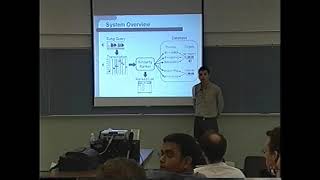
Name That Tune: Finding a Song from a Sung Query
Explore techniques for music retrieval using Query by Humming, including string-alignment algorithms and hidden Markov models. Compare approaches and their effectiveness in finding songs from sung queries.
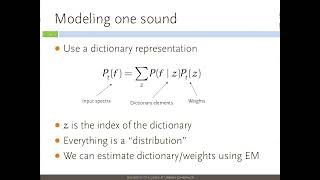
From Bases to Exemplars, and From Separation to Understanding
Explore audio source separation techniques, from basis functions to exemplars, and learn how to achieve direct computation of tasks like noisy speech recognition without intermediate separation steps.
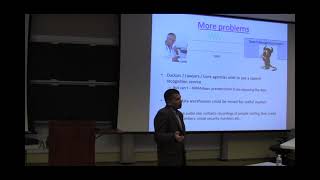
Hearing Without Listening: Voice Authentication with Privacy
Explore voice authentication privacy challenges and solutions, including cryptographic methods and secure binary embeddings for protecting user voice prints while enabling authentication.