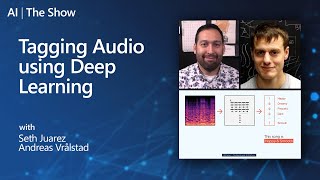
Tagging Audio Using Deep Learning
Learn to use deep learning for audio tagging, converting sounds to images and building a classifier model to categorize songs by mood. Includes hands-on demo and practical insights.

Fourier Analysis
Comprehensive exploration of Fourier analysis, covering series, transforms, and applications. Includes practical implementations in MATLAB and Python for signal processing, PDEs, and image compression.
Fast Fourier Transforms and Audio
Explore Fast Fourier Transforms and their application in audio processing, covering theory, implementation in MATLAB, and practical examples like noise filtering and spectrograms.
Short-Time Fourier Transform Explained Easily
Explore the Short-Time Fourier Transform's theory and applications in AI audio processing, including spectrogram extraction for deep learning models, explained visually and intuitively.

Sound Generation with Deep Learning - Approaches and Challenges
Explore deep learning approaches for sound generation, including raw audio and spectrogram methods. Learn about challenges, architectures, and inputs used in creating AI-generated audio.
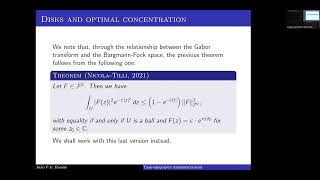
Time-Frequency Representations and Related Topics - Part 3
Explore advanced time-frequency representations and related concepts in signal processing, enhancing understanding of complex signal analysis techniques.
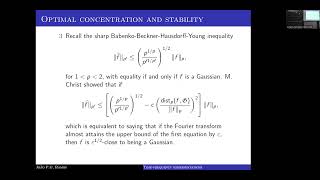
Time-Frequency Representations and Related Topics - Part 4
Explore advanced time-frequency representations and related concepts in signal processing, enhancing understanding of complex signal analysis techniques.
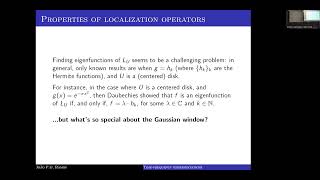
Time-Frequency Representations and Related Topics - Part 2
Explore advanced time-frequency representations and related concepts, building on foundational knowledge to deepen understanding of signal analysis techniques.
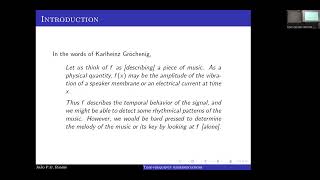
Time-Frequency Representations and Related Topics - Part 1
Explore time-frequency representations and related concepts in signal processing, gaining insights into advanced analysis techniques for complex signals.

Active Luminous Blue Variables in the Large Magellanic Cloud
Explore the enigmatic world of luminous blue variable stars, their unpredictable behavior, and their role in massive star evolution. Gain insights from long-term monitoring and recent discoveries in astrophysics.
Deep Learning Module for Video Sound Recognition Using Azure Video Indexer
Discover how to enhance video transcription by integrating Azure Video Indexer with Databricks, implementing machine learning models for audio recognition and spectrogram classification.

Understanding Audio Data for Deep Learning
Explore fundamental audio processing concepts for deep learning, including waveforms, pitch, Fourier transform, and MFCCs, essential for AI applications in sound analysis.
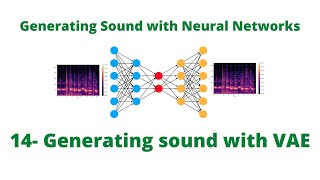
Generating Sound Digits with a Variational Autoencoder
Learn to generate audio spectrograms of sound digits using a trained Variational Autoencoder, then convert them into audio. Includes implementation, scripting, debugging, and result evaluation.
Rapid Radio Reversing
Explore wireless security research techniques combining SDR and non-SDR tools. Learn efficient reverse engineering processes for analyzing and decoding radio signals in this hands-on demonstration.
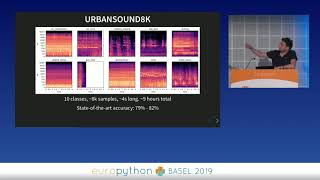
Audio Classification with Machine Learning
Learn practical techniques for audio classification using machine learning, including spectrograms, CNNs, and transfer learning. Explore applications in speech, music, medical diagnostics, and more using Keras and TensorFlow.
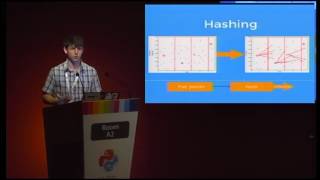
Implementing a Sound Identifier in Python
Explore Python-based sound recognition using DSP techniques. Learn to implement a Shazam-style identifier, covering fingerprinting, challenges, and future steps. Suitable for Python enthusiasts interested in audio processing.
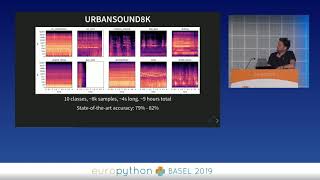
Audio Classification with Machine Learning
Learn to build practical machine learning models for audio classification using spectrograms, CNNs, and techniques like transfer learning and data augmentation with Keras and TensorFlow.