
The Gaseous Universe
Explore the crucial role of gas in astrophysics, from planetary atmospheres to intergalactic space, and its impact on star formation and galactic evolution.

The Universe of Dante Alighieri
Explore Dante's astronomical insights in "The Divine Comedy" with his descendant, astrophysicist Dr. Alighieri. Discover how the medieval poet anticipated modern cosmic concepts and view his masterpiece through a scientific lens.

Armchair Astrophysics, Volume 2
Explore everyday physics concepts and their cosmic connections in this engaging talk. Discover parallels between familiar phenomena and astrophysical observations, bridging the gap between our daily lives and the universe.

The Hubble Space Telescope - From Cosmological Conflict to Alien Atmospheres
Explore the universe with Hubble: from cosmic expansion to exoplanet atmospheres. Discover groundbreaking results in astrophysics and learn about Hubble's unique capabilities driving diverse scientific discoveries.

The Darkest Secrets of the Universe
Explore cosmic mysteries with Dr. GuhaThakurta: dark matter, galaxy cannibalism, black holes, and gravitational phenomena. Uncover hidden connections in the universe and contemplate the fragility of human life.

Shaping Galaxies with Supermassive Black Hole Winds
Explore how supermassive black hole winds shape galaxies, influence star formation, and distribute elements across the universe through observations and simulations.

Cloudy with a Chance of Stars
Explore the fascinating process of star formation, from nebulas to galaxies, and discover the latest research in stellar genesis using advanced telescopes and observational techniques.

The Deaths and Afterlives of Massive Stars
Explore the powerful impact of massive star deaths on the universe, from exotic remnants to heavy element production, and learn about cutting-edge research using multi-messenger astronomy.

Initial Exoplanet Discoveries from TESS
Explore NASA's TESS mission, its exoplanet discoveries, and how it compares to Kepler. Learn about the observatory's design and data availability through MAST at the Space Telescope Science Institute.

Black Holes and Other Dark Matters
Explore gravitational waves, black holes, and dark matter with Dr. Kamionkowski as he discusses LIGO's groundbreaking discovery and its implications for our understanding of the universe.

Chasing Supernovae with Kepler
Explore how the Kepler spacecraft's precise measurements are used to hunt supernovae, offering insights into the early stages of stellar explosions and advancing our understanding of these cosmic events.

The Milky Way’s Bulge - From a Hypothesized Blob to a Remarkably Detailed Picture
Explore the Milky Way's central bulge, its star composition, and formation history. Gain insights into galactic evolution and the implications for planetary systems and life.
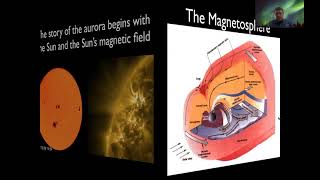
Auroral Currents
Explore the science behind auroral currents, from solar magnetic fields to Earth's magnetosphere, and their impact on navigation and technology. Gain insights from historical discoveries to modern space missions.
Gravity Simulator: Binary Star System - Episode 2
Explore gravitational interactions in binary star systems using a simulator. Learn about energy calculations, angular momentum, and the fascinating patterns of orbital motion.
Gravity Simulator - Sun and Earth Orbital Motion - Episode 1
Explore gravitational motion simulation using VPython, focusing on Sun-Earth dynamics. Learn about Euler-Cromer method, indices tracking, and Earth's scale in space.
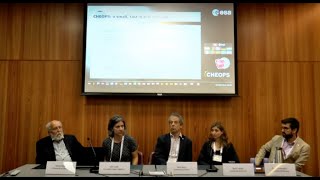
Cheops Mission Update - Exoplanets in Context
Explore the Cheops exoplanet mission's status, science goals, and context within space exploration through expert presentations and discussions on cutting-edge planetary research.
Sounds of the Earth's Magnetosphere in Electroacoustic Music - Inspired by Cosmic Space
Explore the universe through sound, from Earth's magnetosphere to cosmic phenomena, in this captivating lecture blending astronomy and electroacoustic music.
Mercury Transit 2016 - Expert Panel Discussion Part 2
Experts discuss Mercury's 2016 transit across the Sun, exploring its significance, safety measures, and scientific insights. Learn about Mercury's atmosphere, missions, and unique characteristics.
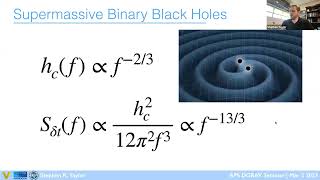
The Dawn of Pulsar Timing Array Gravitational-Wave Astronomy
Explore the latest advancements in gravitational-wave astronomy using pulsar timing arrays, including detection methods, background analysis, and future prospects.
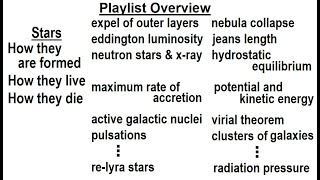
Astrophysics - Star Equilibrium
Explore star formation, nebula collapse, and hydrostatic equilibrium in this astrophysics series, covering critical concepts like Jeans length and pressure gradients.
Astrophysics - Binary Systems & Kepler's Laws
Comprehensive exploration of binary star systems, Kepler's laws, and related astrophysical concepts, including orbital mechanics, mass determination, and reduced mass theory.