Making Stunning AI Anime Animation on Local Stable Diffusion with Deforum and Anything
Learn to create stunning AI anime animations using Stable Diffusion, Deforum, and Anything. Master local installation, configuration, and rendering techniques for unique, high-quality anime-style animations.
Tools to Become a Better AI Artist
Explore AI-assisted art creation using NightCafe, learn about free credits, and discover techniques for enhancing and upscaling AI-generated images.

Copyright AI Art, Hidden Messages and Stolen Images
Explores copyright issues for AI-generated art, discussing hidden messages, unauthorized image use, and the importance of protecting digital creations in the evolving landscape of artificial intelligence and creativity.

Computer Generated Voice - Make It Better - Murf AI vs My Voice
Explore AI-generated voices for video content, comparing human and machine-created audio. Learn to enhance videos using AI tools for voice, music, and image upscaling.
AI to the Rescue - Creating AI Animations with ArtBreeder
Explore AI-powered animation creation using ArtBreeder. Learn to transform still images into dynamic animations through step-by-step guidance on uploading, timeline creation, and various animation types.
Relaxation Music Video with Artificial Intelligence
Explore AI-powered relaxation video creation using Midjourney, Soundraw, and Photomirage. Learn to generate art, animate images, and compose music for immersive experiences.
Freeze - Speed Up Time Effects Tutorial
Learn to create freeze-frame and speed-up time effects for music videos, using techniques from "Stay" by The Kid LAROI and Justin Bieber. Master double exposure, motion blur, and 3D fluid simulations in Premiere Pro and After Effects.
How to Create an Insane Skeleton Xray Effect - Afterlife VFX Tutorial
Learn to create a skeleton X-ray effect in After Effects, including thermal camera simulation, facial tracking, 3D skull integration, hand animation, and X-ray shader development for stunning visual effects.

Crazy Split Head Effect - Billie Eilish x Takashi Murakami Tutorial
Learn to create a Billie Eilish-inspired split face effect with popping eyes using Adobe After Effects. Step-by-step guide covers face tracking, masking, and eye animation techniques.

Ultimate RunPod Tutorial for Stable Diffusion - Data Transfers, Extensions, CivitAI
Comprehensive guide to using RunPod for Stable Diffusion, covering setup, deployment, file transfers, extensions, and advanced techniques like DreamBooth and ControlNet.
StyleGAN Paper Explained
Comprehensive explanation of StyleGAN paper, covering architecture, image quality techniques, style properties, mixing, disentanglement, and training details for advanced AI image generation.
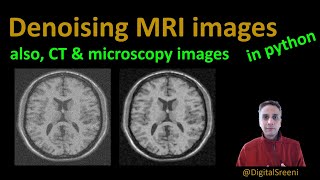
Denoising MRI Images - Also CT & Microscopy Images
Learn effective techniques for denoising MRI, CT, and microscopy images using traditional methods like Gaussian smoothing, bilateral filtering, anisotropic diffusion, non-local means, and BM3D algorithms.
Introduction to Transfer Learning
Explore transfer learning to adapt pre-trained networks for microscopy applications, enhancing accuracy with limited labeled data and reducing training time.
Application of Autoencoders - Image Colorization
Learn to artificially colorize black and white images using autoencoders in Python. Explore the process, implementation, and practical application of this advanced image processing technique.
An Introduction to Autoencoders - In Python
Learn to build and implement autoencoders in Python for image compression, reconstruction, and various applications like denoising and anomaly detection.
Malarial Cell Classification Using CNN
Learn to classify malarial cells using CNN in Python. Covers dataset acquisition, TensorFlow setup, network design, and result analysis for detecting parasitized and healthy cells.
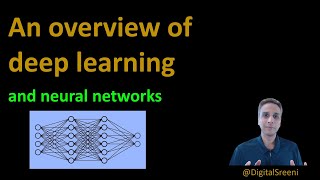
An Overview of Deep Learning and Neural Networks
Comprehensive introduction to deep learning concepts, covering neural networks, convolution, pooling, normalization, and more. Includes code examples for practical implementation.

Grain Size Analysis in Python Using Watershed
Watershed-assisted segmentation in Python for analyzing grain size in microscope images, overcoming limitations of threshold-based methods for improved accuracy in feature separation.
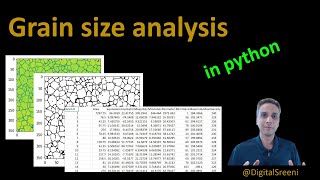
Grain Size Analysis in Python Using a Microscope Image
Automate grain analysis in metal alloys using Python and microscope images. Learn image processing techniques to generate summaries and CSV files for quality control and research.
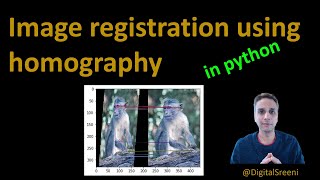
Image Registration Using Homography in OpenCV
Learn image registration using homography in OpenCV. Explore keypoint descriptors, matching techniques, and practical implementation for aligning distorted images with reference images.
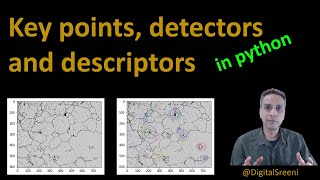
Key Points, Detectors and Descriptors in OpenCV
Learn to detect and describe key points in images using OpenCV algorithms like SIFT, SURF, and ORB for tasks such as image comparison and alignment.