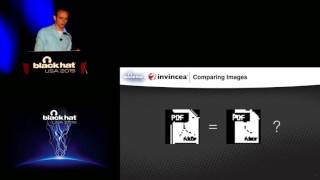
Graphic Content Ahead - Towards Automated Scalable Analysis of Graphical Images Embedded in Malware
Explores automated analysis of images in malware, focusing on identifying visually similar samples and classifying images into categories to enhance malware triage and reveal attacker patterns.

Hidden Risks of Biometric Identifiers and How to Avoid Them
Explore cutting-edge biometric technologies, their advantages, and potential risks. Learn to evaluate security, reliability, privacy, and ethical concerns for informed implementation of future identification systems.
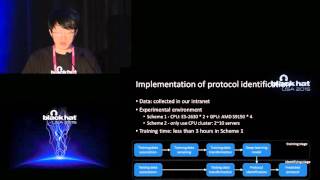
The Applications of Deep Learning on Traffic Identification
Explore deep learning for network traffic identification, covering neural networks, automatic feature learning, and anomaly detection. Improve protocol identification beyond traditional methods.
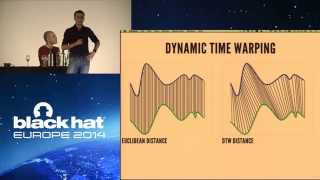
Gyrophone - Eavesdropping Using a Gyroscope
Explore how smartphone gyroscopes can be exploited to eavesdrop on nearby speech, bypassing microphone permissions and posing privacy risks. Learn about potential attacks and defenses.
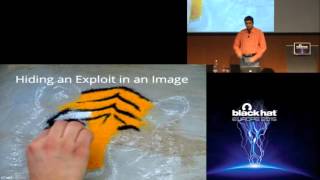
Exploit Delivery With Steganography and Polyglots
Explore innovative exploit delivery techniques using steganography and polyglots, focusing on encoding browser exploits in image files for undetectable payload transmission.
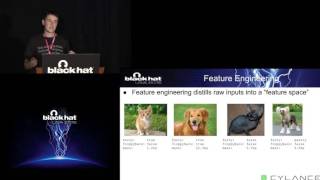
Deep Learning on Disassembly
Explore deep learning techniques applied to disassembly for malware identification, covering the process from raw binaries to model training and evaluation against active malware feeds.
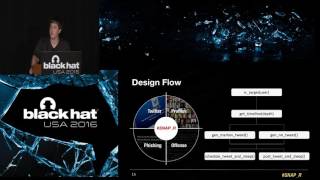
Weaponizing Data Science for Social Engineering - Automated E2E Spear Phishing on Twitter
Automated spear phishing on Twitter using machine learning and social engineering techniques. Explores target profiling, content generation, and high-value target identification for more effective phishing campaigns.
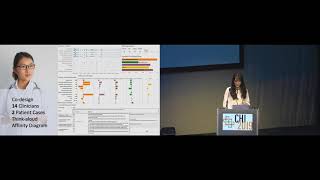
Designing Theory-Driven User-Centric Explainable AI
Explore a framework for human-centered, decision-theory-driven explainable AI, bridging algorithm-generated explanations with human decision-making theories in high-stakes applications like healthcare and criminal justice.

Comparing Data from Chatbot and Web Surveys - Effects of Platform and Conversational Style on Survey Response Quality
Explore how chatbot surveys improve data quality compared to web surveys, examining the impact of conversational style on participant engagement and response accuracy.
Future of Media and Misinformation
Experts discuss the future of media and misinformation, exploring AI's role in predicting behavior, online social systems, and the impact of changing information infrastructure on political action.

Understanding the Individual in Collective Intelligence
Explore how individual factors impact collective intelligence with insights from experts in organizational behavior, network science, and team dynamics.

What AI Is - and Isn't
Sebastian Thrun discusses AI's potential to free humanity from repetitive work, enhance creativity, and revolutionize society, while addressing concerns about runaway AI and emphasizing the vast opportunities for innovation.

Teach Your Computer to Code FizzBuzz
Interactive workshop on evolutionary algorithms, using Java to implement solutions for FizzBuzz. Covers biological evolution concepts, JCLEC framework, and Genetic Programming for evolving source code and automatic bug fixing.

The Future of JavaScript and AI
Explore AI-powered JavaScript apps using TensorFlow.js and APIs. Learn to build innovative applications without extensive math or experience, unlocking new possibilities for JS developers.
Strike a Pose - Gesture Recognition in JS with Machine Learning
Explore gesture recognition using JavaScript, Arduino, and machine learning to create intuitive human-technology interactions. Learn to build a simple system for smarter, adaptive experiences.
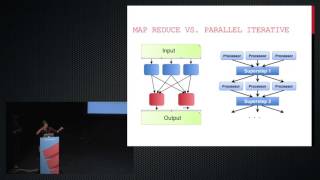
Deep Learning and NLP with Spark
Explore deep learning and NLP using Spark, focusing on LSTM neural networks for complex language tasks. Includes real-time demos with Spark Notebook and Streaming.
Being Creative with Genetic Algorithms and Typeclasses
Explore genetic algorithms and typeclasses in Scala, learning to attach custom interfaces to existing code and create visual, creative solutions with confidence through testing.

Exploring Real-time Computer Vision Using ActionCable
Integrate Rails and Python for real-time computer vision analysis, combining OpenCV with ActionCable & Sidekiq to broadcast insights and create time-lapse renderings with graphs.

The Rust Borrow Checker - A Deep Dive
Explore Rust's borrow checker: from basics to advanced concepts. Learn to leverage its guidance for writing safer, more powerful code, understanding its critical role in Rust's functionality and philosophy.
Extending OpenTelemetry to Observability
Explore OpenTelemetry's role in observability, learn how to enhance it with automation and AI for faster problem resolution in complex environments through a real-world case study and demo.

Hybrid Humans - When, Not If?
Exploring the future of human intelligence enhancement, its challenges, and potential impacts on society, cognition, and our interaction with the world.