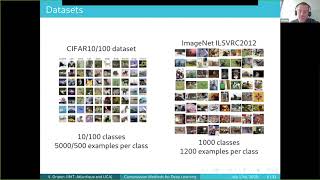
A Review of Compression Methods for Deep Convolutional Neural Networks
Explore compression techniques for Convolutional Neural Networks, including pruning, distillation, and quantization, to optimize deployment on tinyML devices without compromising accuracy.
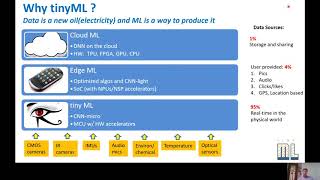
Recent Progress on TinyML Technologies and Always-On Machine Opportunities
Explore recent advancements in tinyML technologies, their implementation, and potential applications across various industries, with a focus on always-on machine learning for voice, vision, and sensing.
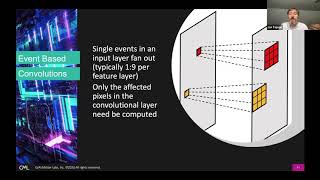
Saving 95% of Your Edge Power with Sparsity to Enable TinyML
Explore sparsity techniques to drastically reduce power consumption in edge ML, enabling real-time processing for tinyML applications with the innovative GrAI Core architecture.
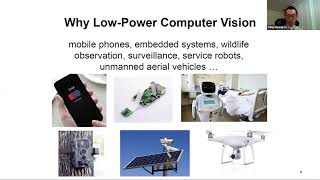
TinyML Talks - Low-Power Computer Vision
Explore energy-efficient computer vision techniques for battery-powered systems, including quantization, network architecture search, and knowledge distillation. Learn about hierarchical neural networks and the IEEE Low-Power Computer Vision Challenge.
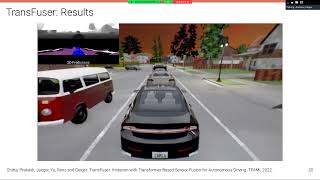
Learning Robust Policies for Self-Driving
Explore robust policies for self-driving vehicles, covering TransFuser for sensor fusion, PlanT for learned planning, and KING for identifying critical scenarios in autonomous driving.
Driving with Attention
Explore innovative sensor fusion techniques for autonomous driving, focusing on TransFuser and NEAT models that leverage attention mechanisms to improve perception and decision-making in complex traffic scenarios.
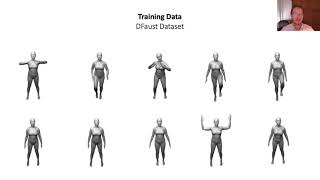
Towards Animatable Human Avatars
Explore cutting-edge techniques for creating animatable human avatars using neural implicit shapes and meta-learning approaches, with applications in computer vision and graphics.
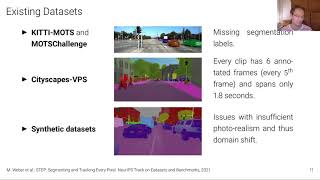
Segmenting and Tracking Every Pixel
Explore video panoptic segmentation with STEP datasets, focusing on real-world challenges in pixel-precise segmentation and tracking. Learn about new evaluation metrics and baseline methods.
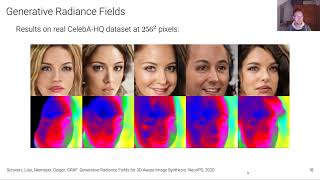
Generative Neural Scene Representations for 3D-Aware Image Synthesis
Explore 3D-aware image synthesis using generative neural scene representations, covering GRAF, GIRAFFE, and CAMPARI models for advanced computer vision applications.
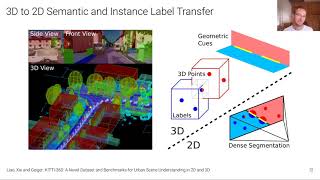
KITTI-360 - A Novel Dataset and Benchmarks for Urban Scene Understanding in 2D and 3D
Comprehensive dataset and benchmarks for urban scene understanding, combining computer vision, graphics, and robotics to advance autonomous driving technology.
Towards Nonlinear Disentanglement in Natural Data with Temporal Sparse Coding
Explore unsupervised disentanglement of factors in natural videos using SlowVAE. Learn about temporal sparse coding, identifiability proof, and performance on benchmark datasets including new natural dynamics benchmarks.
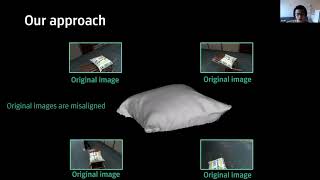
Appearance Acquisition for Digital 3D Content Creation
Explore advanced techniques for digital 3D content creation, including texture recovery, mesh reconstruction, and volumetric representation, using machine learning and computer vision approaches.
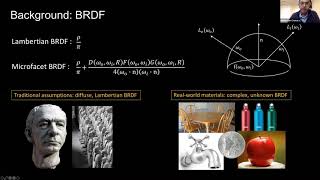
Physically-Motivated Learning of Shape, Material and Lighting in Complex Scenes
Explores physically-motivated learning for shape, material, and lighting recovery in complex scenes using differentiable rendering layers and parsimonious representations, enabling augmented reality applications with single or few images.
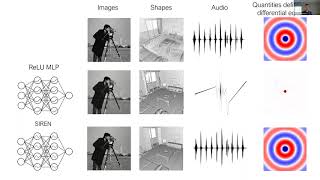
Implicit Neural Scene Representations
Explore implicit neural representations for complex signals, enabling 3D reconstruction from single images and fast inference through gradient-based meta-learning, with applications in scene understanding and semantic segmentation.
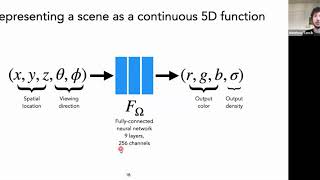
Neural Radiance Fields for View Synthesis
Explore neural radiance fields for view synthesis, combining coordinate-based neural representations with volumetric rendering to achieve state-of-the-art results in synthesizing novel views of complex scenes.
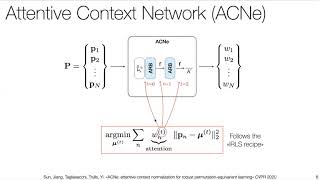
Andrea Tagliasacchi: Structured Representations for 3D Computer Vision
Explore structured 3D representations for computer vision, covering scene analysis, digital humans, and hybrid geometry models. Gain insights into advanced techniques for 3D understanding and reconstruction.
Unmasking the Inductive Biases of Unsupervised Object Representations for Video Sequences
Explore unsupervised object-centric learning approaches for video sequences, comparing perceptual abilities in detection, segmentation, and tracking using a benchmark dataset of procedurally generated videos.
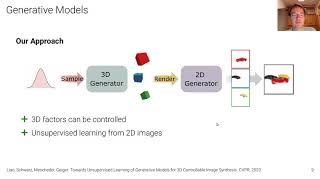
Towards Unsupervised Learning of Generative Models for 3D Controllable Image Synthesis
Explores unsupervised learning for 3D-controllable image synthesis, disentangling latent factors like viewpoint and object pose from raw images to create novel, consistent scenes.
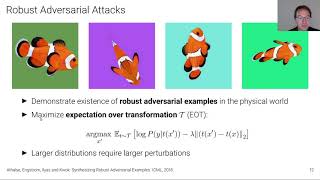
Attacking Optical Flow
Explores adversarial patch attacks on optical flow networks, revealing vulnerabilities in deep learning-based motion estimation crucial for autonomous driving safety.
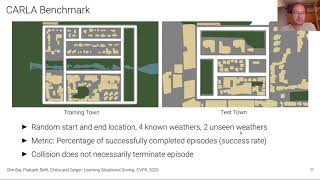
Learning Robust Driving Policies
Explore robust driving policies for autonomous vehicles, covering situational reasoning strategies and addressing covariate shift in imitation learning to improve generalization and safety in diverse conditions.
Learning 3D Reconstruction in Function Space
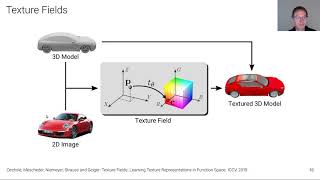
Explore neural implicit 3D representations for geometry and texture reconstruction, discussing their advantages, limitations, and applications in computer vision and graphics.