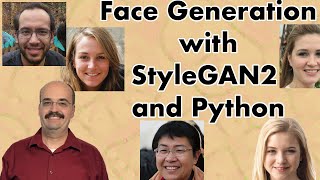
Face Generation with NVIDIA StyleGAN2 and Python 3
Generate realistic faces using nVidia StyleGAN2 and Python. Learn to utilize pretrained weights, TensorFlow wrapper, and Google CoLab GPU for efficient face generation without extensive training.
Generating Faces with a Generative Adversarial Networks - GAN in Keras-Tensorflow 2.0
Learn to implement a Generative Adversarial Network (GAN) from scratch using TensorFlow and Keras to generate realistic human faces, with step-by-step guidance and practical code examples.
Multi-Variate Feature Engineering Presentation for Machine Learning
Learn advanced feature engineering techniques for machine learning, including feature importance, target coding, neural networks, and embedding layers to improve model performance and extrapolation.
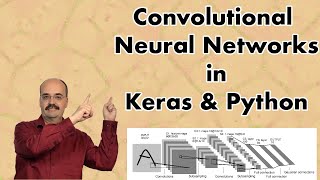
Keras Convolutional Neural Networks for MNIST and Fashion MNIST
Explore convolutional neural networks for image processing, focusing on MNIST and Fashion MNIST datasets. Learn about CNN architecture, training, and evaluation for advanced deep learning applications.

The Deep Learning Revolution
Explore the evolution of deep learning, from its origins to modern applications, covering key milestones, breakthroughs, and future prospects in AI and neuroscience.
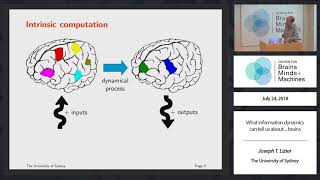
What Information Dynamics Can Tell Us About Brains
Explore information dynamics in complex systems, focusing on intrinsic computation, information transfer, and applications in neuroscience and network analysis.
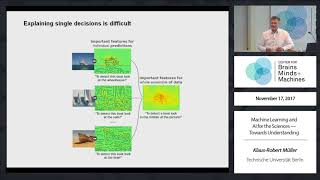
Machine Learning and AI for the Sciences - Towards Understanding
Explore ML and AI applications in sciences, focusing on neuroscience, medicine, and physics. Learn about extracting insights from ML models to enhance understanding in fields like quantum chemistry.
Searching for Information in the Ocean - Adaptive Sampling of Dynamic Processes in Coastal Areas and Fjords Using Autonomous Underwater Vehicles
Exploring adaptive sampling techniques using autonomous underwater vehicles for studying dynamic coastal ocean processes, focusing on phytoplankton biomass and its impact on biogeochemical processes.
Reinforcement Learning - Emma Brunskill - Stanford University
Explore reinforcement learning fundamentals, applications, and challenges with Stanford's Emma Brunskill, covering AI planning, machine learning, and decision-making processes.
Natural Language Processing - Mark Riedl - Georgia Tech School of Interactive Computing
Explore AI-driven storytelling, focusing on neural text generation control and long-term knowledge retention. Discover challenges and applications in automated narrative creation and other NLP tasks.
Natural Language Processing - Sam Bowman (NYU)
Explore recent progress in general-purpose language understanding models through GLUE and SuperGLUE benchmarks. Discuss evaluation techniques and future directions in NLP research.
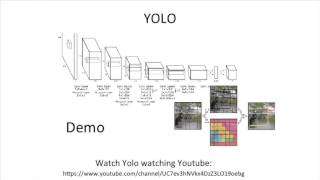
Deja Vu - The Story of Vision & AI
Explore the evolution of computer vision and AI with Ali Farhadi, covering deep neural networks, object detection, visual reasoning, and future predictions in this insightful seminar.

MIT Introduction to Deep Learning
Comprehensive introduction to deep learning fundamentals, covering perceptrons, neural networks, loss functions, gradient descent, backpropagation, and regularization techniques.
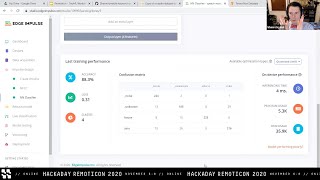
TinyML - Using Machine Learning on Microcontrollers to Recognize Speech
Learn to implement speech recognition on microcontrollers using TinyML. Train a neural network, convert it to TensorFlow Lite, and deploy it on an ARM board for real-time wake word detection.
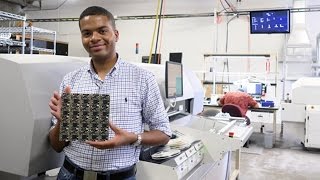
Kickstarting Computer Vision with the OpenMV
Explore the journey of OpenMV, a computer vision project, from Hackaday Prize entry to successful product launch, overcoming challenges in manufacturing and community management.
Interactive Storytelling Brings the Best and Most Engaging Traditions to the Digital Age
Explore interactive storytelling techniques that blend traditional narratives with modern technology, enhancing audience engagement and participation in shaping the story's outcome.

Parse Developer Q&A: Cloud Code, Push Notifications, and SDK Support
Meta's developer advocates answer questions on Parse features, including Cloud Code, push notifications, data management, and SDK support, offering insights and tips for developers.

Running at Scale on Parse - Tips for High-Traffic Apps
Learn strategies for scaling high-traffic apps on Parse, including optimizing API requests, database principles, and data modeling techniques to enhance performance and reliability.
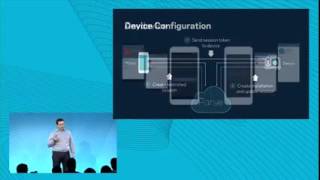
The Latest and Greatest from Parse - F8 2015
Explore Parse's latest products, features, and ecosystem updates, focusing on API Explorer, Enhanced Sessions, and React integration for efficient data handling and UI development.
Integral Images: Concept and Application in Spatial Algorithms
Learn about integral images for faster spatial partitioning and search algorithms, with a demonstration of object tracking implementation and practical coding examples.
Build: Getting Started with Parse - Data Storage, Push Notifications, and Analytics
Learn to build apps quickly with Parse's features like data storage, push notifications, and analytics, focusing on creating unique experiences without server worries.