
F-Singularities - Applications of Characteristic P Methods to Singularity Theory
Explore applications of characteristic p methods in singularity theory, focusing on F-singularities and their implications for algebraic geometry and commutative algebra.
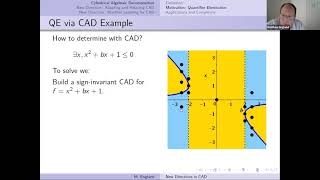
New Directions in Cylindrical Algebraic Decomposition
Explores recent advancements in Cylindrical Algebraic Decomposition, focusing on search-based algorithms and machine learning heuristics to improve efficiency in solving polynomial constraints.

Hugging Face Agents - Full Tutorial
Explore Hugging Face's new Transformers Agents API for natural language-driven multimodal tasks, including image generation and text-to-speech, with extensible tools and practical examples.

FrugalGPT: How to Not Get Broke Using GPT4
Learn cost-effective strategies for utilizing GPT-4, maximizing its potential while minimizing expenses. Discover tips and tricks to optimize your usage and get the most value from this powerful AI tool.

Are LLMs the Future of Recommender Systems?
Explore the potential of Large Language Models in revolutionizing recommender systems, discussing their advantages, challenges, and future implications for personalized content delivery.
Master Deep Voice Cloning in Minutes - Unleash Your Vocal Superpowers Locally on Your PC
Learn to clone voices and generate realistic speech using TorToiSe TTS. Master data preparation, model training, and speech synthesis techniques for creating lifelike voice replicas on your PC.
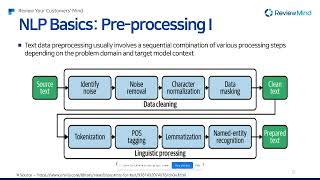
Introduction to NLP and Topic Modeling
Explore NLP basics, advanced techniques like word vectors, and topic modeling. Learn pre-processing, tools, and methodologies to start NLP modeling and understand topic analysis.
ODSC East 2022 Keynote by Luis Vargas, Ph.D. - The Big Wave of AI at Scale
Explore the trend of larger AI models, their growing capabilities, and impact on language, vision, and multi-modality. Learn about research, engineering efforts, and implications for companies.
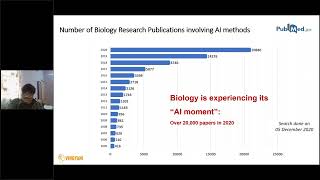
Coronavirus - Through The Lens Of AI
Explore AI applications in COVID-19 research: CT scan analysis, NLP for literature insights, and deep learning for drug candidate design. Learn how technology aids pandemic response.
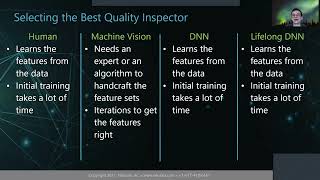
What Kind of AI Can Help Manufacturing Adapt to a Pandemic
Explore how AI, particularly DDNs and L-DNNs, can revolutionize quality inspections in manufacturing, adapting to challenges like COVID-19 and Industry 4.0 for improved efficiency and product quality.
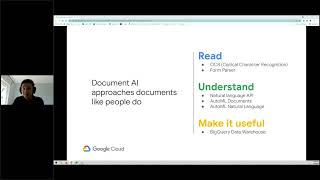
Accelerating the Journey to Document Understanding AI
Unlock document value with AI: transform unstructured data into actionable insights using Vision and NLP. Learn possibilities, capabilities, and implementation strategies for Document AI technology.
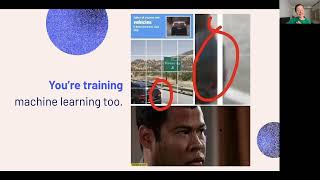
The Missing Link- How AI Can Help Create a Safer Society and Better Businesses
Explore how AI and NLP can enhance crime-solving, improve business efficiency, and create safer societies by automating information linking and reducing investigative time.
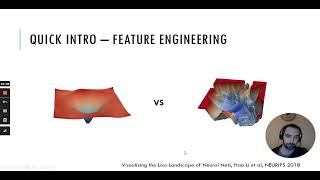
Dataset Management for Computer Vision - Important Component to Delivering Computer Vision Solutions
Explore dataset management's crucial role in computer vision solutions. Learn to align business goals, express assumptions, and maintain datasets for successful real-world implementations.
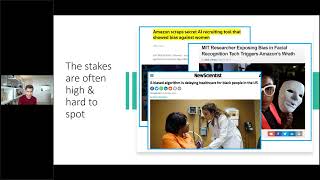
Building an Ethical Data Science Practice
Explore building an ethical data science practice, focusing on transparency, fairness, and explainability. Learn strategies to operationalize ethical AI and foster proactive risk management in your organization.
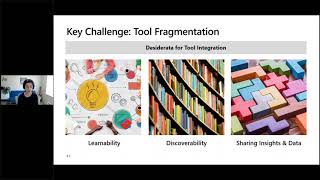
Responsible AI Dashboard - A Tool for Operationalizing Responsible AI
Explore Microsoft's Responsible AI Dashboard, an open-source framework integrating tools for error analysis, interpretability, fairness, and causal decision-making to build reliable and responsible AI products.
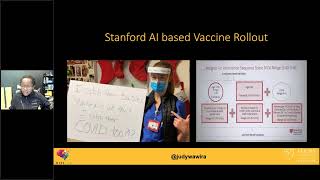
Fairness in Medical Algorithms - Threats and Opportunities
Explore fairness in medical AI algorithms, addressing biases, challenges, and opportunities for equitable healthcare. Learn practical approaches and open questions in developing fair medical AI systems.
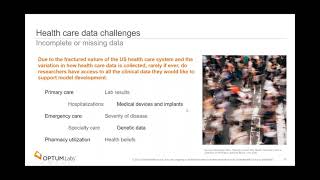
Responsible Use of AI in Health Care
Explore responsible AI use in healthcare, addressing challenges, identifying biases, and implementing ethical practices to enhance patient outcomes and promote health equity.
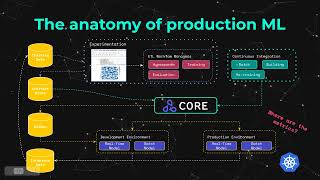
Production Machine Learning Monitoring- Principles, Patterns and Techniques
Practical deep dive on production monitoring of machine learning models, covering standard techniques and advanced paradigms like concept drift, outlier detection, and explainability, with hands-on examples and architectural patterns.
Information Flow and Deep Representation Learning
Explore information bottleneck analysis in deep learning, gaining insights into representation learning, nuisance insensitivity, and disentanglement for advanced understanding of neural networks.
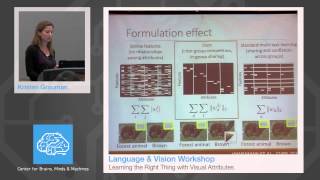
Kristen Grauman - Learning the Right Thing with Visual Attributes
Explore visual attribute learning techniques, including shared properties, transfer learning, and local approaches for fine-grained attribute differences in computer vision.
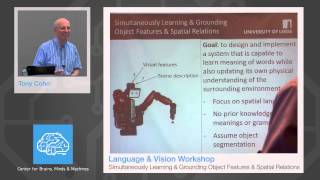
Tony Cohn - Simultaneously Learning and Grounding Object Features and Spatial Relations
Explore spatial information, qualitative relations, and inductive logic programming to understand object features and spatial relationships in various contexts.