Machine Learning with TensorFlow Object Detection Running on Docker
Explore TensorFlow Object Detection API implementation using Docker, covering image creation, dependencies, and practical analysis of object detection in pictures.
Artificial Intelligence-Machine Learning in Manufacturing and Inspection - A GE Perspective
Explore GE's perspective on AI/ML in manufacturing, focusing on metal additive manufacturing, ceramic matrix composites, and microstructure quantification for improved quality assurance.
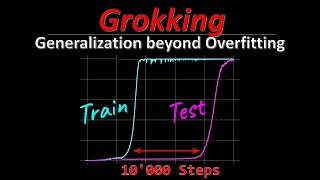
Grokking - Generalization Beyond Overfitting on Small Algorithmic Datasets
Explore the fascinating "grokking" phenomenon in neural networks, where sudden pattern recognition leads to perfect generalization. Discover its implications for deep learning and algorithmic datasets.
Self-Driving from Vision Only - Tesla's Self-Driving Progress by Andrej Karpathy - Talk Analysis
Analysis of Tesla's vision-only self-driving progress, discussing data labeling, edge-case sampling, neural network training, and the advantages of camera-only systems over multi-sensor approaches.
Why AI Is Harder Than We Think
Explores four fallacies in AI research leading to overconfident predictions, examining the complexity of intelligence and challenges in developing advanced AI technologies like self-driving cars and conversational companions.
Is the Problem in the Data? Examples on Fairness, Diversity, and Bias
Exploring AI bias through interactive examples on fairness, diversity, and hidden biases. Examines whether bias issues stem from data or other factors in machine learning models.
Deep Networks Are Kernel Machines
Explores the theory that deep neural networks function as kernel machines, challenging the view that they discover new data representations. Discusses implications for interpretability and algorithm development.
Extracting Training Data from Large Language Models - Paper Explained
Explores a method to extract training data from large language models, discussing security implications, risks, and mitigation strategies for models like GPT-3. Covers technical aspects and ethical considerations.

DeepMind's AlphaFold 2 Explained - AI Breakthrough in Protein Folding - What We Know and What We Don't
Comprehensive exploration of DeepMind's AlphaFold 2, a groundbreaking AI system that solved the protein folding problem. Covers the science, previous approaches, and potential implications for biology and medicine.
What Matters in On-Policy Reinforcement Learning? A Large-Scale Empirical Study
Comprehensive study on on-policy reinforcement learning, examining 50+ design choices across 5 environments. Provides insights and recommendations for practitioners to optimize agent performance in continuous control tasks.
Self-Training With Noisy Student Improves ImageNet Classification - Paper Explained
Explore a novel semi-supervised learning approach for image classification using unlabeled data, improving model performance and robustness through iterative self-training and noise injection techniques.
Playing Atari with Deep Reinforcement Learning - Paper Explained
Explore deep reinforcement learning's breakthrough in Atari game mastery using convolutional neural networks, revolutionizing AI with pixel-based control policies and outperforming human experts.
Gradient Origin Networks - Paper Explained with Live Coding
Explore Gradient Origin Networks: a novel implicit generative model for efficient latent representation learning, with live coding demonstration and in-depth explanation of the paper's key concepts.
On the Measure of Intelligence by François Chollet - The ARC Challenge - Paper Explained
Explores the ARC challenge for testing machine intelligence, focusing on rapid generalization tasks based on human core knowledge priors like object-ness and symmetry. Discusses goals, examples, and potential solutions.
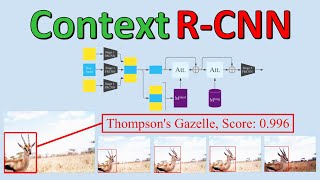
Context R-CNN- Long Term Temporal Context for Per-Camera Object Detection
Explores Context R-CNN, an object detection model leveraging long-term temporal context from static cameras. Improves performance in wildlife and traffic monitoring by incorporating data from multiple frames.
On the Measure of Intelligence by François Chollet - The Math Explained
Explore the formal definition of intelligence measurement, focusing on generalization difficulty, priors, and experience in terms of algorithmic complexity, as proposed by François Chollet.
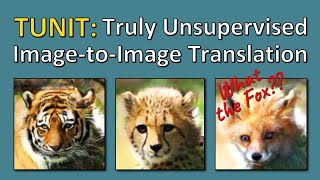
Rethinking the Truly Unsupervised Image-to-Image Translation - Paper Explained
Explore TUNIT, a groundbreaking approach to unsupervised image-to-image translation. Learn about its innovative architecture, loss functions, and experimental results for transforming images across domains.
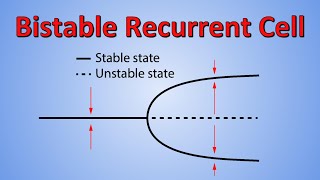
A Bio-Inspired Bistable Recurrent Cell Allows for Long-Lasting Memory
Explore a bio-inspired recurrent cell design that enhances long-term memory in neural networks, inspired by neuronal bistability and offering improved performance on time-series tasks requiring extended recall.
Deep Differential System Stability - Learning Advanced Computations from Examples
Explore how language models can learn complex mathematical computations for differential systems, including stability analysis and controllability, through example-based training.
Learning to Classify Images Without Labels - Paper Explained
Explore innovative techniques for unsupervised image classification, combining representation learning, clustering, and self-labeling to group visually similar images without predefined labels.
On the Measure of Intelligence by François Chollet - Foundations - Paper Explained
Exploring Chollet's proposal for measuring AI intelligence through generalization ability, challenging traditional skill-based evaluations and drawing inspiration from psychometrics to redefine intelligence assessment.