Sentiment Analysis in R with Sentimentr - Handling Negation and Valence Shifters
Explore sentiment analysis in R using {sentimentr}, handling negation and valence shifters for accurate text data analysis of emotions and profanity.
Unsupervised Learning for Stellar Spectra with Deep Normalizing Flows - Jo Ciuca
Explore unsupervised machine learning techniques for analyzing stellar spectra using deep normalizing flows, with applications in galaxy evolution and big data astronomy.

Experimenting with Alpaca & LLaMA
Explore Alpaca and LLaMA models in real-time, gaining hands-on experience with cutting-edge language AI technologies and their practical applications.
Everything You Need to Know About GPT-4
Comprehensive overview of GPT-4's capabilities, improvements, and potential applications, exploring its advancements in language understanding and generation compared to previous models.
What's LLaMA? ChatLLaMA? - And Some ChatGPT/InstructGPT
Explore LLaMA, ChatLLaMA, and other language models, understanding their capabilities, differences, and potential applications in AI and natural language processing.
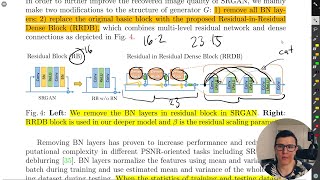
ESRGAN Paper Walkthrough
Detailed walkthrough of the ESRGAN paper, exploring enhanced super-resolution techniques using generative adversarial networks for improved image upscaling and restoration.
ESRGAN Implementation From Scratch
Learn to implement ESRGAN, an advanced image super-resolution technique, from scratch. Gain hands-on experience in deep learning and computer vision through step-by-step coding.
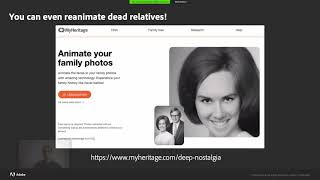
The Misinformation Age - Defending Against Deep Fakes
Explore deepfake technology's impact, current state, and initiatives to combat misinformation, including the Content Authenticity Initiative and hardware-level solutions for trusted content creation.
Supervised Machine Learning Tutorial - Logistic Regression - Naive Bayes Classifier
Explore logistic regression and Naive Bayes classifiers for supervised machine learning. Learn their advantages, applications, and implementation in classification tasks for data-driven decision making.
Batch Normalization in PyTorch - Adding Normalization to Convolutional Neural Network Layers
Learn to implement batch normalization in convolutional neural networks using PyTorch. Explore the benefits, create and compare networks, and optimize performance through hands-on coding and practical examples.
PyTorch Sequential Models - Neural Networks Made Easy
Learn to build neural networks using PyTorch's Sequential class. Explore multiple ways to construct models, set random seeds for reproducibility, and understand the benefits of this approach for creating efficient deep learning architectures.
PyTorch DataLoader Source Code Debugging - Batch Building and Normalization
Debugging session exploring PyTorch DataLoader's inner workings, focusing on data normalization, batch building, and parameter impacts. Insights into efficient data handling for deep learning projects.
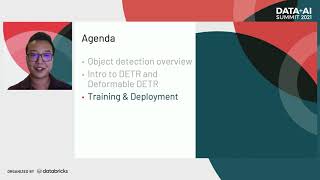
Object Detection with Transformers - From Training to Deployment
Explore cutting-edge object detection using transformers, from fundamental concepts to advanced techniques. Learn scalable training with Determined AI and deployment using MLflow.
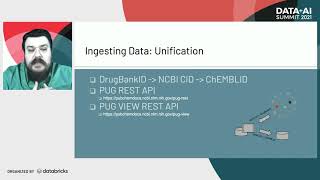
Drug Repurposing Using Deep Learning on Knowledge Graphs
Explore deep learning on knowledge graphs for drug repurposing, covering graph building, latent relationship prediction, and application to existing drugs for new treatments.

PyTorch and COVID-19 Research: Advancements in AI and Data Analysis - Keynotes
Explore PyTorch's advancements in machine learning and learn how AI is helping manage COVID-19 research data, featuring insights on industry adoption and scientific information accessibility.
Scalable AI for Environmental and Social Impact
Explore Microsoft's AI contributions to Apache Spark and Machine Learning, focusing on environmental and social impact projects like art exploration and endangered species protection.
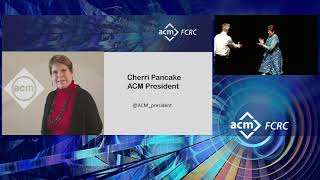
Deep Learning Revolution: Turing Award Lecture by Geoffrey Hinton and Yann LeCun
Pioneers of deep learning discuss breakthroughs, applications, and future prospects of neural networks in AI, from handwriting recognition to medical imaging and autonomous vehicles.
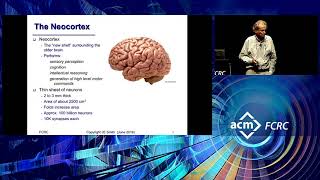
A Roadmap for Reverse-Architecting the Brain’s Neocortex
Explore a roadmap for reverse-engineering the neocortex, from biological observations to computational primitives and functional building blocks, towards developing biologically plausible neural networks for unsupervised learning.
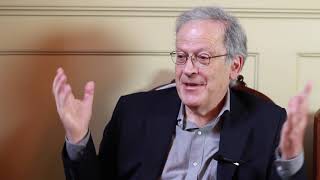
Leslie G. Valiant - Turing Award Lecture 2010
Explore computational learning theory, machine learning, and brain modeling with Leslie G. Valiant, 2010 ACM Turing Award winner, as he discusses his groundbreaking research and insights.

Ed Feigenbaum - 1994 ACM Turing Award Recipient Interview - Part 1
Explore AI pioneer Ed Feigenbaum's journey from childhood to groundbreaking research, expert systems development, and international collaborations in this insightful interview with Don Knuth.
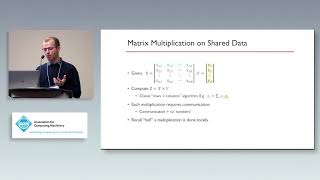
ABY3 - A Mixed Protocol Framework for Machine Learning
Explore privacy-preserving machine learning with ABY3, a framework addressing data collection concerns through encrypted computations and secure multi-party protocols.