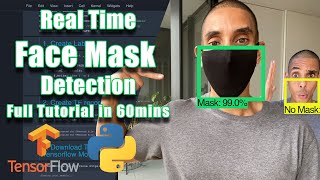
Real Time Face Mask Detection with Tensorflow and Python - Custom Object Detection with MobileNet SSD
Learn to build a real-time face mask detector using TensorFlow and Python. Master image labeling, custom object detection, transfer learning, and implement a practical workflow for training and deployment.
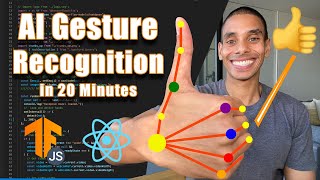
Real Time AI Gesture Recognition with Tensorflow.js + React.js + Fingerpose
Learn to build a real-time gesture recognition app using TensorFlow.js, React.js, and Fingerpose. Control web applications with hand gestures through deep learning-powered computer vision.
Presidential Debate Twitter Sentiment Analysis Using Python and NLTK
Learn to analyze Twitter sentiment for presidential debates using Python, NLTK, and TextBlob. Extract polarity and subjectivity from tweets to gauge public opinion on candidates quickly and efficiently.
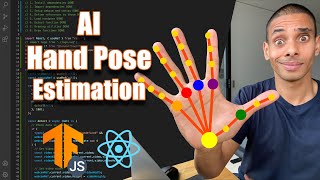
Real Time AI Hand Pose Estimation with Javascript, Tensorflow.js and React.js
Build a real-time hand pose estimation app using Javascript, TensorFlow.js, and React.js. Learn to set up a pre-trained model, use webcam input, and detect hand landmarks for gesture recognition applications.
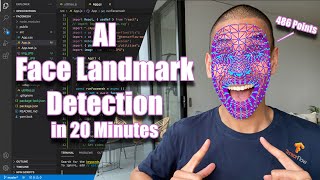
Real Time AI Face Landmark Detection with Tensorflow.JS and React
Build a real-time facial landmark detection app using Tensorflow.JS and React. Learn to install models, create the app, and detect face points via webcam in just 20 minutes.
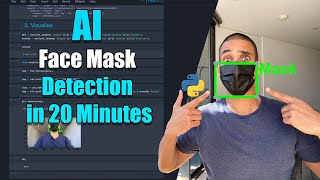
Build a Face Mask Detector with Watson and Python
Learn to create a face mask detector using Watson Visual Recognition, Python, and OpenCV. Capture images, visualize detections, and train custom object detection models in this hands-on tutorial.
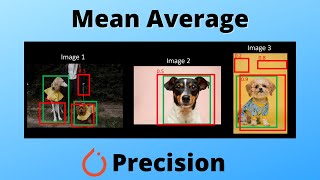
Mean Average Precision Explained and PyTorch Implementation
Learn to calculate and implement Mean Average Precision (mAP) for evaluating object detection models, with a detailed explanation and hands-on PyTorch implementation from scratch.
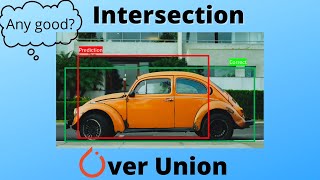
Intersection Over Union Explained and PyTorch Implementation
Comprehensive guide to Intersection over Union (IoU) in object detection, covering theory and practical implementation in PyTorch. Ideal for understanding this crucial metric.
TensorFlow Tutorial - Model Subclassing with Keras - Part 8
Learn to build flexible TensorFlow models using Keras subclassing, including a ResNet-like model with skip connections. Gain advanced model creation skills beyond Sequential and Functional APIs.

Pytorch Text Generator With Character Level LSTM
Learn to build a character-level LSTM text generator in PyTorch, focusing on generating new baby names. Explore practical implementation of RNNs for creative text generation tasks.
Neural Network from Scratch - Machine Learning Python
Implement a neural network using Python and numpy, focusing on the coding aspects while building upon previously explained mathematical concepts.
PyTorch GoogLeNet - InceptionNet Implementation from Scratch
Learn to implement GoogLeNet/InceptionNet from scratch in PyTorch, with explanations of network architecture and step-by-step coding guidance.
Neural Network from Scratch with Python - Part 4
Implement a neural network using Numpy, learning to build deep learning models from the ground up without relying on high-level frameworks.
Comparing AI Image Caption Models: GIT, BLIP, and ViT+GPT2
Explore a comparison of three cutting-edge AI image captioning models, analyzing their performance across diverse images and understanding their unique approaches to vision-language tasks.
Stable Diffusion 2.0 Fine-Tuning with DreamBooth on Free Colab
Fine-tune Stable Diffusion 2.0 with DreamBooth on free Google Colab. Create custom AI avatars and profile pictures. Learn data collection, processing, model training, inference, and conversion for Automatic1111 compatibility.
Multilingual Video Caption Generator with OpenAI Whisper - Full Tutorial
Learn to create a multilingual video subtitle generator using OpenAI Whisper, Python, and Gradio. Build, deploy, and use this free tool for automatic captioning in various languages.
ML-Powered Web Apps - React, Javascript Tutorial with Gradio API - Hugging Face
Build ML-powered web apps using Gradio API on Hugging Face Spaces. Learn to integrate machine learning capabilities into vanilla JavaScript or React applications for free.
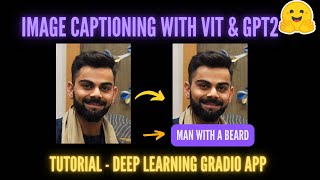
Image Captioning Python App with ViT and GPT2 Using Hugging Face Models - Applied Deep Learning
Learn to create an image captioning app using ViT and GPT2 models from Hugging Face. Build a Gradio interface and deploy it on the Model Hub for easy access and sharing.
Numerizer - Spacy Powered Streamlit Deployed on Hugging Face - Applied NLP Tutorial
Learn to convert English numbers to numeric values using Numerizer, build a Streamlit app, and deploy it on Hugging Face Spaces. Gain practical NLP skills through hands-on Python coding and web app development.
Partial Dependence Plots in Machine Learning Explainability - Day 17 of Kaggle's 30 Days of ML
Explore Partial Dependence Plots for interpretable machine learning. Learn to visualize, build, and interpret PDPs, including 2D plots, to enhance model explainability and insights.
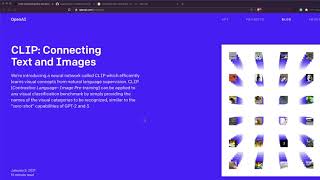
Zero-Shot Image Classification with OpenAI's CLIP Model
Explore OpenAI's CLIP model for zero-shot image classification, demonstrating its ability to predict relevant text for images using natural language instructions without task-specific training.