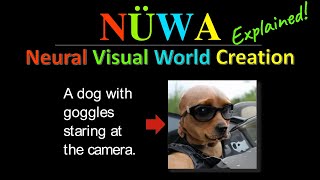
NÜWA - Visual Synthesis Pre-training for Neural Visual World Creation
Explore NÜWA, a unified multimodal model for visual synthesis tasks. Learn about its 3D transformer framework, 3D Nearby Attention mechanism, and applications in text-to-image/video generation and manipulation.
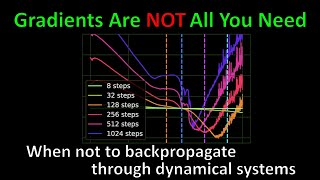
Gradients Are Not All You Need - Machine Learning Research Paper Explained
Explores limitations of differentiable programming in machine learning, focusing on chaos-based failures in various systems. Discusses alternatives to backpropagation for gradient estimation in complex, stochastic environments.
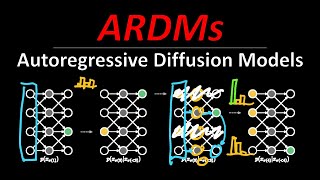
Autoregressive Diffusion Models - Machine Learning Research Paper Explained
Explore Autoregressive Diffusion Models, a novel approach combining autoregressive and diffusion models for efficient, order-agnostic generation and compression of text and image data.
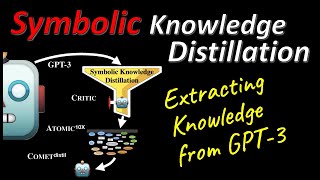
Symbolic Knowledge Distillation- From General Language Models to Commonsense Models Explained
Explore how to distill commonsense knowledge from large language models to create high-quality knowledge graphs and train smaller, specialized models for improved performance in commonsense reasoning tasks.
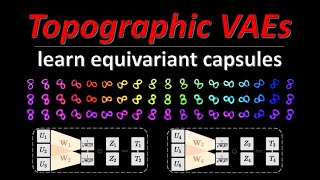
Topographic VAEs Learn Equivariant Capsules - Machine Learning Research Paper Explained
Explore Topographic VAEs: a novel approach to deep generative models with organized latent variables, bridging topographic organization and equivariance in neural networks for improved feature learning and transformation handling.
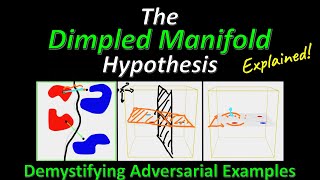
The Dimpled Manifold Model of Adversarial Examples in Machine Learning - Research Paper Explained
Explores the Dimpled Manifold Model to explain adversarial examples in machine learning, challenging existing theories and providing experimental evidence for a new perspective on neural network vulnerabilities.
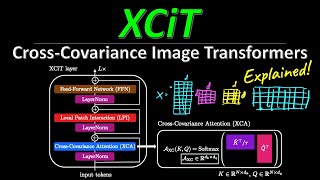
XCiT- Cross-Covariance Image Transformers - Facebook AI Machine Learning Research Paper Explained
Explore XCiT, a novel Transformer architecture for computer vision using cross-covariance attention. Learn about its linear complexity, scalability, and performance across various vision tasks.
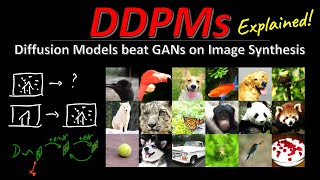
Diffusion Models Beat GANs on Image Synthesis - Machine Learning Research Paper Explained
Explore how Diffusion Models outperform GANs in image synthesis, with improved architecture, classifier guidance, and better sample quality while maintaining distribution coverage.
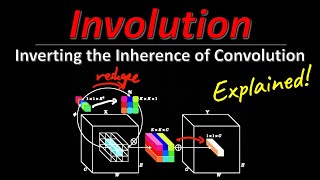
Involution - Inverting the Inherence of Convolution for Visual Recognition
Explores involution, a novel neural network operation inverting convolution principles. Compares it to self-attention, demonstrating improved performance and efficiency in various computer vision tasks.
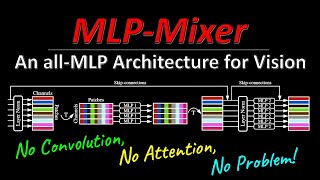
MLP-Mixer - An All-MLP Architecture for Vision - Machine Learning Research Paper Explained
Explores MLP-Mixer, a novel architecture using only multi-layer perceptrons for image classification. Discusses its design, performance, and implications for computer vision beyond CNNs and Transformers.

Emerging Properties in Self-Supervised Vision Transformers - Facebook AI Research Explained
Explore Facebook AI's DINO system, combining self-supervised learning with Vision Transformers for impressive image analysis without labels. Learn about its architecture, methodology, and groundbreaking results in computer vision.
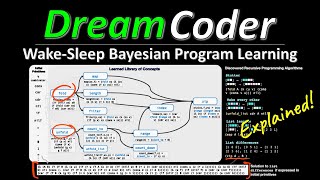
DreamCoder- Growing Generalizable, Interpretable Knowledge With Wake-Sleep Bayesian Program Learning
Explores DreamCoder's approach to program synthesis, combining neural-guided search with symbolic reasoning to learn generalizable knowledge and solve complex tasks through iterative abstraction and refinement.
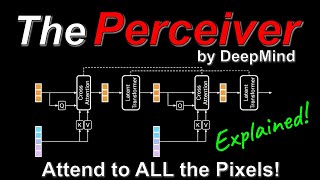
Perceiver - General Perception with Iterative Attention
Explore DeepMind's Perceiver model, a versatile architecture that processes diverse input modalities using iterative attention, solving the quadratic bottleneck problem in Transformers.
Self-Supervised Learning - The Dark Matter of Intelligence
Explore self-supervised learning as a promising approach for AI to develop background knowledge and common sense, with insights from Yann LeCun and Ishan Misra of Facebook AI Research.
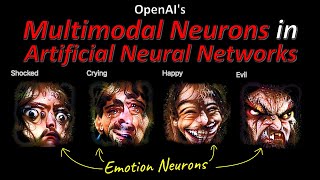
Multimodal Neurons in Artificial Neural Networks - With OpenAI Microscope, Research Paper Explained
Explore multimodal neurons in CLIP model, revealing how AI recognizes concepts across various visual representations. Gain insights into neural networks' inner workings and their ability to process diverse information.
Deploy with FastAPI - Sentiment Analysis with BERT Using Huggingface, PyTorch, and Python Tutorial
Learn to deploy a pre-trained BERT model for sentiment analysis as a REST API using FastAPI, PyTorch, and Hugging Face. Covers project setup, API creation, model integration, and real-time predictions.

Sentiment Analysis with BERT Using Huggingface, PyTorch, and Python Tutorial
Learn to build a sentiment classification model using BERT, Hugging Face, and PyTorch. Covers BERT basics, fine-tuning for sentiment analysis, model training, evaluation, and prediction from raw text.
Sentiment Analysis with BERT Using Huggingface, PyTorch and Python Tutorial
Learn text preprocessing for sentiment analysis using BERT, Hugging Face, and PyTorch. Covers tokenization, padding, attention masks, dataset creation, and data splitting for NLP tasks.

Transfer Learning for Image Classification with PyTorch & Python Tutorial - Traffic Sign Recognition
Learn to classify traffic signs using transfer learning with PyTorch. Explore data, build datasets, train a pre-trained ResNet model, evaluate performance, and make predictions on new images.

LSTM Time Series Prediction Tutorial Using PyTorch in Python - Coronavirus Daily Cases Forecasting
Learn to forecast Coronavirus cases using LSTM and PyTorch. Covers data preprocessing, model building, training, evaluation, and future predictions with real-world time series data.

OpenCV Python Tutorial for Beginners - Image Processing for Computer Vision & Deep Learning
Comprehensive guide to image processing with OpenCV in Python, covering essential techniques from basic operations to advanced manipulations for computer vision applications.